Zagreb to Istria Loop
Cross to Opatija, Motovun, Rovinj, Pula and Labin over five to seven days before returning to Zagreb.
- Allow
- 5–7 days
- Route
- 598 km
- Drive time
- 8 hr 9 min
- Stops
- 6
The route from Zagreb to Istria crosses more than distance. Opatija introduces Habsburg resort architecture on Kvarner Bay, inland Motovun and the Mirna Valley shift toward truffles and hill towns, and Rovinj and Pula bring two very different Adriatic histories.
Istria rewards two bases rather than constant packing. Old towns restrict traffic, summer parking fills early and wine or olive-oil appointments need a designated driver. Use the motorway for the gateway transfer and slow down once the peninsula becomes the point.
The road, in one glance
Pinch or scroll with Ctrl / ⌘ to zoom
Drawing the route…
The route earns
its distance
Each pin is selected as a place to do something—not merely proof that you passed through.
 Photo: Nick Savchenko from Kiev, Ukraine · CC BY-SA 2.0
Zagreb
Finish the capital on foot and by tram, then collect the car for the westbound crossing.
Zagreb ( ZAH-greb; Croatian: ) is the capital and largest city of Croatia. It is in the north of the country, along the Sava river, at the southern slopes of the Medvednica mountain. Zagreb stands near the international border between Croatia and Slovenia at an elevation of approximately 158 m (518 ft) above sea level.
 Photo: ChrisV · CC BY 3.0
Opatija
Belle Époque hotels, gardens and the Lungomare promenade introduce the Kvarner coast.
Opatija (Croatian:; Italian: Abbazia; German: Sankt Jakobi) is a town and a municipality in Primorje-Gorski Kotar County in west Croatia. The traditional seaside resort on the Kvarner Gulf is known for its Mediterranean climate and its historic buildings reminiscent of the Austrian Riviera.
 Photo: Ekaterina Polischuk · CC BY-SA 4.0
Motovun
A walled hill town rises above the Mirna Valley, vineyards and truffle country.
Motovun is a village and a municipality in central Istria, west Croatia. In ancient times, both Celts and Illyrians built their fortresses at the location of present-day Motovun. The name of the village is also of Celtic origin, derived from Montona, meaning "a town in the hills".
 Photo: Florian Hirzinger - http://www.fh-ap.com · CC BY-SA 4.0
Rovinj
A dense Venetian old town pushes into the Adriatic beneath St Euphemia’s bell tower.
Rovinj (Croatian:; Venetian and Italian: Rovigno; Istriot: Ruvèigno or Ruveîgno; Ancient Greek: Ρυγίνιον, romanized: Rygínion; Latin: Ruginium) is a city in west Croatia situated on the north Adriatic Sea with a population of 14,294 (2011). Located on the western coast of the Istrian peninsula, it is a popular tourist resort and beach destination, in addition to being an active fishing port.
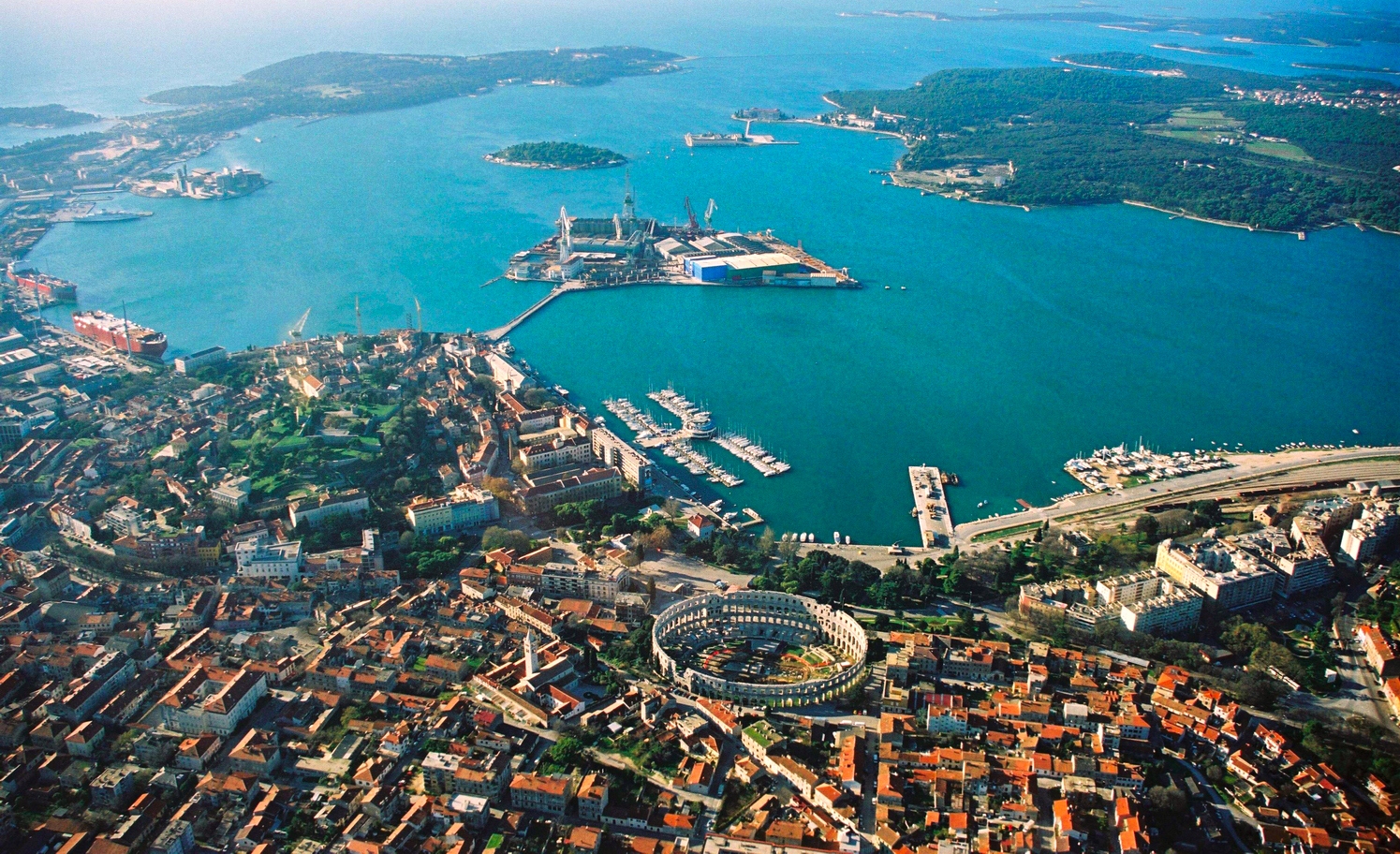 Photo: Orlovic · CC BY-SA 3.0
Pula
A monumental Roman arena and working port give southern Istria an urban, archaeological center.
Pula, also known as Pola, its Italian name, is the largest city in Istria County, western Croatia, and the seventh-largest city in the country, situated at the southern tip of the Istrian peninsula in western Croatia, with a population of 52,220 in 2021. It is known for its multitude of ancient Roman buildings, the most famous of which is the Pula Arena, one of the best preserved Roman amphitheaters.
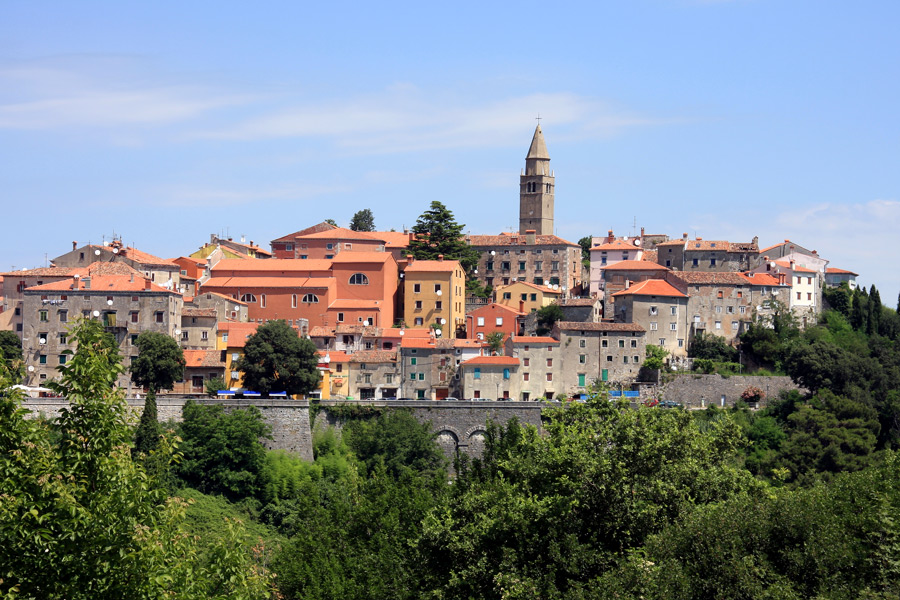 Photo: Alessandro Vecchi · CC BY-SA 3.0
Labin
A colorful hill town above the east coast adds mining history and a quieter final Istrian night.
Labin is a hilltop town in eastern Istria above the coastal resort of Rabac. A Venetian-influenced old town occupies the ridge, while museums and industrial remnants interpret the coal-mining history that shaped the modern settlement below.
Drive the conditions,
not the itinerary.
Use town-edge parking, understand motorway tolls and appoint a sober driver for wine or spirits tastings. Summer Saturdays can be extremely congested.
Checked against
the people who run it
Distances and driving times are planning estimates. Conditions, closures, ferries, permits and park rules can change, so check the linked official guidance before setting out.