
A quick mental map
Zagreb’s core is a two-level story: Upper Town (historic, quiet lanes, viewpoints) and Lower Town (parks, museums, boulevards). Beyond that, neighborhoods like Maksimir and Jarun add greenery and a more local pace — and Novi Zagreb shows the modern city across the river.
Neighborhood vibes (high level)
- Upper Town (Gornji Grad): romance, stone streets, views.
- Lower Town (Donji Grad): architecture, museums, parks, best first-timer base (Green Horseshoe vibe).
- Kaptol area: historic core energy near major landmarks.
- Trešnjevka: local everyday Zagreb — markets, casual food, and a lived-in pace.
- Maksimir: park life, calmer pace, easy nature access.
- Jarun: lake loops, sporty vibe, summer evenings.
- Novi Zagreb: modern side + Museum of Contemporary Art.
Start with these neighborhood guides
If you want the fastest way to “get” Zagreb, read the two core areas first — then pick one side-trip neighborhood.
How to choose where to stay
If this is your first trip, start central. If you want a different vibe, choose based on your mornings.
- Want walk-everywhere convenience? Choose the center.
- Want quiet nights? Choose Upper Town edges or residential streets.
- Want morning nature? Choose near Maksimir or Jarun.
How Zagreb’s neighbourhoods fit together
Zagreb makes more sense when you stop treating the centre as one undifferentiated old town. The historic core rises north of Ban Jelačić Square through Kaptol and Upper Town, while Lower Town opens southward into straighter streets, museums, parks and the railway-station axis. The distances between these areas are modest, but their mood changes quickly: a climb of a few streets can move you from a busy market approach to stone lanes and viewpoints, while a turn south replaces medieval texture with the measured rhythm of the Green Horseshoe.
That compact geography is Zagreb’s great planning advantage. You do not need a separate day for every central district. Kaptol, Upper Town and Lower Town can form one coherent first-day route, provided you leave enough time for the slopes, a coffee and one cultural stop. The neighbourhood decision becomes more important on the second day, when you can choose between a residential market area, a major park, the lake or the modern city across the river instead of repeating the same central streets.
For accommodation, the same map creates different kinds of trip. Lower Town is the low-friction base for most first visits; the Upper Town edge trades some convenience for old-street atmosphere; tram-connected residential areas make more sense on longer stays; Maksimir and Jarun suit travellers who want green space built into the morning. None is a universal winner. The useful question is what you want outside the hotel before breakfast and after dinner.
Upper Town and Kaptol: close neighbours with different rhythms
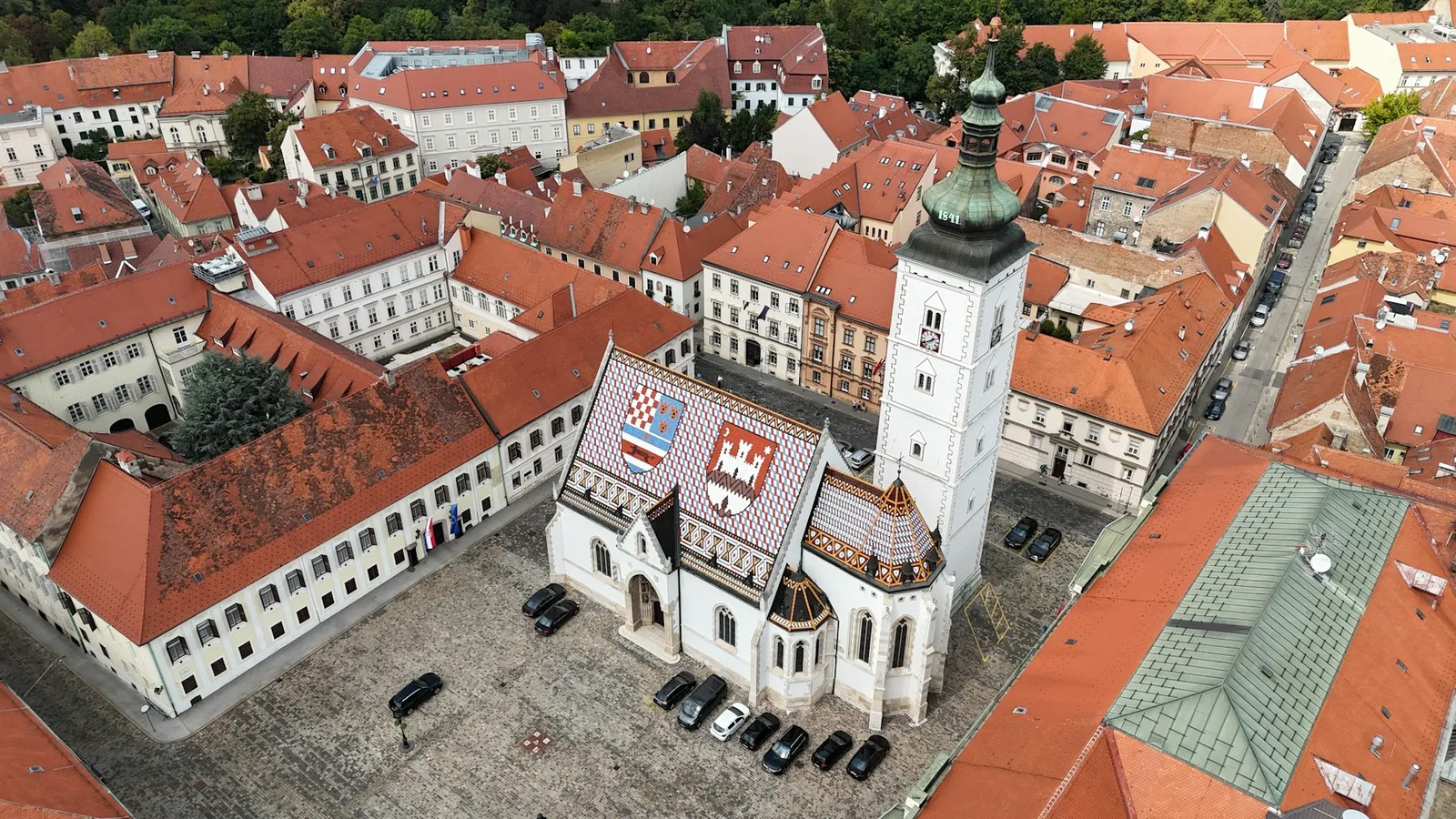
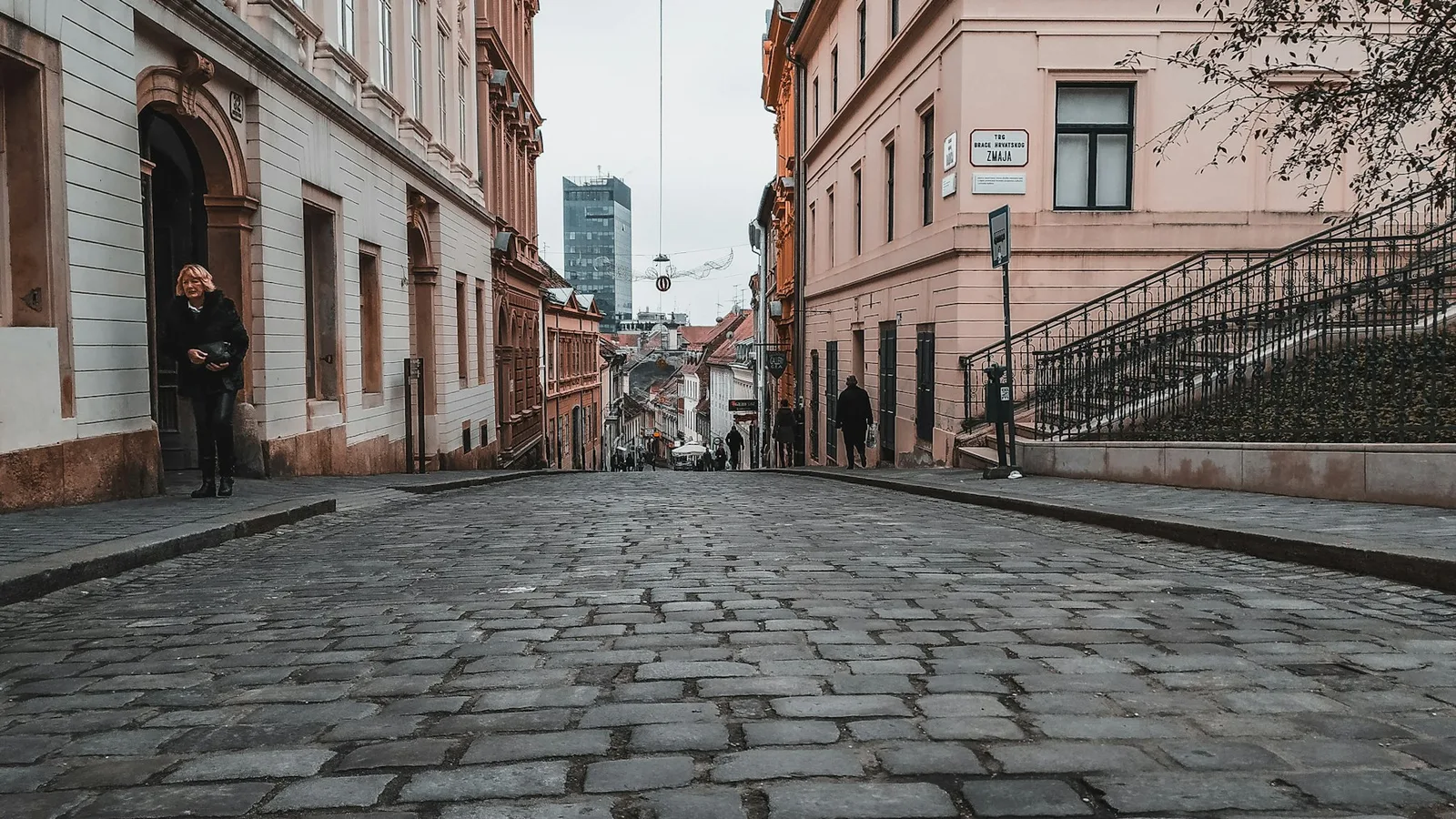
Upper Town is the part of Zagreb most visitors picture first: St. Mark’s Church, the Stone Gate, old lanes, viewpoints and the walk along Strossmayer Promenade. It is best approached as a slow loop rather than a row of landmarks. The slopes and steps are part of the experience, but they are also the practical trade-off for anyone carrying luggage, pushing a stroller or planning to return to the room several times during the day.
Kaptol sits beside that historic experience but feels more connected to the city’s daily movement. Dolac Market and the Cathedral quarter give it a morning energy that is different from Upper Town’s quieter lanes. A first visit works well when Kaptol is the beginning of the route: market, Cathedral area, then the gradual move uphill. That sequence lets the city reveal its layers without requiring a transport plan or a forced distinction between two districts that meet naturally on foot.
Stay near these areas when atmosphere is a priority and you are comfortable with the terrain. Visit them from Lower Town when you want easier arrivals, flatter evening logistics and more choice around parks and museums. The two approaches lead to the same sights, but the trip feels different: one wakes inside the historic texture; the other makes the climb a deliberate part of the day.
Lower Town: the city-break base that keeps options open
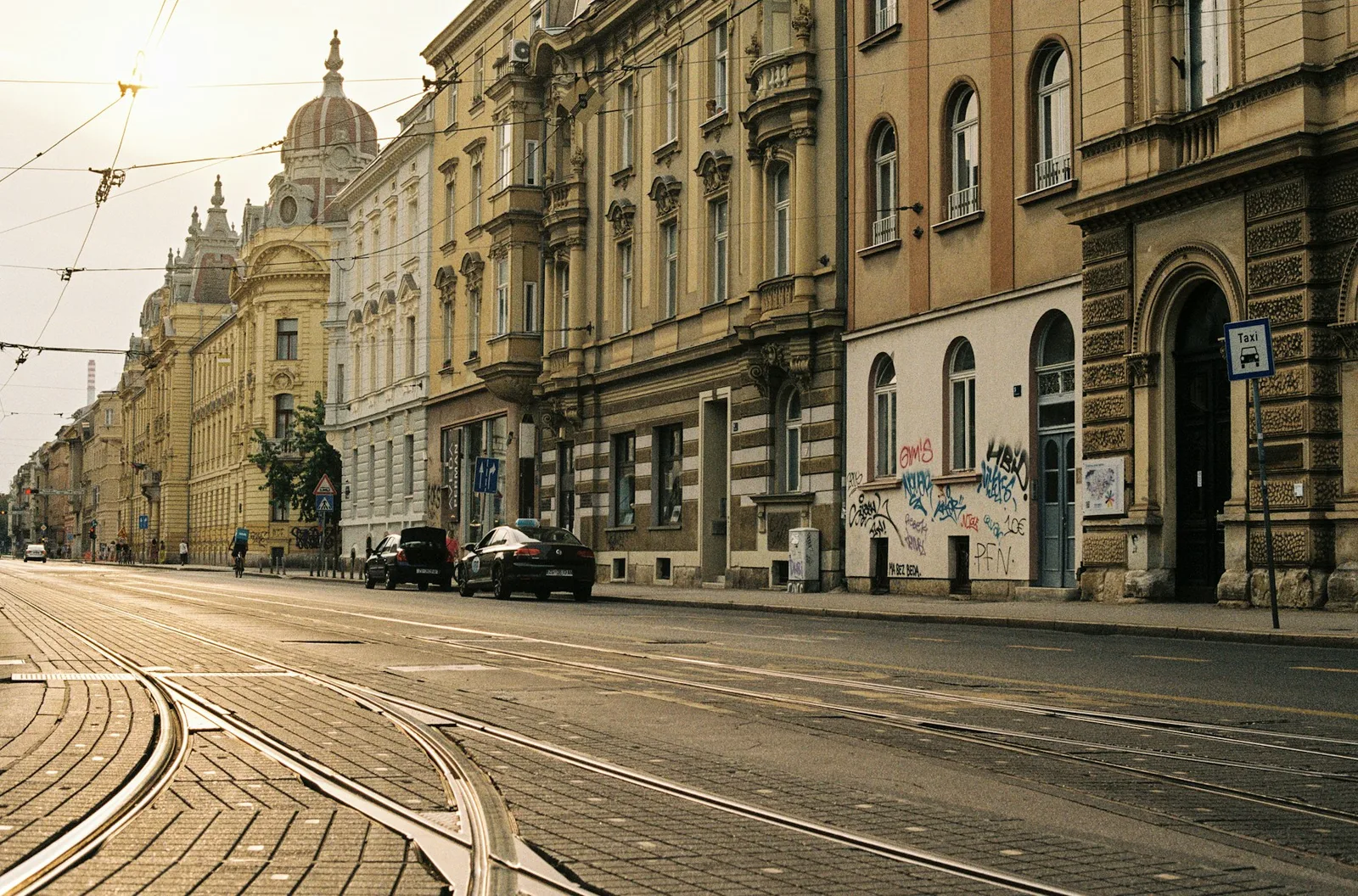
Lower Town is the practical heart of a short Zagreb trip. It places the Green Horseshoe, major cultural buildings, café streets, the main square and the railway-station side within one walkable pattern. The architecture is more spacious than Upper Town, the terrain is gentler, and a day can move between museum, park and meal without feeling like a sequence of separate excursions. That is why it is the default recommendation for first-timers rather than merely the district with the most central map pin.
The district is broad enough that the exact street still matters. A room close to a lively central route gives effortless evenings but may need a quieter orientation; the station side simplifies arrivals and departures; the Green Horseshoe side suits travellers who want parks to structure the day. Paying to be directly on Ban Jelačić Square is not necessary when a nearby side street gives the same walkability with a calmer return.
Lower Town also works as the hinge for every other neighbourhood choice. Go north for Upper Town and Kaptol, east or west by tram for residential Zagreb, south toward Novi Zagreb, or keep the day entirely central. On a weekend, that flexibility is worth more than squeezing a supposed local neighbourhood into every morning. Use Lower Town as a base, then choose one area beyond it because the area adds something specific to the trip.
Trešnjevka: choose everyday Zagreb, not a checklist
Trešnjevka is useful for travellers who want a residential counterpoint to the historic centre. Its appeal is not a single monument; it is the pattern of markets, bakeries, casual food, tram stops and ordinary streets. That makes it a good longer-stay neighbourhood and a poor candidate for a rushed ‘hidden Zagreb’ detour. Go when you have time to walk without demanding a headline sight at the end of every block.
A market morning is the most natural way to give the visit a purpose. Pair it with breakfast or coffee, notice the change in street scale, then decide whether to remain for lunch or return centrally. The route works because it is light. Adding several distant attractions afterward turns the neighbourhood into a transit exercise and removes the everyday pace that made it worth choosing.
For accommodation, Trešnjevka can offer a more local-feeling base when the tram route is genuinely convenient for your plans. Check the exact connection rather than assuming every address in the district functions the same way. On a two-night first visit, Lower Town remains easier. On a longer trip, the residential rhythm can become the point—especially if you prefer neighbourhood mornings to immediate access to the old core.
Maksimir and Jarun: let the landscape choose the day
Maksimir and Jarun are both green escapes, but they solve different itinerary problems. Maksimir gives you wooded paths, pavilions and a park-first day that feels removed from the central sightseeing rhythm. It is the better choice when you want shade, a calm walk or a family-friendly change of pace. Treat the park as the anchor rather than a quick add-on after an already full museum morning.
Jarun is more open and lake-oriented. It suits movement, wider skies and warmer-weather evenings, particularly when the goal is a long loop rather than a formal attraction. The experience depends more on season and weather than a central park walk, so keep the decision flexible. If the day is cold, wet or already transport-heavy, Lower Town’s parks may give you the reset you need without committing to a separate outing.
Neither area is the obvious accommodation choice for a first weekend, but both can work on a longer stay when the morning environment matters more than walking to Upper Town. Choose Maksimir for park access and a calmer rhythm; choose Jarun when the lake is part of how you plan to spend the trip. In either case, confirm that the connection to your evening plans is simple enough to support the way you actually travel.
Novi Zagreb: modern Zagreb as a deliberate contrast
Novi Zagreb is not an extension of the old centre; that difference is the reason to go. Across the river, the urban scale changes, post-war planning becomes visible and the Museum of Contemporary Art provides a clear cultural anchor. The visit works best for travellers who want to understand more than Zagreb’s postcard layer, or who already have enough time for the central essentials.
Build the outing around one modern-culture decision rather than wandering without context. MSU can anchor the day, with Bundek adding an outdoor counterpoint when weather and energy allow. Return to the centre for dinner instead of stacking another distant neighbourhood onto the same route. That contrast—historic morning or evening, modern afternoon—is more legible than trying to make Novi Zagreb imitate an old-town sightseeing experience.
Staying here suits a specific trip: business in the area, interest in modern Zagreb, a contemporary hotel preference or repeat visitors who do not need the old core outside the door. First-timers usually gain more from a central base. The point is not that Novi Zagreb is less authentic; it is that authenticity is not the same as convenience, and the right base depends on which version of the city your itinerary needs most often.
A neighbourhood plan for one, two or three days
With one day, keep the geography coherent: Dolac and Kaptol in the morning, Upper Town as the slow historic loop, Lower Town parks and dinner afterward. This is not the moment to prove you have seen residential Zagreb. The central sequence already contains several neighbourhood moods, and rushing outward will cost the pauses that make the route work.
With two days, use the second for one contrast. Choose Maksimir for greenery, Trešnjevka for a market-and-neighbourhood morning, Jarun for a lake-oriented afternoon or Novi Zagreb for modern culture. Keep the evening central unless the outer area itself is the evening plan. One well-chosen contrast deepens the trip; three brief contrasts make every district feel like a stopover.
With three days or more, neighbourhood choice can become part of the daily rhythm rather than a special excursion. Repeat a market, return to a park, or explore one residential area without needing a list. That is when Zagreb begins to feel less like Upper Town plus add-ons and more like a capital whose historic, green, residential and modern layers coexist within a manageable city.
How to choose a base without overpaying for the map pin
Start with the journeys you will repeat, not the landmark you most want to photograph. A traveller arriving by train, taking an early day trip and spending evenings around Lower Town benefits from a base on the southern side of the centre. Someone planning slow mornings at Dolac and repeated Upper Town walks may accept the slopes for a more atmospheric address. A tram stop is valuable only when its lines simplify the trips already in your plan; transport on the doorstep is not automatically better than being ten minutes from the places you will visit twice.
Noise and terrain are the two details that broad neighbourhood labels hide. A central room can face a nightlife street, a service courtyard or a quiet side road, so read recent room-specific comments and check the building orientation. Upper Town and Kaptol addresses may include climbs, steps or awkward taxi access. Residential districts may feel wonderfully calm but turn a late dinner into a longer return. Look at the final few hundred metres between the tram stop and the door, not just the district name in the listing.
For most first visits, a slightly less famous Lower Town street is the value sweet spot: central enough to walk, broad enough to offer several routes, and less dependent on paying for a square-facing address. Couples may prefer the Upper Town edge for evening atmosphere; families often gain more from space, lift access and a nearby park; longer-stay travellers can trade immediate sightseeing access for a kitchen and neighbourhood market. The best base is the one that removes friction from your particular mornings and nights.
The neighbourhood mistake to avoid
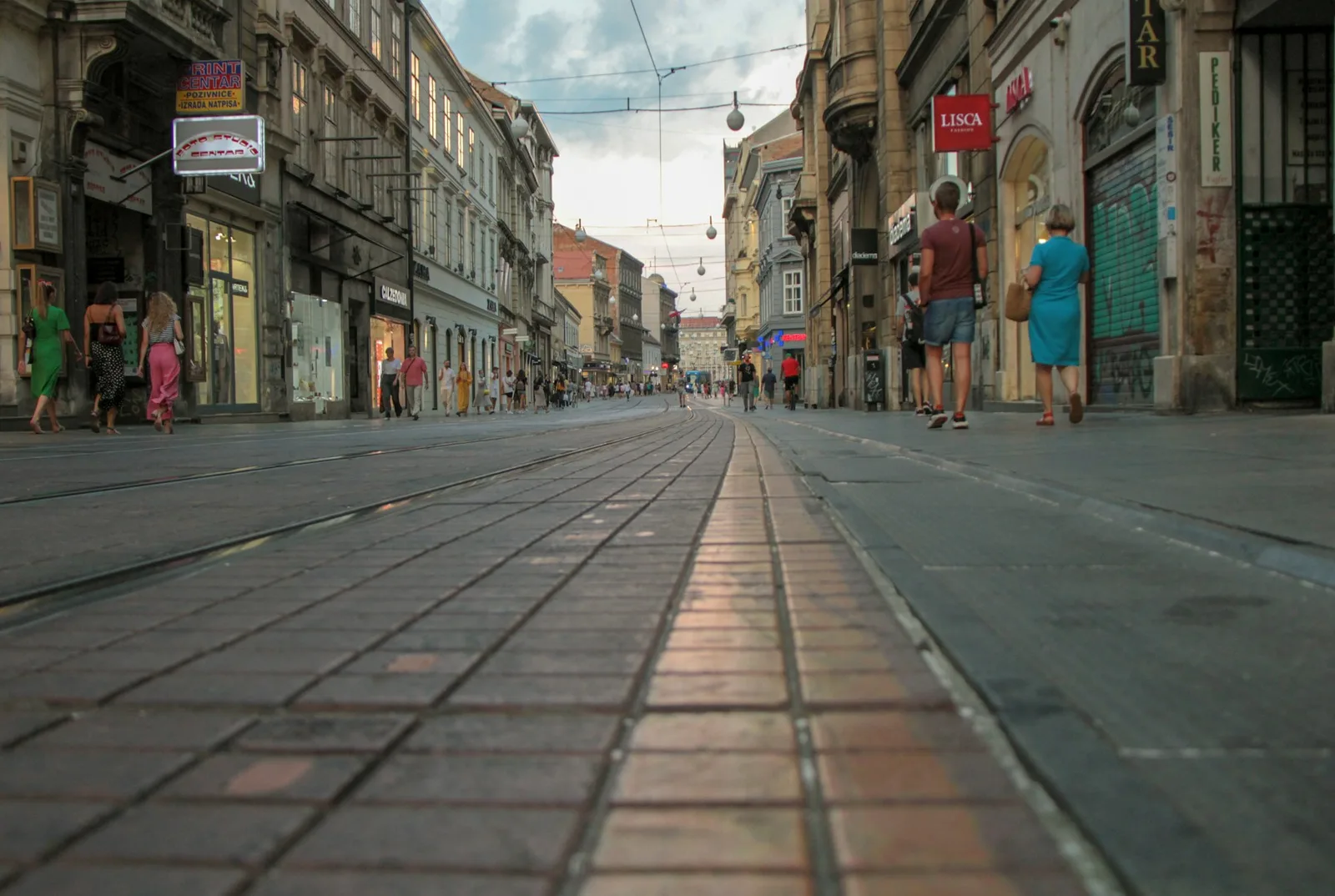
Do not confuse distance from Ban Jelačić Square with depth of experience. A residential district is not automatically more local, and a central street is not automatically tourist-only. Zagreb residents use the centre, markets and trams too. What changes outside the core is the ratio of daily life to headline sights, along with the effort required to return for central plans.
Choose an outer neighbourhood because its market, park, architecture or morning rhythm matches your interests. When the reason is only to escape other visitors, the journey often produces disappointment and unnecessary transit. A thoughtful central day with one residential contrast is more revealing than a city-wide sweep built around the vague promise of authenticity.
The same principle applies at night. A district that is rewarding at market hour may be too quiet for the evening you imagined, while a central base can make a late return effortless. Visit areas at the time that reveals their strength, and sleep where the repeated logistics of the whole trip remain comfortable.
Read Zagreb through one change of scale per day
Zagreb’s neighbourhoods become clearer when each day crosses one meaningful boundary. Kaptol into Upper Town changes market and religious streets into civic squares and old lanes. Upper Town into Lower Town changes elevation and medieval texture into a measured grid of parks and institutions. Lower Town into Trešnjevka changes the ratio of landmarks to ordinary errands. Crossing the Sava into Novi Zagreb changes the scale again, replacing the postcard city with post-war planning, large cultural buildings and broader open space.
One boundary is enough for a short day. A morning that begins at Dolac, climbs through the Stone Gate and descends into Zrinjevac already contains several Zagrebs. Adding Trešnjevka and Novi Zagreb to prove the city has depth will only turn those districts into tram windows. Give the second or third day one deliberate contrast instead: a Trešnjevka market morning, a Maksimir park block, a Martićeva-to-Kvatrić walk or MSU with Bundek.
Trams are part of this reading rather than a gap between experiences. Use them to notice when central façades loosen into residential blocks, when the road width changes and when a market becomes the organising centre instead of a visitor attraction. Get off for a chosen reason and keep a simple return. A neighbourhood visit becomes insightful when the streets explain something the old centre could not—not when distance from Ban Jelačić Square is treated as authenticity.
The same principle should guide accommodation. Sleep in Lower Town when several days need different directions; choose the Upper Town edge when historic mornings matter enough to accept terrain; use a tram-connected residential base when extra space and daily routine outweigh immediate sightseeing access. A district is not a personality test. It is the repeated environment around breakfast, the hotel return and the first decision of every day.
After dark, compare neighbourhoods by the return they offer. Tkalčićeva and the main-square side keep energy close, Lower Town provides several calmer park-and-street approaches, and the Upper Town edge trades convenience for atmosphere and terrain. A residential base may feel wonderfully ordinary in the morning but add a tram decision after every late dinner. Visit outer districts for the quality they bring to a day; choose a hotel base for the journey you will repeat when attention and energy are lowest.
A good final test is whether you can describe the district without borrowing the adjective used for the last one. Upper Town is not merely atmospheric; its slopes, civic institutions and old lanes organise the visit. Lower Town is not merely convenient; its parks and cultural buildings create a different daily structure. Trešnjevka is not merely local; its market and residential movement are the point. Novi Zagreb is not merely modern; its scale across the river changes how the capital is understood.