
What Donji Grad feels like
Donji Grad (Lower Town) is the “classic postcard” version of central Zagreb: wide streets, historic facades, museums you can reach on foot, and parks that make the whole area feel breathable.
If you’re staying in the center, odds are you’ll spend a lot of your trip here — even if you didn’t mean to.
How Donji Grad works (so you enjoy it fast)
Think of Donji Grad as Zagreb’s “easy mode.” The streets are flatter than Upper Town, trams connect everything, and parks give you natural breaks between indoor stops.
- Parks are not side quests here — they’re the route. The Green Horseshoe is the built-in walking plan.
- Museums sit close to the parks, so you can do “culture → bench break → coffee” without thinking.
- Evenings are made for slow strolling: you don’t need a big nightlife plan to have a great night.
Best things to do in Donji Grad
- Walk the Green Horseshoe (Lenuci) parks for a calm, beautiful city loop.
- Do one museum (not three) and balance it with coffee and a park bench.
- Plan one “architecture stroll” hour with no destination — it’s the point here.
- End at HNK area for a classic evening plan (dinner + walk).
What to prioritize (by trip style)
- First-timers: do the Horseshoe walk + one classic museum.
- Couples: golden-hour parks + a theatre-night plan (or a long dinner + walk).
- Rainy days: museums + cafés, with short park breaks between them.
- Photo walks: symmetry in the parks + one Upper Town viewpoint for contrast.
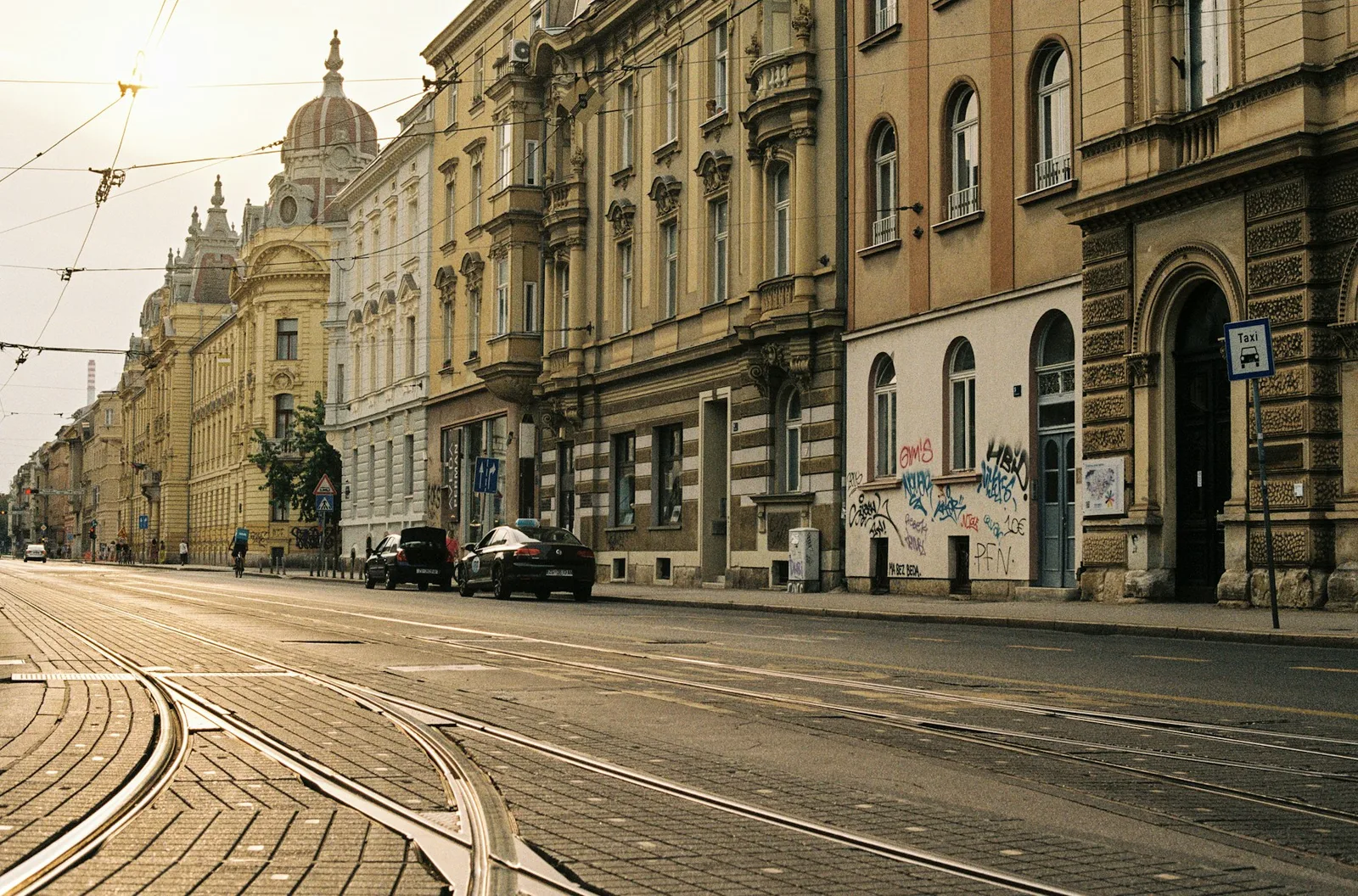
A half-day Donji Grad route (no rush)
- Start at King Tomislav Square → Art Pavilion area.
- Walk into Zrinjevac → sit for 15 minutes (mandatory).
- Choose one museum → then a long coffee.
- Optional: Botanical Garden detour.
- Evening: dinner + an unhurried walk back through the center.
Where to stay (quick decision)
- Best for first-timers: Donji Grad / near the center for walkability.
- Best for easy transport: near a tram line (you can still be quiet at night).
- Best for a classic city-break feel: parks + cafés within a 15-minute walk.
Pair it with Upper Town (best contrast)
Upper Town is texture and viewpoints; Donji Grad is boulevards and parks. Doing both makes the city click.
What a Donji Grad day should add to the trip
Donji Grad is the practical and architectural heart of a Zagreb city break: the Green Horseshoe, museums, cafés, transport and evening routes form a flexible central base.
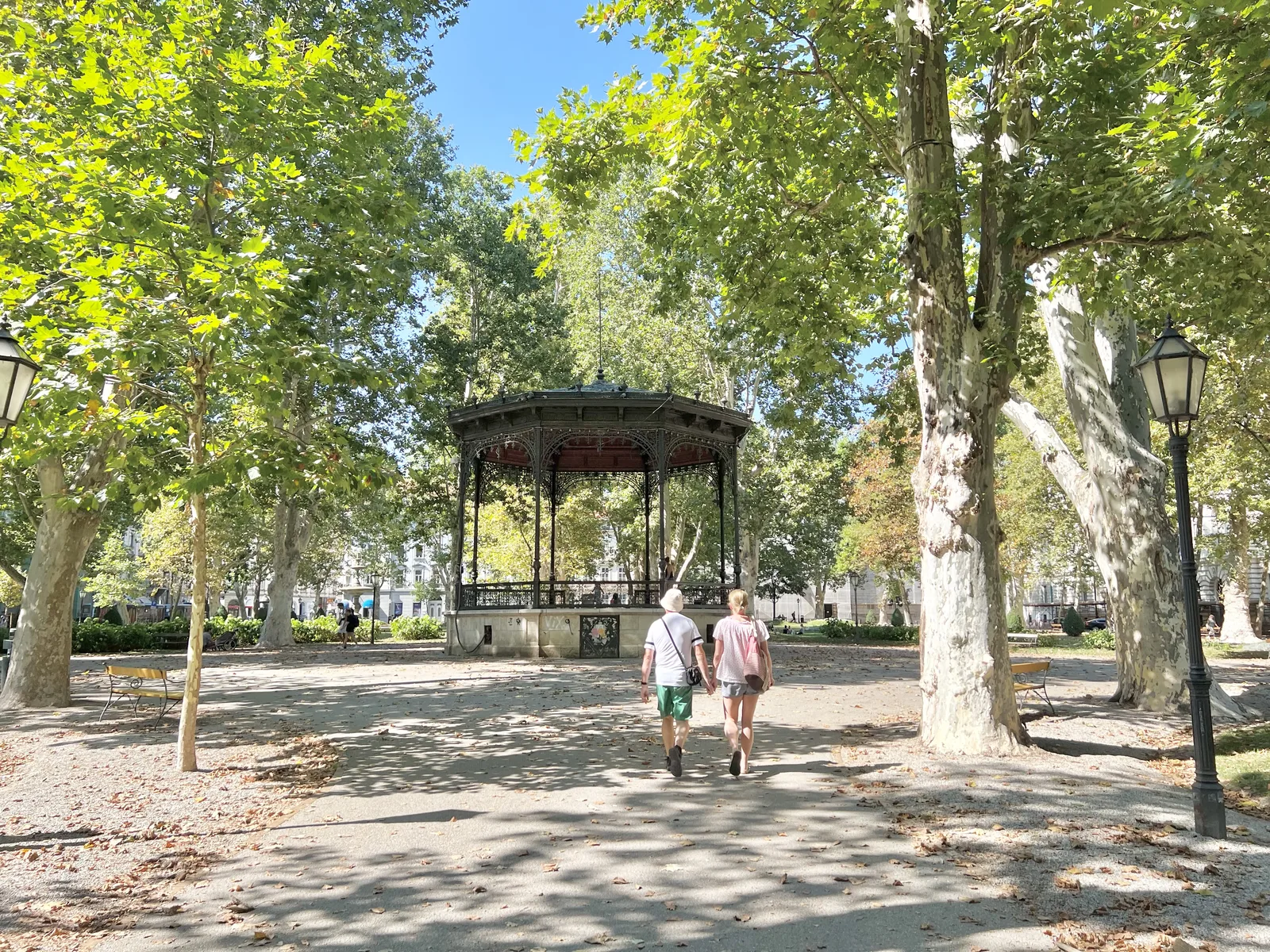
A route and pace that make a Donji Grad day work
Walk Zrinjevac and a selected horseshoe section, choose one museum and finish near HNK, Cvjetni or the main-square side. Divide the district across days rather than tracing every park at once.
The choices, trade-offs and common mistake
Stay here for flat central convenience and multiple route choices; visit from Upper Town for the parks and culture. The exact street determines noise, station access and evening mood.
Central does not mean silent or step-free. Check room orientation, lift, tram noise and the final approach, especially around events or major streets.
Weather, current information and the fallback plan
In rain, use nearby museums and cafés with short park transitions. If one institution is closed, the district offers several same-area substitutes without remapping the day.
The Green Horseshoe as the district's structure
The Green Horseshoe (Lenuci's Horseshoe) isn't a bonus park to squeeze in between sights — it's the organising structure of Donji Grad itself. The parks and squares form a connected chain that loops through the district, and most of the museums, theatres and civic buildings sit along its edges rather than scattered independently. Once you see the Horseshoe as the route rather than as decoration around the route, Donji Grad stops feeling like a grid of streets to decode.
- Squares and parks link up, so you rarely need to detour far to reach the next green space.
- Major museums and the theatre cluster along the Horseshoe's edge rather than deep inside residential blocks.
- Walking one continuous section of the Horseshoe covers more ground, with less backtracking, than jumping between individual streets.
Three sides of the Horseshoe: east, station, west
The Horseshoe is easier to use as three linked chapters. Zrinjevac and the eastern squares form the most direct continuation from the main-square side. King Tomislav Square, the Art Pavilion and the railway-station frontage create the southern hinge. The western arm returns through the Botanical Garden, Marulić and Mažuranić squares towards the Croatian National Theatre. Each chapter mixes landscape with institutions, but the atmosphere and best entry point differ.
Start on the eastern side when arriving from Ban Jelačić Square, use the southern hinge when a train journey or station-side hotel shapes the day, and choose the western arm for the Botanical Garden, HNK or nearby museums. Walking all three is possible, but a first visit often gains more from one complete arm plus a chosen interior. The Horseshoe is an urban structure to understand, not a fitness loop whose outline must be completed.
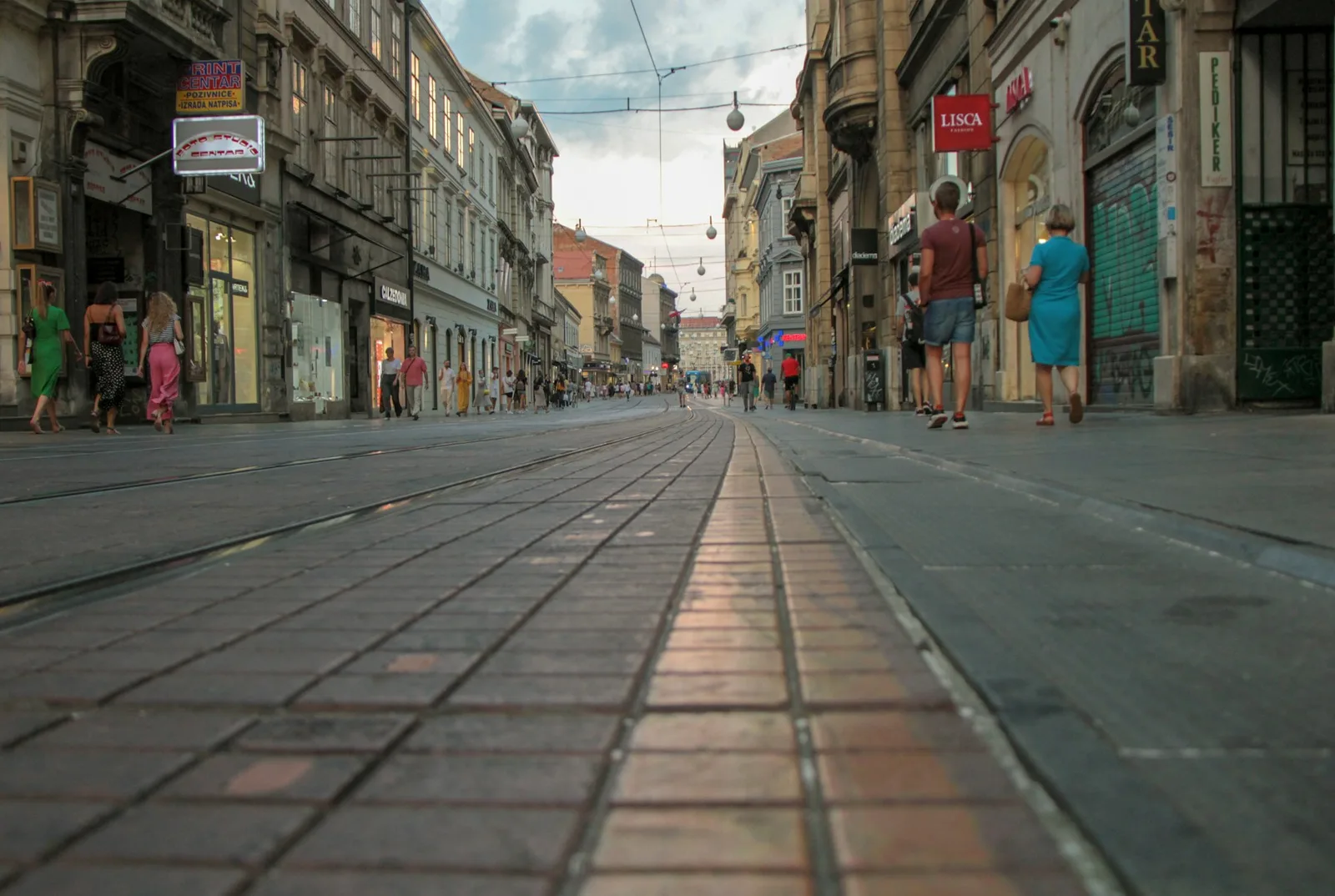
Choosing among Donji Grad's museums
Donji Grad concentrates most of central Zagreb's museum options, which makes restraint more useful here than in Upper Town. The temptation is to string three or four institutions together in one day; the better plan is one museum plus a proper park break plus a long coffee — a rhythm that leaves room to actually absorb what you've seen rather than rushing to the next door.
Which single museum to choose depends on interest rather than any objective ranking: a general collection suits a first visit to the district, while a smaller, specialist museum suits a second or third trip once you already know the area's shape. Either way, pairing the museum with a nearby park stretch, rather than another indoor stop, keeps the day balanced.
Parks as rhythm, not detours
The park breaks built into the Horseshoe aren't optional padding — they're what stops a Donji Grad day from feeling like a march between buildings. A short pause on a bench in Zrinjevac, or a slower stretch through the Botanical Garden, resets the pace before the next indoor stop and is part of what makes the district feel liveable rather than purely sight-driven.
- Treat any park crossing as a built-in break, not just a shortcut between two other things.
- Zrinjevac works well as a short mid-route pause; the Botanical Garden suits a longer, slower detour.
- On a tight schedule, protect at least one proper park stop rather than cutting all of them.
Cafés and evenings: the low-effort plan
Donji Grad doesn't need an elaborate evening plan to deliver a good night. A long coffee earlier in the day and dinner near the HNK or Cvjetni side of the district, followed by an unhurried walk back through the parks, covers most of what a classic Zagreb evening is meant to feel like. The area's flat streets and general walkability make this kind of loosely planned evening easy to pull off without much logistics.
This is also where Donji Grad differs most from Upper Town: the pleasure here is horizontal and social — cafés, boulevards, a slow dinner — rather than vertical and scenic. Save the viewpoint-chasing evening for Upper Town, and let a Donji Grad evening simply unspool at street level.
Arrival and trams: how the geometry works
Donji Grad's flat layout and central trams make it the easiest part of the city to arrive into and move around without much planning. Because the Horseshoe threads through the district, a tram stop near one edge of the parks often puts you within easy walking reach of several other stops on the loop, rather than requiring a second ride.
- Arriving by train puts you near the station-side section of the Horseshoe by default.
- From most central trams, you're rarely more than a short walk from some part of the park loop.
- Use the flat geometry to your advantage: it's easier to walk between two Horseshoe sections here than to work out a transfer.
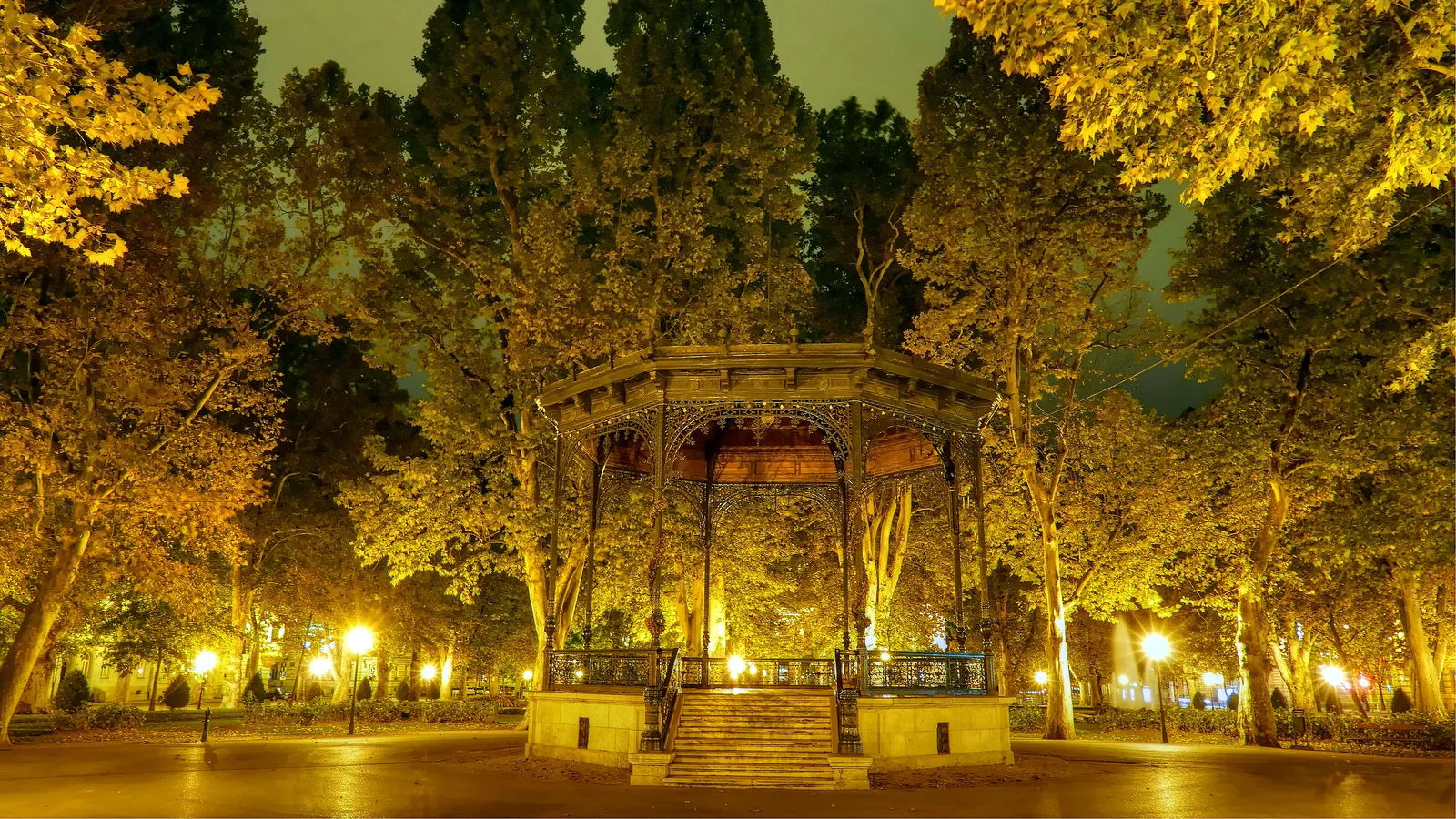
Architecture worth slowing down for
Donji Grad's streets carry the district's postcard reputation for a reason: wide boulevards, historic facades and a consistent architectural character that rewards simply walking without a fixed destination for part of the day. This is the one hour worth deliberately leaving unplanned — no museum, no café stop, just the streets themselves.
The Horseshoe's civic buildings — the theatre, the pavilion, the museums along its edge — were built to be seen from the parks facing them, so the best architectural views often come from a bench rather than from directly outside the building. Slowing down here pays off more than trying to photograph every facade up close.
Accessibility and accommodation trade-offs
Donji Grad's flat streets make it the more accessible half of central Zagreb, and that's a real factor when choosing where to base yourself, not just where to walk. A room here trades Upper Town's atmosphere for step-free streets, closer tram access and an easier late-night return.
- Being central here doesn't automatically mean quiet — check which side of a building faces a tram line or a busy street.
- Ground-floor or lift access matters more for older buildings in this district than the location itself suggests.
- For most first-time visitors, walkability and flat terrain outweigh the loss of Upper Town's hilltop atmosphere.
A one-day Donji Grad route, start to finish
- Arrive near King Tomislav Square and let the Art Pavilion set the tone for the eastern Horseshoe.
- Walk into Zrinjevac and sit for a proper break before continuing.
- Choose one museum for the day and pair it with a long coffee afterwards.
- Detour west to the Botanical Garden if you want a quieter, greener finish to the afternoon.
- End near HNK or Cvjetni for dinner, then walk back through the parks rather than taking transport.
This route deliberately covers only one side of the Horseshoe in depth rather than rushing the full loop. Save the other stretch for a second day or a slower return visit — Donji Grad holds up well to being explored in sections rather than all at once.
Where Donji Grad joins the rest of the city
The district is most useful as Zagreb’s hinge. North, short streets lead back to Ban Jelačić Square, Dolac and the Upper Town climb. East and west, tram corridors extend into residential and cultural areas. South, the station side and routes across the railway or towards Novi Zagreb change the travel scale. A Lower Town base therefore serves several different days without requiring the same morning direction twice.
Use that connectivity selectively. Walk within the park-and-museum grid, take a tram when it meaningfully removes an outer transition, and avoid riding one or two stops because the tracks make transport look obligatory. At night, choose the return that stays simple for the group. A central district is valuable not because everything is on its doorstep, but because several coherent versions of Zagreb begin there.
Questions people actually ask
Is Donji Grad a good place to stay?
Yes. For most visitors it’s the easiest base: walkable, central, and packed with cafés, parks, and museums.
What’s the fastest “Donji Grad” experience?
Walk Zrinjevac, do one museum, then sit for a long coffee. That’s the Lower Town rhythm in three moves.