Why Zrinjevac is a must-do pause
Zrinjevac (Trg Nikole Šubića Zrinskog) is the park that proves Zagreb is a “green center” city. It’s close to everything, but it feels like a small, elegant break from the streets.
It’s named after Nikola Šubić Zrinski and is often described as the first and most famous square in the city’s Green Horseshoe — a chain of Lower Town parks and squares that makes Zagreb feel airy and walkable.
What to do here (simple)
- Do a slow promenade loop and treat it like a mini ritual.
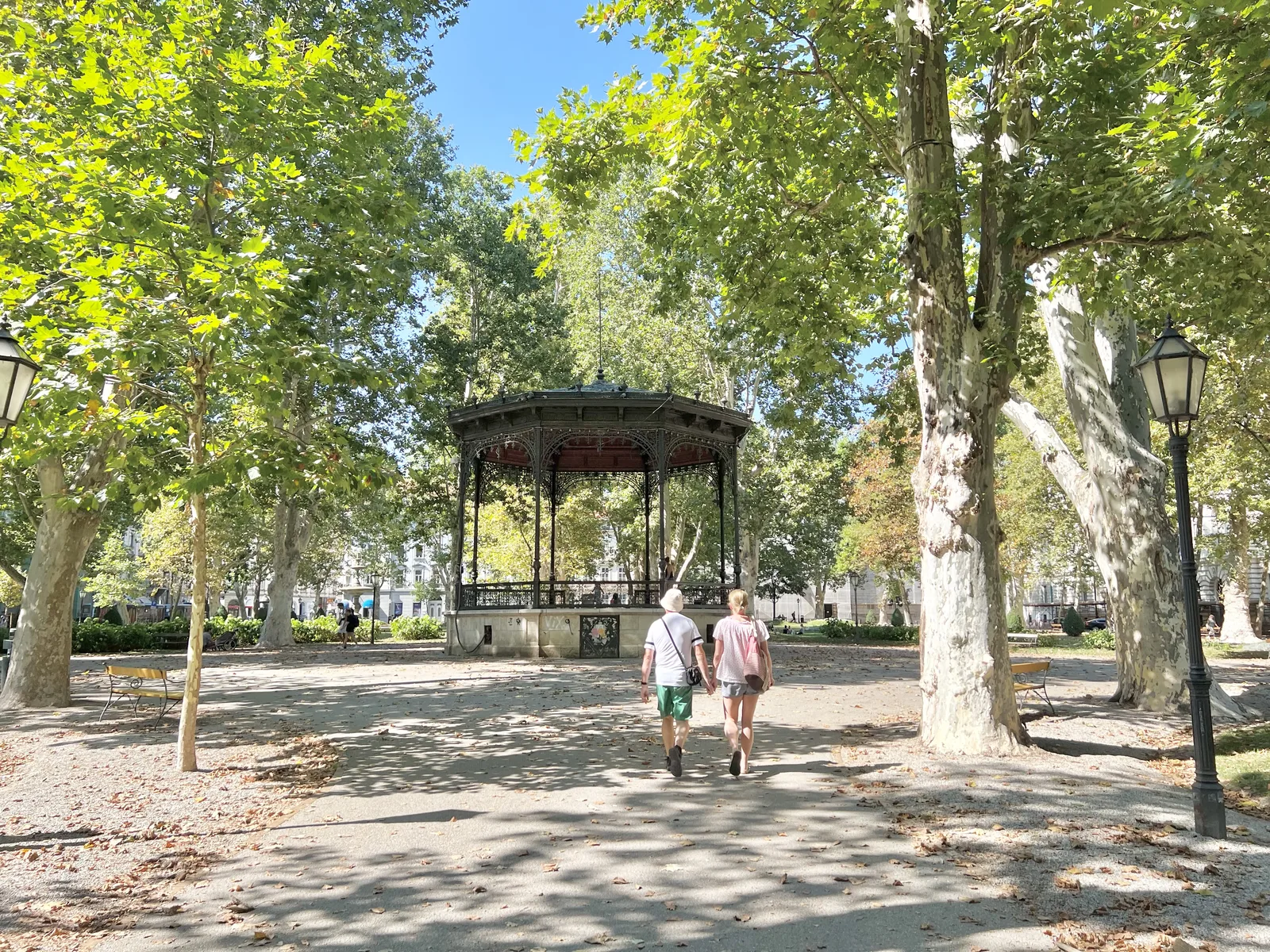
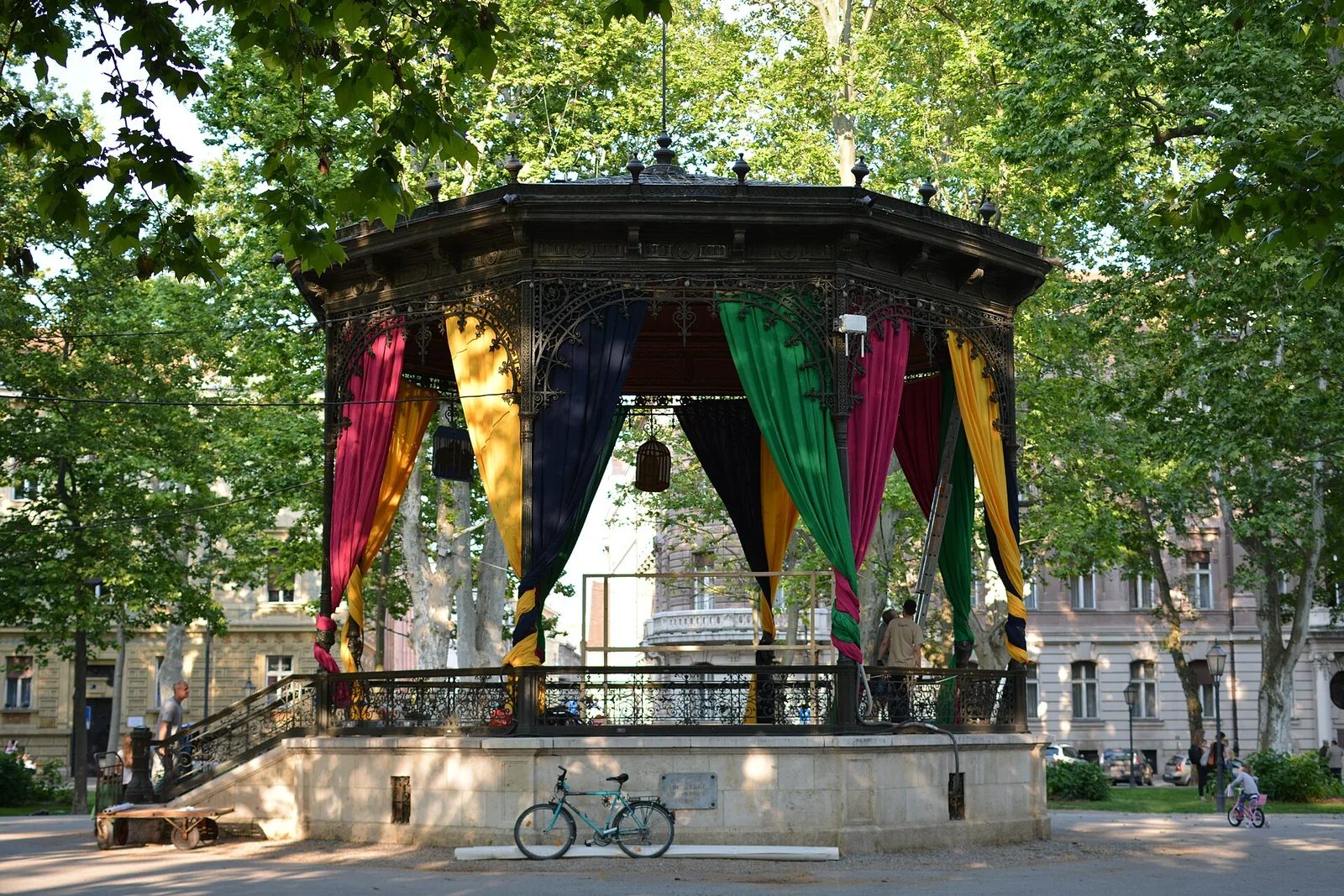
- Stop by the music pavilion and the fountains (especially when concerts/events are on).
- Use it as a “between” moment: museum → Zrinjevac bench → coffee terrace.
- If you’re visiting in winter, Zrinjevac is one of the classic Advent atmosphere zones to walk through.
How it fits into the Green Horseshoe
Think of Zrinjevac as your “starter square” for the Green Horseshoe walk: you can wander from here toward King Tomislav Square, the Art Pavilion area, and the Botanical Garden without needing a plan.
- Short version (30–45 min): Zrinjevac loop + a café stop.
- Medium version (60–90 min): Zrinjevac → Tomislavac → back through the center.
- Long version (2–3 hours): do the full Green Horseshoe style walk and add one museum stop.
A perfect pairing (park + culture)
If you want the most “Zagreb” use of Zrinjevac, pair it with one cultural stop and one long coffee.
Why Zrinjevac Park belongs in the day
Zrinjevac is Lower Town’s most effortless green pause and one of the clearest introductions to the Green Horseshoe. The park’s symmetry, mature trees and surrounding institutions show how landscape and civic architecture work together in central Zagreb.
Use Zrinjevac between Ban Jelačić Square and the southern Lower Town parks, or return after dinner for a shorter evening loop. It connects naturally with the Archaeological Museum area and nearby galleries without demanding that the full horseshoe be walked at once.
What to notice and how to decide
Stand back to read the park’s formal layout, then notice the pavilion, paths, benches and façades that define its edges. The everyday use of the space is part of its character. A seated pause reveals more than a fast diagonal crossing on the way elsewhere.
The park is easy to encounter but weather, events and seasonal decoration can change its mood and circulation. Paths may be busy during programmes. Travellers with limited mobility should still check the exact approach and any temporary diversions rather than assuming every edge is equivalent.
Prioritise Zrinjevac as a pause, orientation point and evening reset, not as a half-day attraction. It suits nearly every first visit because it improves routes already passing through Lower Town. Choose Maksimir or Jarun when a substantial green escape is the actual goal.
Use Zrinjevac as a hinge, not a standalone destination
Zrinjevac works because it joins chapters of a central day. It can sit between Ban Jelačić Square and the station, begin a Lower Town park sequence, or provide a bench pause between a museum and meal. Decide what comes before and after, then let the park absorb the transition. A dedicated cross-city journey for a ten-minute loop misses its strength; a deliberate twenty-minute pause inside a coherent walk reveals why the square matters to Zagreb’s daily rhythm.
Orient at the perimeter before cutting diagonally across paths. Notice the relationship between the planted square, surrounding institutional facades, central pavilion and the streets that continue the Green Horseshoe. Choose one exit towards the next fixed commitment rather than circling until the route feels complete. If a temporary event changes the centre, follow barriers and use the open edge instead of walking through staff areas.
Read day, night and Advent as different layers
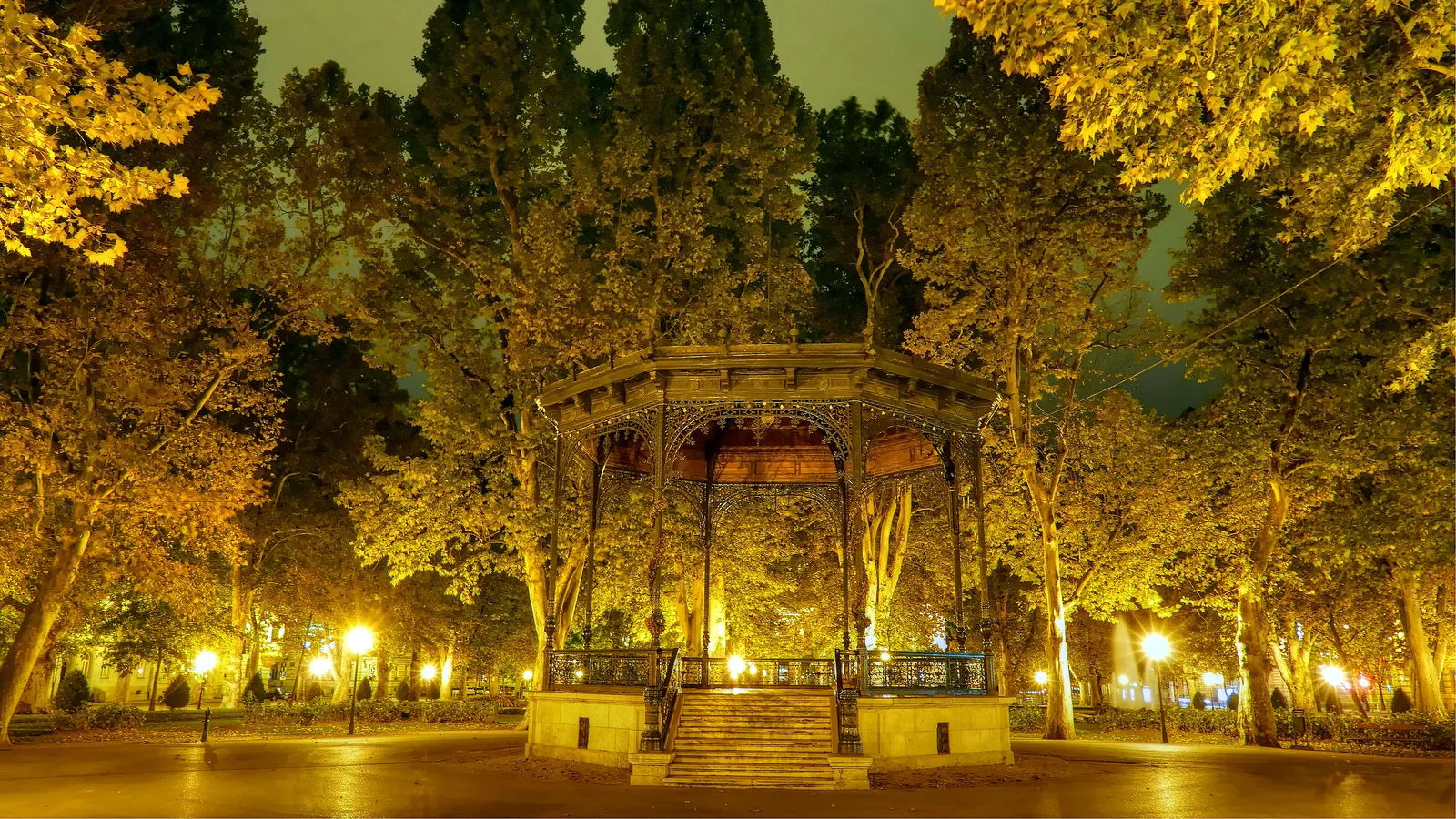
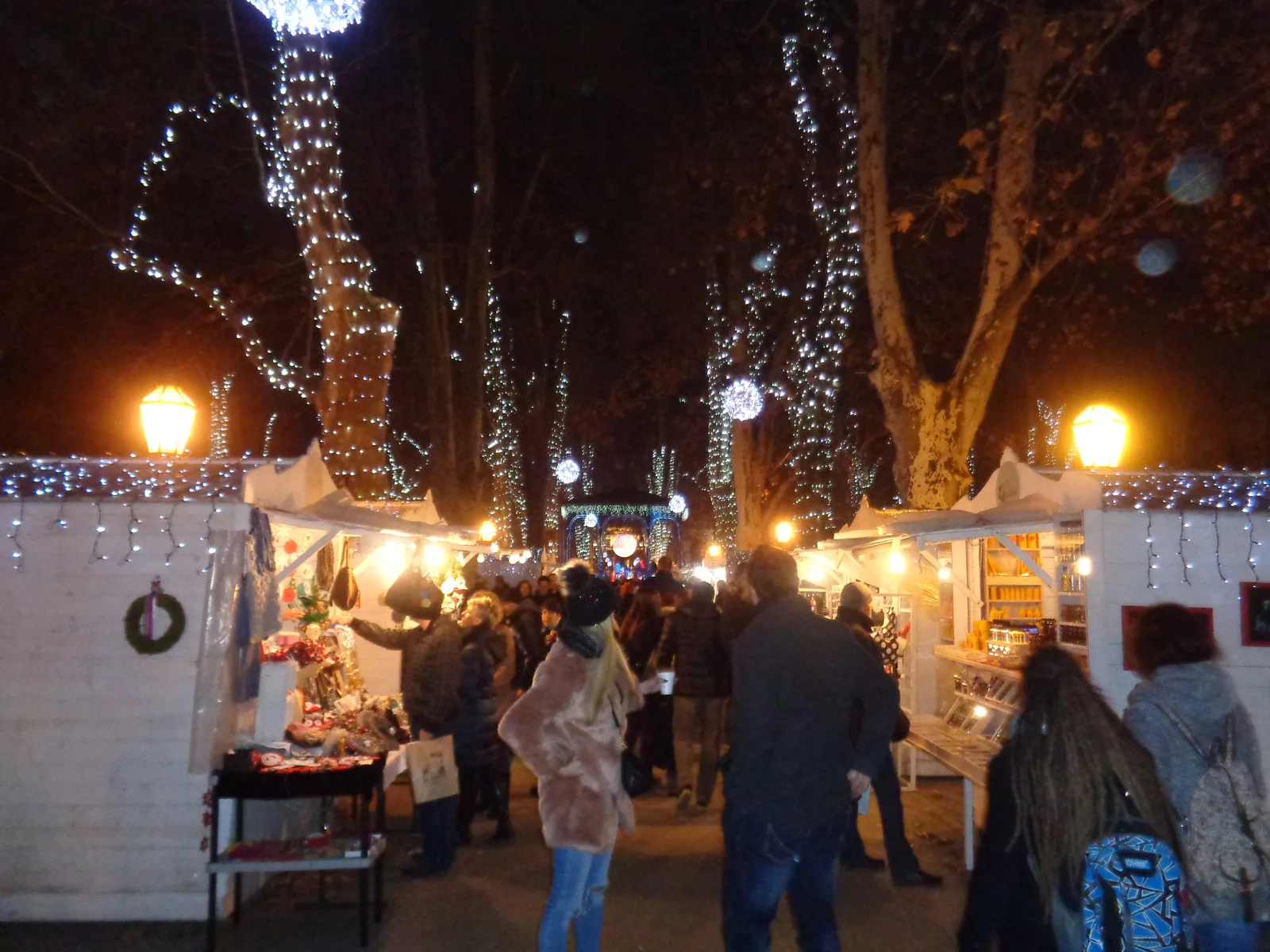
By day, mature trees, paths and building edges explain Zrinjevac as public landscape. At night, ordinary lighting and fewer visual distractions change the scale. During Advent, temporary cabins, decoration and crowds can transform the same paths again. None of these photographs describes the park permanently. The current programme determines whether an event is present, while the underlying square remains worth understanding without a stage or market.
When an event is running, check its official hours and access, keep clear of cables and working zones and do not assume every bench or path remains available. On a normal evening, stay aware of cycle, pedestrian and roadway edges as light falls. A night photograph should be made from a stable legal place without blocking the path. In winter, dress for standing; a central park can feel colder when the visit becomes an unplanned wait.
Extend south only as far as the day supports
The natural extension runs through the Lower Town park system towards King Tomislav Square, the station area and, on a longer route, the Botanical Garden. Build a short, medium or long version according to weather and admission times. The Garden is a managed collection with seasonal hours and last entry, not an open park that can be added whenever the group arrives. Check its official page before making it the endpoint.
A medium route can stop at Tomislav Square or the station architecture and return by a different nearby street. A long route should include only one museum or indoor anchor; otherwise the park sequence becomes fragmented by tickets. Mixed-mobility groups should inspect kerbs, crossings, tram interfaces and the continuous surface rather than assuming that every green square connects step-free. Use marked crossings and never stand on tram tracks for a centred composition.
Share the square with residents and events
Zrinjevac is not a scenic waiting room reserved for visitors. Keep groups to one side of the path, leave benches available after a reasonable pause and keep music personal. Do not attach decorations, hammocks or equipment to trees, step into planted beds or feed birds. A picnic belongs only where current park rules permit it and should leave no trace. Use public toilets or a staffed venue rather than treating shrubbery as infrastructure.
Ask before making a close portrait of another visitor or event worker. Commercial shoots, drones, large lighting or a tripod layout can require permission and must never displace ordinary circulation. Families should establish a fixed meeting point before a crowded event and keep children away from the road and tram edges. When a concert or market fills the square, the responsible option may be enjoying one edge and continuing to another park.
Weather and access can shorten a central pause
Tree cover provides shade but is not protection during lightning or strong wind. Move to a substantial building when storms approach and respect closures after branch damage. Rain makes paving, leaves and tram interfaces slippery; heat makes water and a shorter midday stop important. Fill a bottle at accommodation or a verified drinking-water fixture rather than using an ornamental fountain.
The central position creates many exit options, which is Zrinjevac’s strongest access feature. It does not prove every kerb, temporary ramp, path or event layout suits every visitor. Identify the entry that works, the nearest suitable toilet and the next indoor rest. If the park is only a green reset between commitments, ten comfortable minutes can be better than completing every path in poor conditions.
Choose a nearby stay for the whole Lower Town, not one bench
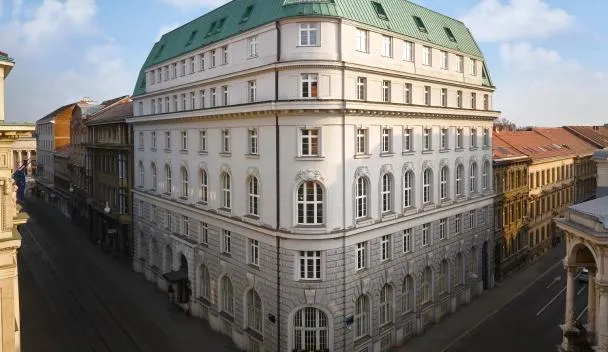
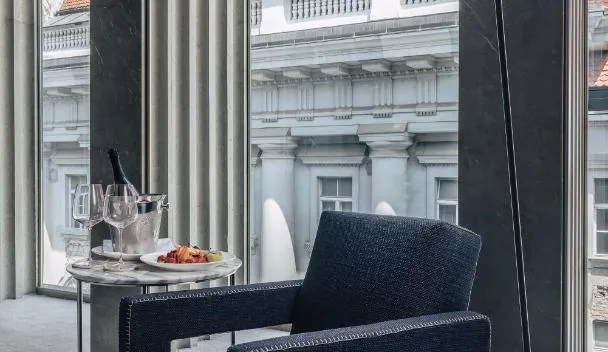
Zrinjevac is too central to justify choosing accommodation by the park alone. Instead ask whether the hotel makes the wider Lower Town sequence, arrival and evening return coherent. Amadria Park Hotel Capital keeps the main square and eastern side of the park route close; Esplanade anchors the railway station and southern parks; Met Boutique Hotel places a design-led stay near the central civic axis. We picked these as different route propositions, not as interchangeable luxury labels.
Read the exact room, noise orientation, access path and cancellation terms. A central event can alter street sound and taxi access temporarily, while a quieter facade may face away from the park entirely. The hotel should support several chapters—market morning, museum, park walk and direct return—rather than promising a permanent green view. When Zrinjevac hosts Advent or another programme, check the live map before assuming the property sits inside or outside the busiest zone. Save the confirmed entrance before arrival, and ask about a quieter room orientation when sleep matters during a city event or festival.