
How Zagreb “works” (so you enjoy it fast)
Zagreb isn’t a checklist city — it’s a rhythm city. The magic is in the in-betweens: terraces, parks, little streets connecting Upper and Lower Town, and evenings that stretch longer than you planned.
Plan 2–3 anchor moments per day, then leave space for wandering. Your best memories will usually be unplanned.
Your first-timer must-do list
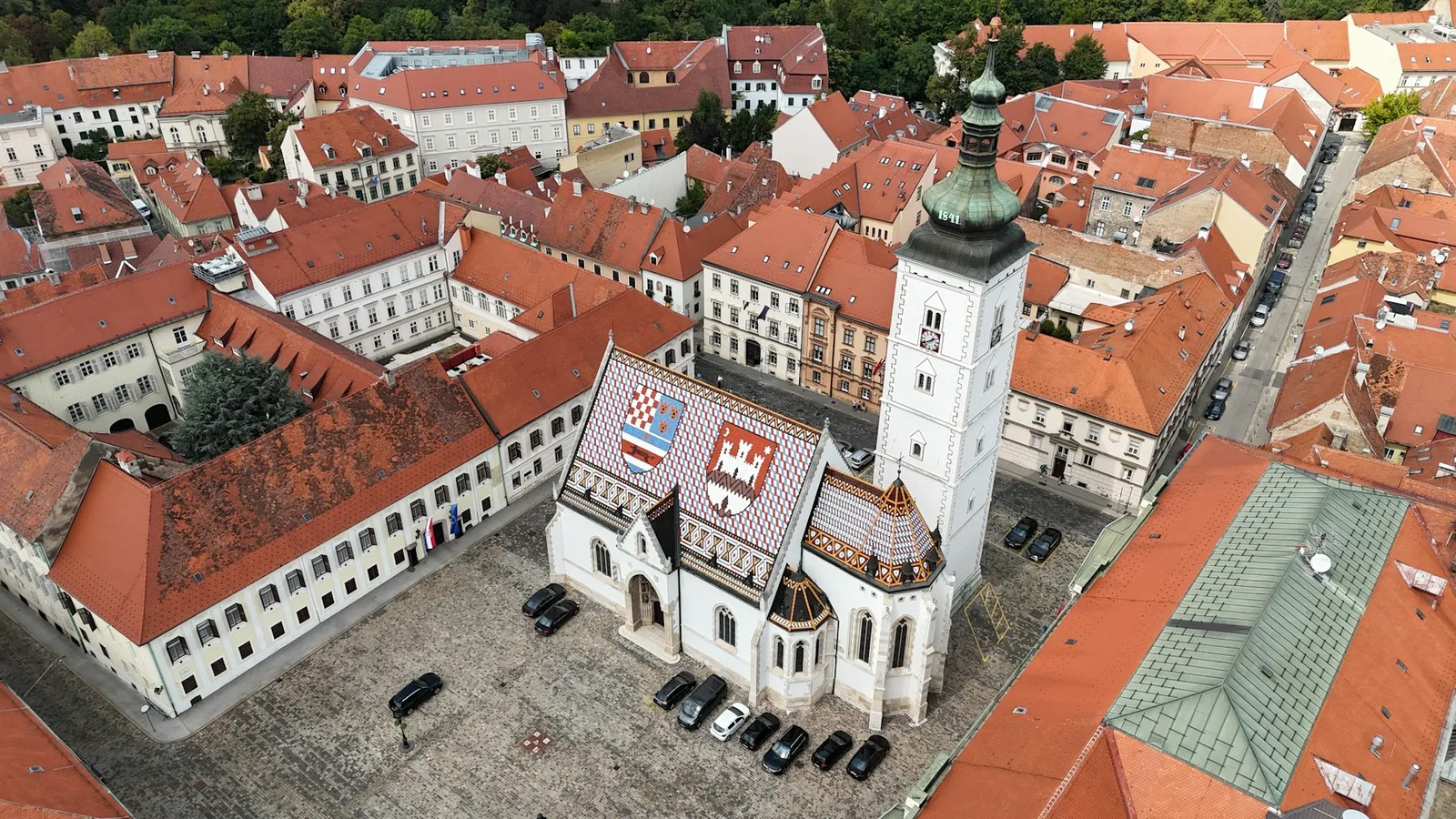
- Wander Upper Town (Gornji Grad): St. Mark’s Church, Stone Gate, viewpoints.
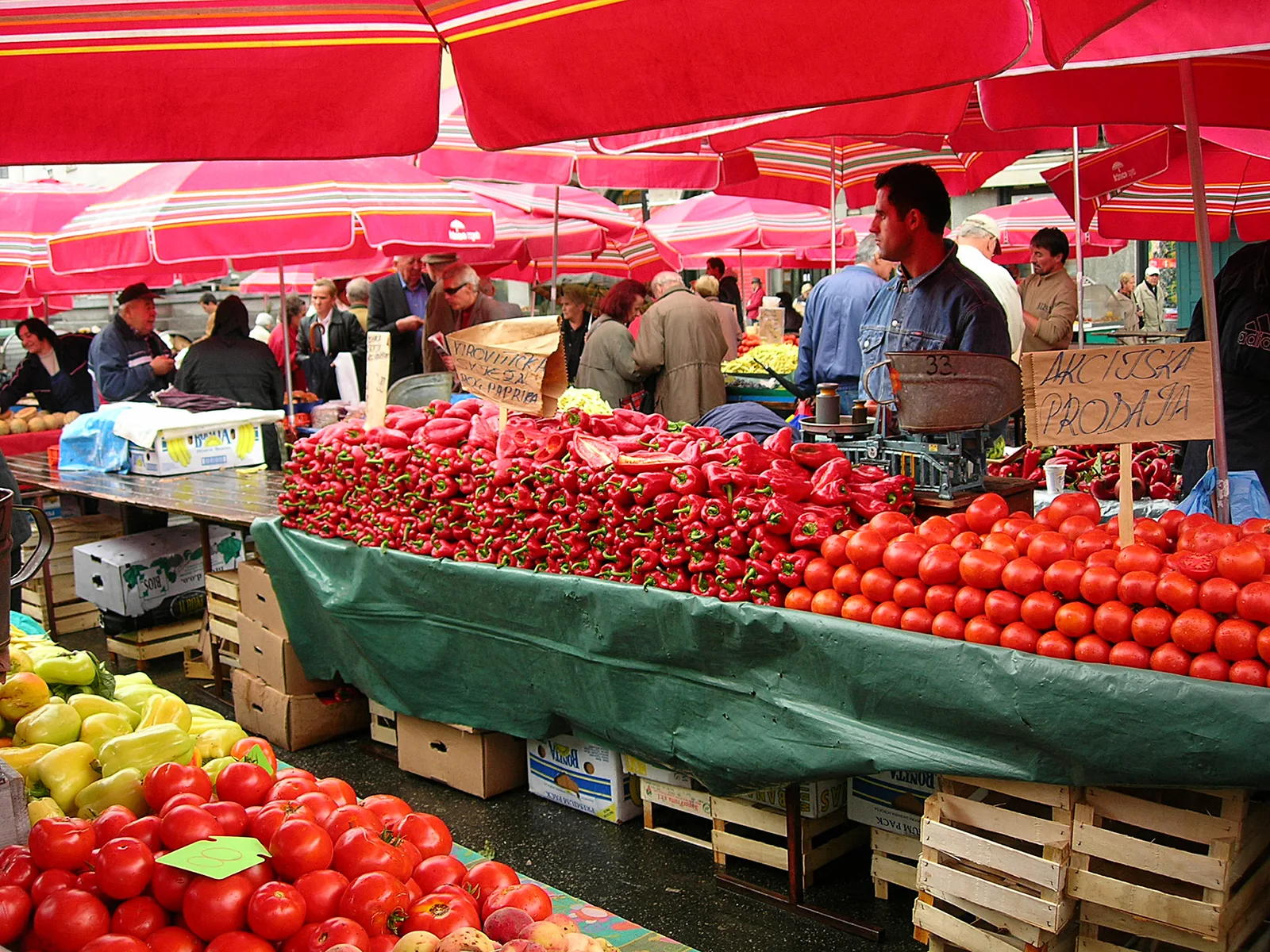
- Start your morning at Dolac Market and treat it like a local ritual.
- Pick 1–2 museums (not five) — quality over quantity.
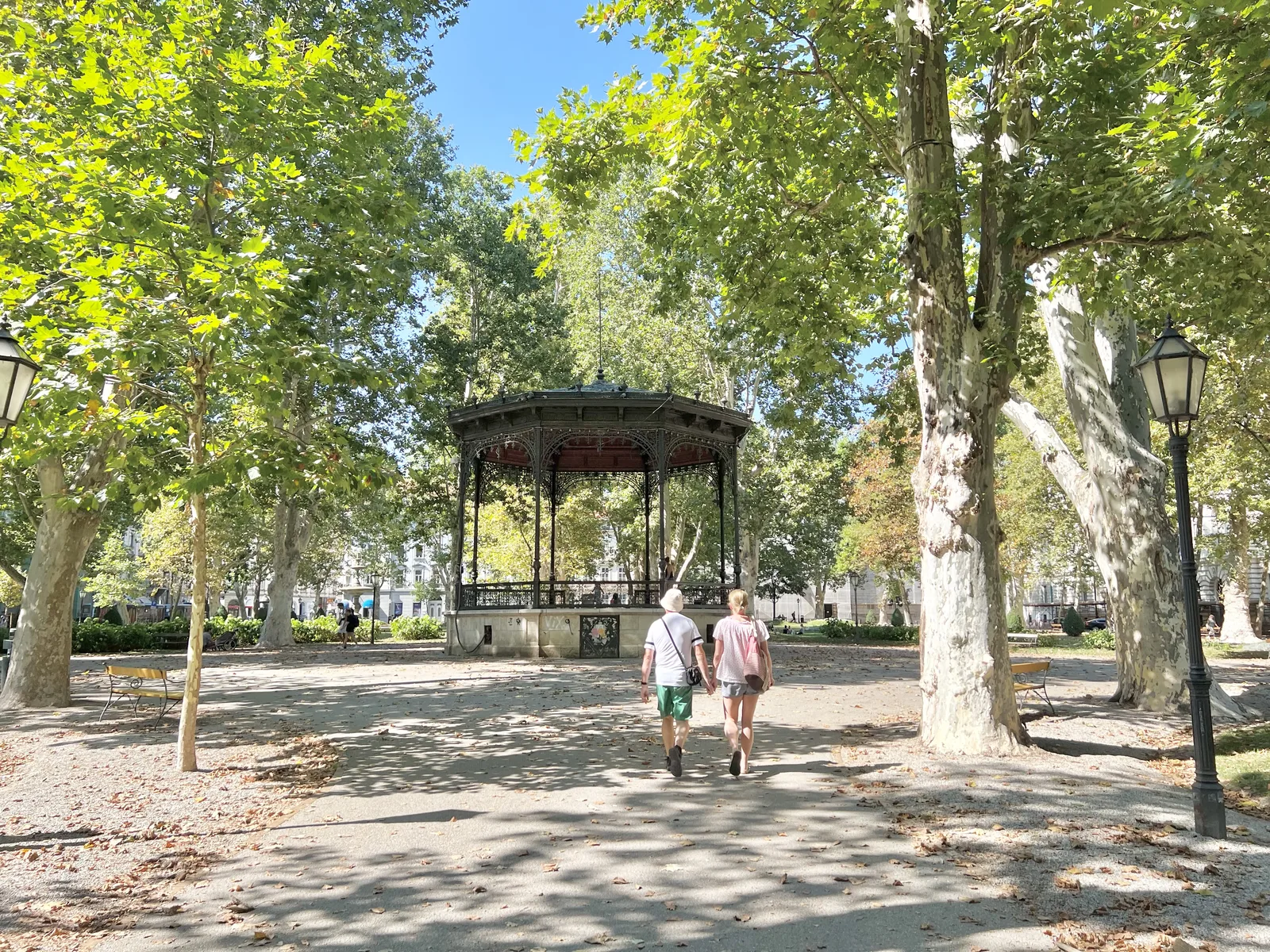
- Do a Lower Town park loop and notice how green the center feels.
- End a night on foot: city lights + calm streets = Zagreb at its best.
Where to stay (simple picks)
Stay central if your trip is short. Zagreb’s center is compact and the tram network makes everything else easy.
- Lower Town / Center: best for first-time convenience, architecture, parks, and day-to-night options.
- Upper Town edges: romantic, quiet evenings, and postcard views — but more stairs.
- Jarun: great if you want lakeside runs, summer energy, and a more local feel.
Getting around (walk + tram = perfect)
Most visitors do 70% walking and 30% tram. Trams are frequent and intuitive once you learn a couple of landmark stops.
- Walk the core: Ban Jelačić Square ↔ Dolac ↔ Upper Town ↔ Lower Town parks is best on foot.
- Use trams for longer hops: center ↔ Maksimir, center ↔ Jarun, center ↔ neighborhoods.
- If you ever feel slightly lost, reset at Ban Jelačić Square — it’s the easiest orientation point.
Getting in from the airport (choose the easy option)
Most first-timers do best with the simplest arrival logistics: shuttle to the central bus station, then a short tram/taxi hop — or a taxi/ride-hail door-to-door if arriving late.
- Arriving late or with heavy luggage: taxi/ride-hail is usually worth it.
- Arriving daytime and staying central: shuttle → quick final hop is easy and budget-friendly.
- If you choose public transport from the airport: be ready for more moving parts (zones + transfers).
A 2-day first trip (balanced)
- Day 1: Dolac → Cathedral area → Upper Town sights → museum → dinner street-life.
- Day 2: Lower Town parks → one big museum → Maksimir or Jarun → sunset walk.
Add a third day for a day trip (Samobor, Varaždin, Trakošćan, or Medvednica) or for slow café-hopping.
If you have 3 days (the ‘best of both worlds’ plan)
Three days lets you keep the city-break vibe while adding one escape or a deeper neighborhood day.
- Day 1: market + Upper Town + one museum + night walk.
- Day 2: parks + one major museum + Maksimir/Jarun.
- Day 3: easy day trip (Samobor/Sljeme) or a slow city day (Mirogoj + cafés + galleries).
First-timer mistakes (easy to avoid)
- Trying to do too many museums: pick 1–2 per day, then balance with parks and cafés.
- Skipping the night walk: Zagreb’s center is softer, prettier, and more relaxed after dark.
- Treating Upper Town as a ‘quick stop’: it’s best as a slow loop with viewpoints.
- Overplanning meals: book one special dinner, keep the rest casual and flexible.
Your first twenty-four hours: orient, do not optimise
On arrival, resist the urge to turn the first afternoon into a full sightseeing route. Put down your bags, walk to Ban Jelačić Square, find Dolac and take a coffee nearby. That simple loop tells you more about the layout of Zagreb than an hour with a map, and it leaves the bigger Upper Town and museum choices for when you have more energy.
If you arrive in the evening, reverse the logic. Check in, take a short central walk, have dinner within walking distance and let the city be new in low light. The next morning will feel much easier because the square, the main streets and the route back to your accommodation are already familiar. There is no prize for completing the headline sights before you have found the rhythm of the centre.
Make one neighbourhood decision before booking
For a first visit, Lower Town or the station side is usually the right answer. You can walk to museums, parks, the market and dinner, and you are not dependent on transport at the end of the day. Upper Town is appealing when the historic atmosphere is genuinely part of the trip, but it comes with slopes, cobbles and a little less day-to-day convenience.
Hotel Jägerhorn is a historic, central character stay with a tucked-away courtyard; Esplanade Zagreb Hotel makes the station side feel like an occasion; Canopy by Hilton Zagreb City Centre is a polished contemporary alternative. These are researched stays rather than a generic ranking. Use their individual pages to compare the room, the building and the current booking conditions after you choose the area.


Getting around without making transport the story
Walk the central core and use trams as an energy-saving tool, not a puzzle to solve. Ban Jelačić Square is the useful mental reset point: Dolac, Upper Town and the Lower Town parks all connect naturally from there. When the day takes you farther out—to Maksimir, Jarun or a residential neighbourhood—a tram is often the simplest way to keep the plan pleasant.
Do not build a first day around a complicated chain of connections. If a place needs a long tram journey and another change, leave it for a day when it is the actual goal. A first-time itinerary works best when the distance between stops is legible on foot. The transport guide has the current ticket and validation details; this guide is about knowing when the walk is the better experience.
Build the first full day around one upward walk and one downward walk
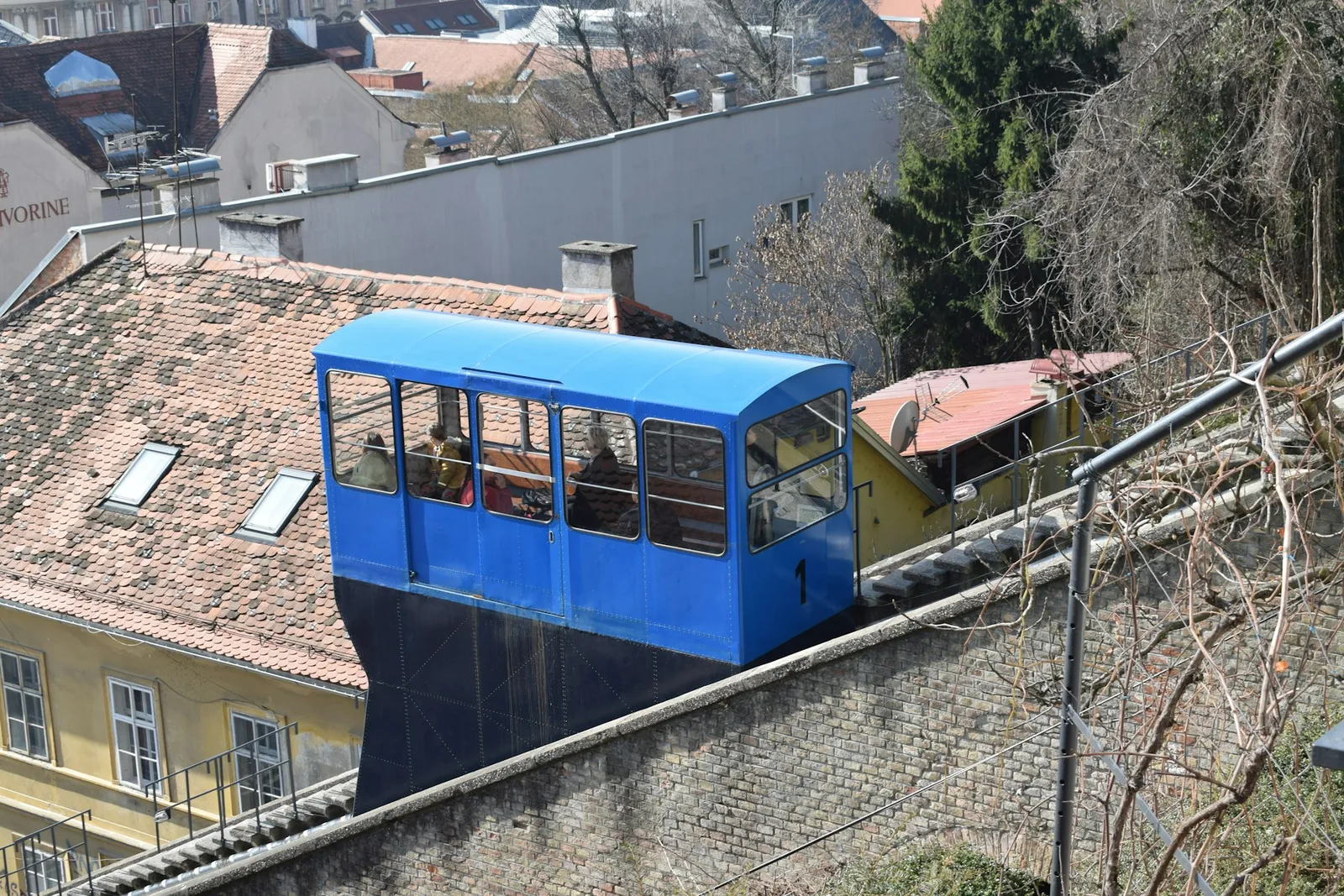
Make Upper Town the upward walk: Dolac, the Cathedral area, the climb or funicular, then St. Mark’s, the Stone Gate and Strossmayer Promenade. Do not treat it as a line of photo stops. It becomes memorable when you leave enough time to drift through the smaller lanes and choose one pause—an indoor museum, a church, a view or simply a bench.
Make Lower Town the downward walk: descend gradually, choose one museum if it suits the weather, and pass through the parks before dinner. This is the part of Zagreb that explains why a city break here is not just an old-town visit. The architecture becomes more spacious, the café rhythm returns, and the route home can be the whole evening’s final activity.
Let weather choose the material, not ruin the structure
A rainy first day is still a good Zagreb day if you preserve the shape: one museum, one café, one short covered or low-stress walk, then dinner. The Museum of Broken Relationships, Technical Museum or another focused indoor visit can be the anchor; the goal is not to make up for the weather by staying indoors from morning to night.
In summer, start the longer Upper Town walk early or late and keep the middle of the day loose. In winter, make warmth part of the itinerary rather than an emergency: a café between walks, an early dinner, a short Advent loop rather than every square. Spring and autumn are the easiest seasons for a parks-and-streets plan, but the same principle applies in every month—keep one indoor alternative close to the route.
How to use a second and third day well
On day two, do not repeat Upper Town at a faster pace. Choose a different texture: Lower Town parks and a deeper museum, Maksimir for green space, Jarun for a summer evening, or a neighbourhood beyond the postcard core. This makes the trip feel like a city rather than a central sightseeing circuit.
A third day is where a day trip or slower local day begins to make sense. Samobor is the gentler change of scene; Medvednica offers the mountain backdrop; Mirogoj and galleries can make a quiet in-city day. Choose one. Trying to do a large day trip, a full museum day and a final big dinner in the same window usually makes the extra day feel less generous than the first two.
The habits that make a first trip feel less generic
Take one coffee seriously, repeat one route, and leave one evening without a second booking. Those small habits are more useful than a secret list of venues because they let the city develop a personality around your trip. The same terrace seen twice, or the same park crossed at different times of day, becomes a better memory than a tenth attraction with no time around it.
Before you leave, take the long route home once: through the centre after dinner, up toward a view, or past a park that you rushed through on day one. Zagreb is compact enough to reward that kind of return. It is the simplest way to notice what you missed without turning the trip into another task.
Eat and drink as part of the route
A first-time food plan should be modest: market snacks or a bakery in the morning, a coffee stop that lasts, one dinner worth sitting over, and perhaps dessert or a bar afterward. Zagreb is not best experienced as a sprint between every recommended restaurant. Choose the kind of meal you care about, then let the streets around it determine the rest of the evening.
Tkalčićeva is useful when you want obvious central energy, while Lower Town and residential streets offer a calmer change of pace. Reserve one special dinner on a weekend if that matters; keep the remaining meals flexible enough to follow your walking day. A meal after Upper Town, a park loop or a museum is more satisfying when it is the next natural step rather than a crossing-town obligation.
Use evenings to understand the city, not extend the checklist
The first evening needs only one good plan: dinner within a sensible walk of the hotel, followed by an unhurried route back through the centre. This is when Zagreb often makes the most sense. The busiest daytime corners become quieter, the city’s scale feels more intimate, and there is no pressure to decide which attraction deserves another ticket.
If you have energy, add one purposeful detour: Strossmayer Promenade for a view, Tkalčićeva for a drink, or a Lower Town park for a quieter finish. If you do not, walk directly home and save the appetite for the next day. A first trip should create a desire to return to a street, not a feeling that every street has already been consumed.
A final first-timer checklist
Before you go out each day, know your first destination, your one anchor and the general direction home. Before booking, know whether you value central walkability, a landmark hotel, a quieter old-street base or a longer stay with a local rhythm. Before adding a day trip, ask whether you have already given Zagreb itself enough time. These decisions simplify a first visit without turning it into a rigid plan.
For anything time-sensitive—opening hours, transport tickets, airport schedules, event dates or room conditions—use the official and booking links before you commit. The goal of this guide is to give those checks a sensible place in the trip, then leave you free to walk, sit and notice the city once you arrive.
What not to save for the next trip
Do not save the simple things for the final morning: Dolac, a proper coffee, a Lower Town park walk and an Upper Town view are the pieces that make Zagreb feel distinct on a first visit. They are easy to postpone because they look uncomplicated on a map, yet they are the places that make the museum, meal and hotel choices around them cohere.
Also do not save all of Upper Town for a single rushed sunset. See it in daylight when you can read the streets, then return when the light changes if it still feels right. The two visits reveal different city moods, and they stop the evening from carrying the entire weight of the itinerary.
Most of all, do not leave without one unscheduled hour. It may become a second coffee, a market stall, a quiet lane or an early night. On a first trip, that hour is often the point at which Zagreb stops being a guidebook and starts becoming a place you understand.
A good first visit should therefore feel slightly unfinished in the best sense. You will have seen the essential geography, found a favourite route and understood the pace, but you will still have a reason to return for a neighbourhood, a park, a day trip or a season you did not try this time.
That is a more useful aim than a perfect completion score. Zagreb’s real advantage is that the core is easy to learn, while the city keeps enough ordinary life, green space and evening texture outside the obvious route to reward curiosity much later on.
Questions people actually ask
Is Zagreb walkable?
Yes. The core is compact, and the tram network makes longer hops effortless.
Is English widely spoken?
In tourist-facing places, yes — especially in the center.
How many days should first-timers spend in Zagreb?
Two full days is the sweet spot. One day works for essentials; three days adds a day trip, slower meals, and deeper neighborhoods.
What’s the best “first hour” in Zagreb?
Go to Ban Jelačić Square, then walk to Dolac Market and finish with a long coffee. It’s the fastest way to get the city’s rhythm.