
Why Upper Town is the heart of the city
Upper Town (Gornji Grad) is Zagreb’s most atmospheric area: stone streets, historic buildings, and viewpoints that make the city feel romantic and timeless.
If you only explore one neighborhood deeply, make it this one.
Key sights
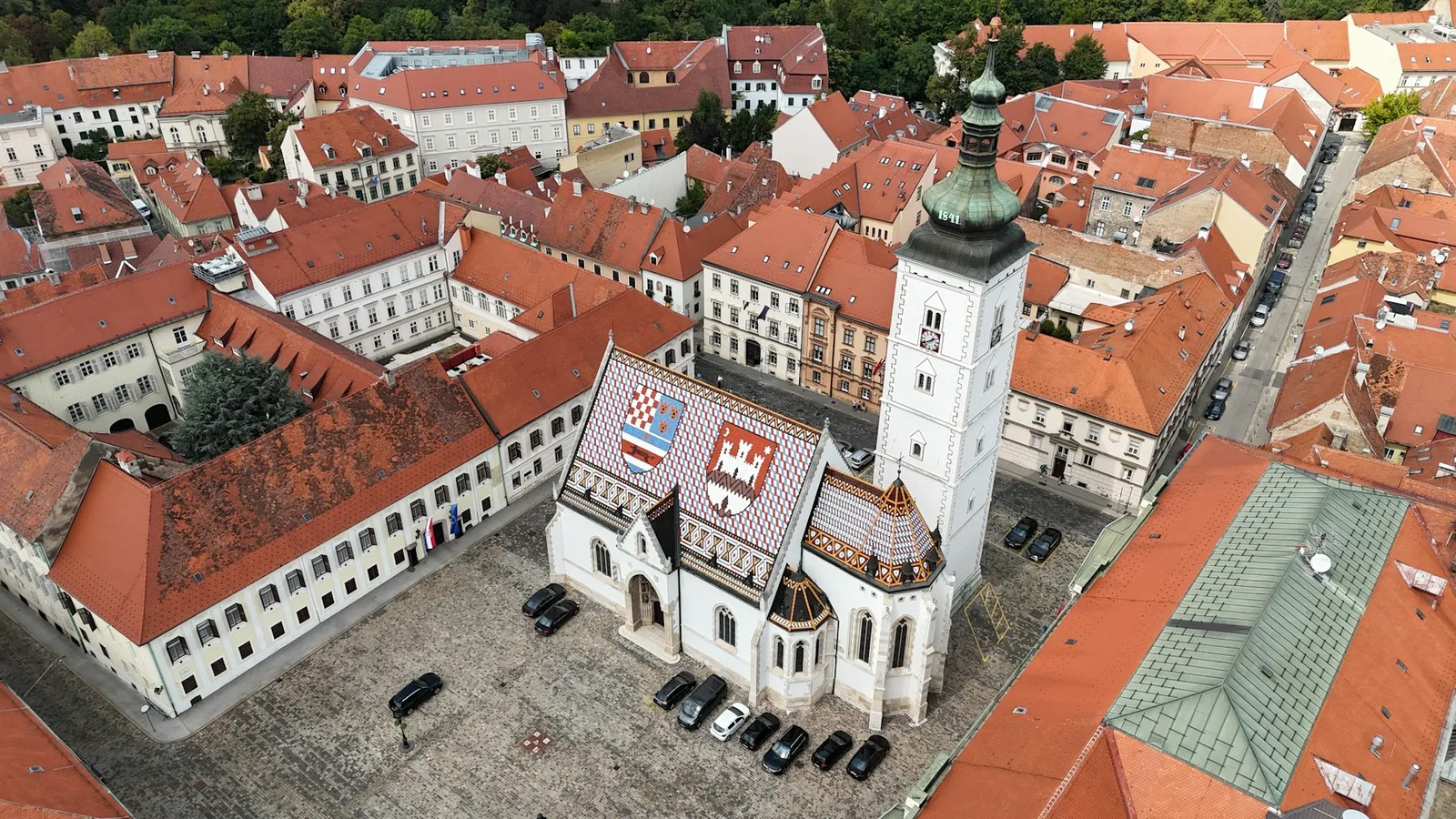
- St. Mark’s Church: iconic roof and the visual symbol of Upper Town.
- Stone Gate (Kamenita vrata): a small passage with big meaning and atmosphere.
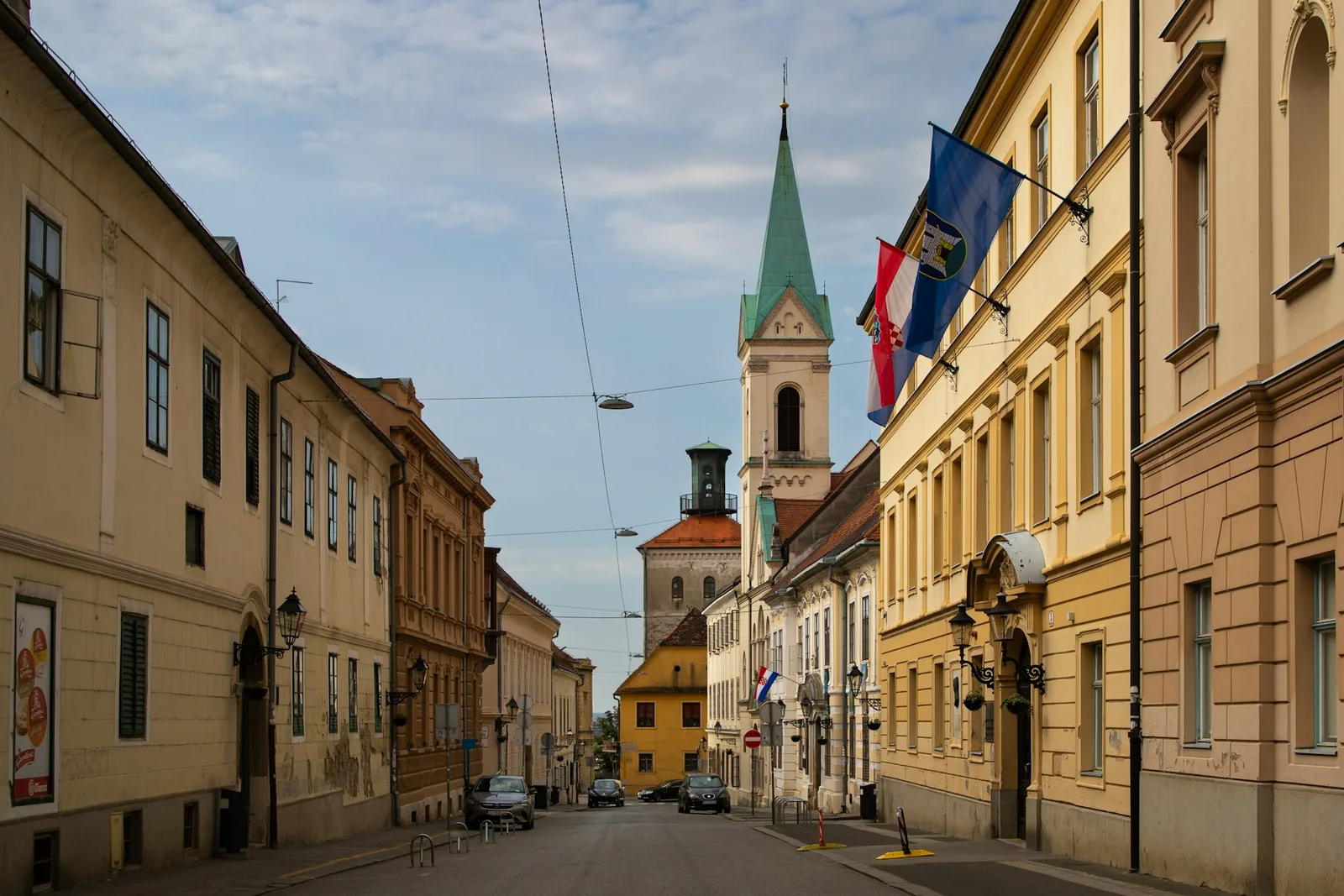
- Lotrščak Tower: classic Upper Town views — and the famous noon cannon moment.
- Strossmayer Promenade: an easy viewpoint stroll made for golden hour.
Don’t miss: the noon cannon moment
If you’re near Lotrščak Tower around noon, you might catch the Grič cannon — one of those small traditions that makes Zagreb feel like a lived-in city, not just a destination.
- Arrive a little early, then treat it like a mini viewpoint break.
- It’s loud. If you’re sensitive to noise, keep a little distance.
- Pair it with a slow promenade walk right afterward.
A simple walking loop (60–90 minutes)
- Start near the center → head up to St. Mark’s → wander the lanes → pause at viewpoints → walk back down to cafés and parks.
Best times to go
- Morning: calm streets and soft light.
- Late afternoon → dusk: the most romantic vibe.
- Night: quieter, lantern-lit, and perfect for a slow walk.
Key Upper Town stops (quick links)
St. Mark’s Church guide
Iconic roof + what to know before you go.
Stone Gate guide
A meaningful passage + shrine stop.
Lotrščak Tower guide
Noon cannon + classic views.
Strossmayer Promenade guide
The classic sunset stroll.
Zagreb funicular guide
What to know (and current works timeline).
Best viewpoints
Where the views actually are.
What an Upper Town visit should add to the trip
Upper Town should provide Zagreb’s historic core as a slow loop of thresholds, civic squares, religious sites, lanes and views. Its compact map hides slopes and pauses that deserve half a day.
A route and pace that make an Upper Town visit work
Start with Dolac and Kaptol, pass through the Stone Gate, reach St. Mark’s Square and finish along Strossmayer Promenade. Ride the funicular one direction if it improves energy or accessibility.
The choices, trade-offs and common mistake
Choose one museum according to interest and let the district remain outdoors otherwise. The City Museum adds context, while smaller art and specialist collections create a more focused cultural chapter.
Government security, worship, restoration and old surfaces can change access and behaviour. Follow current signs, keep voices low at devotional spaces and do not force old photo angles across barriers.
Weather, current information and the fallback plan
In rain, alternate a short lane section with one confirmed museum and café. When slopes are difficult, use transport to the closest practical point and reduce the loop rather than removing all historic context.
Sequencing the walk: thresholds, not stops
Upper Town rewards a specific order more than it rewards a checklist. Rather than hopping between sights as separate errands, walk it as a sequence of thresholds: each stop is really a passage into the next. Dolac spills into Kaptol, Kaptol narrows towards the Stone Gate, the Stone Gate opens onto St Mark's Square, and the square eventually releases you onto Strossmayer Promenade. Walked in that order, the district reads as one continuous experience rather than a scattered list of landmarks. It also matches the natural slope of the terrain, so you are climbing gradually instead of zig-zagging between high and low points.
- Dolac to Kaptol: market energy gives way to a quieter, more civic mood.
- Kaptol to Stone Gate: the passage narrows and the pace slows almost automatically.
- Stone Gate to St Mark's Square: the square opens out and the roof becomes the focal point.
- St Mark's Square to Strossmayer: lanes widen again before the promenade delivers the view.
Kaptol and Gornji Grad, walked as one
Kaptol sits close enough to Gornji Grad that the two are best treated as one continuous outing rather than separate visits on different days. Start with Dolac and Kaptol, then pass through the Stone Gate towards St Mark's Square — that sequence uses Dolac as the natural hinge between the two hills, so the transition from Kaptol's more open streets into the tighter lanes of Gornji Grad happens gradually instead of as an abrupt switch.
Splitting Kaptol and Upper Town across two separate trips tends to dilute both. Doing them back to back, in one loop, keeps the change in atmosphere — from market and civic space to the quieter, more residential feel of the old town — as part of the story rather than something you have to re-orient yourself for on a second day.
Terrain and access: know the trade-off before you commit
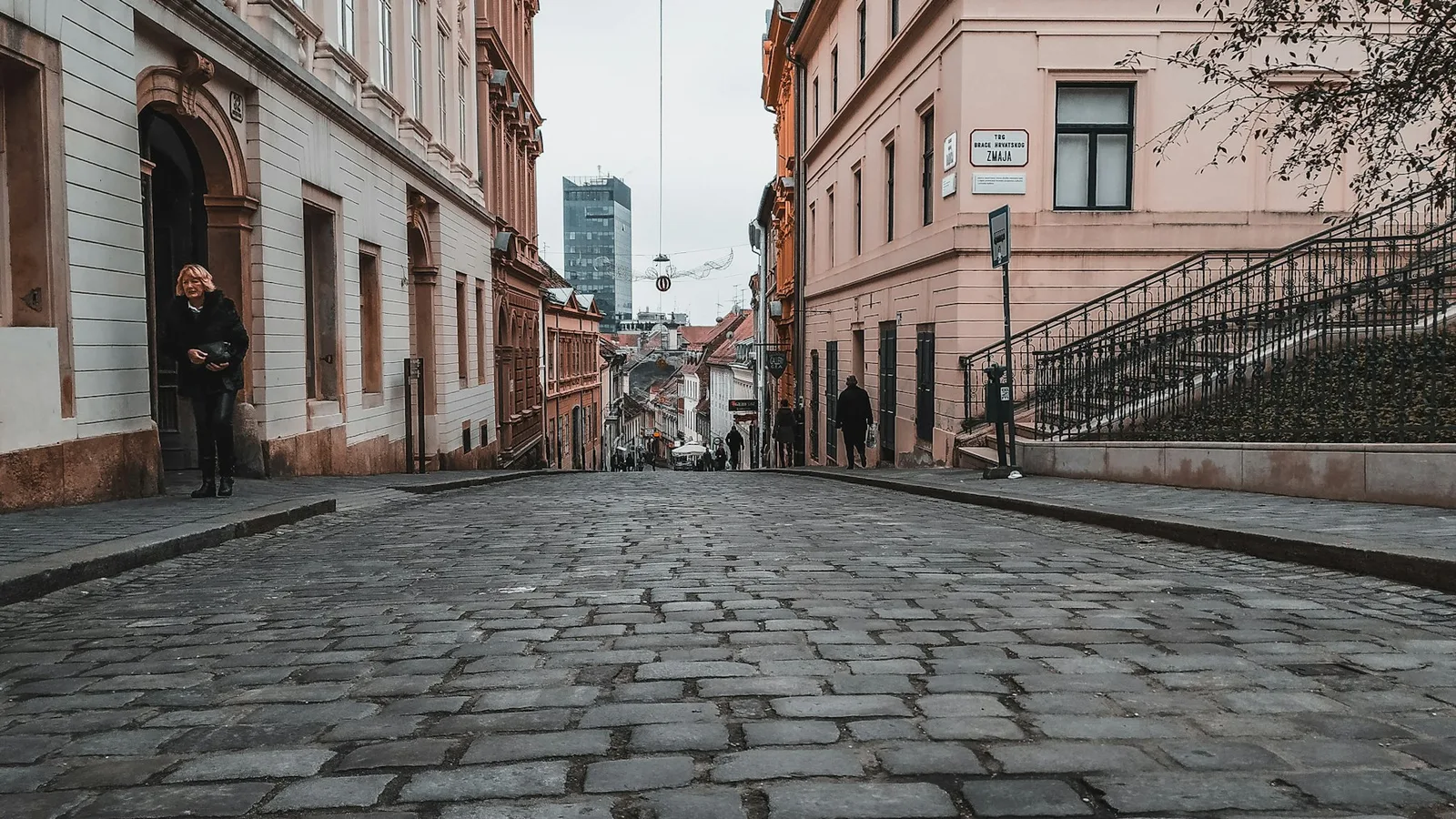
Upper Town's charm is built on its slope, which also means it asks more of your legs than Donji Grad does. Cobbled lanes, uneven old surfaces and a genuine climb are part of the deal, whichever direction you approach from. That trade-off is worth knowing in advance rather than discovering halfway up, especially if you're travelling with anyone for whom stairs or slopes are a real constraint rather than a minor inconvenience.
- Walking the stairs is the classic, scenic route and needs no timing around anything else.
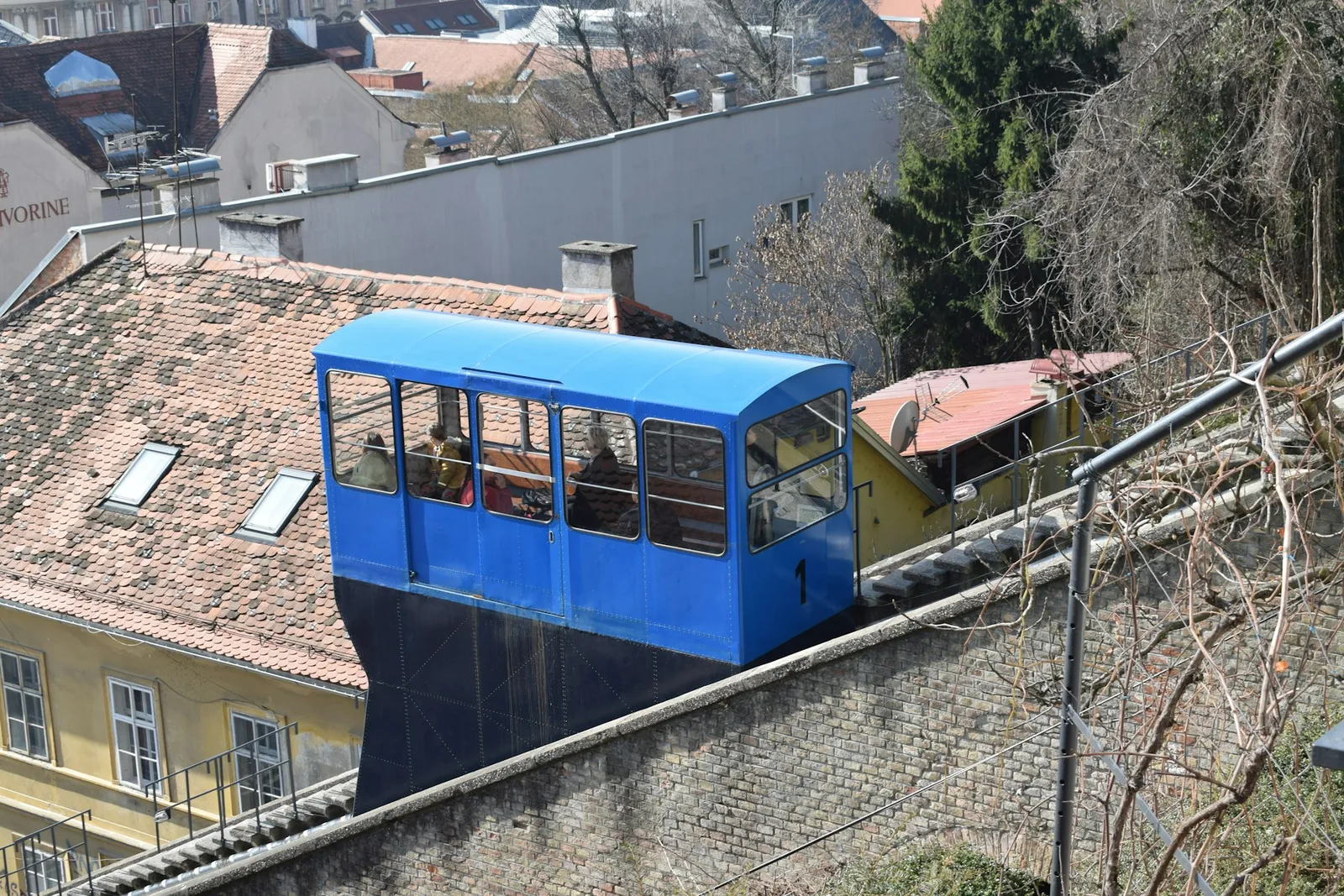
- The funicular gives you a shortcut in one direction, useful for saving energy for the return leg.
- Either way, expect old, sometimes uneven surfaces rather than a flat, predictable pavement.
Choosing your one museum
Upper Town's museum offer works best treated as one deliberate choice rather than a list to clear. The City Museum is the broadest option and gives you context for the district as a whole, which suits first-time visitors who want the bigger picture before wandering further. Smaller, more specialist collections nearby reward people who already know they want to go deep on one subject rather than get an overview.
Trying to fit more than one museum into an Upper Town day usually comes at the expense of the district's real strength, which is the outdoor route itself — the lanes, the thresholds, the viewpoints. One well-chosen museum, paired with plenty of unhurried outdoor time, tends to make for a better day than two museums squeezed between sights.
Morning quiet, evening glow
Upper Town changes character across the day more than most Zagreb districts. Earlier, the streets are generally quieter and the light can make architectural detail easier to read before the central route becomes busier. It is a useful window for visitors who prioritise a slow, contemplative walk over the social atmosphere that develops later. Quieter does not mean private: residents, workers, worshippers and security activity remain part of the district.
Late afternoon into dusk is when the district earns its reputation as Zagreb's most romantic corner: the viewpoints along Strossmayer catch the best light, and the whole area softens into something closer to a stage set. Night brings a third mood again — quieter, lantern-lit, and well suited to a slow walk with no particular destination.
Staying in Upper Town or visiting from below
Basing yourself in Upper Town means waking up inside the atmosphere everyone else has to walk up for, and having the district largely to yourself before the day's visitors arrive. It comes with the same terrain trade-off as visiting: slopes, stairs and old buildings that may or may not suit your tolerance for that kind of daily walking.
- Choose Upper Town itself if you want the early-morning and late-evening atmosphere as part of daily life, not just a visit.
- Choose a Donji Grad base if flat streets, tram access and easy evening logistics matter more than proximity to the viewpoints.
- Either way, treat Upper Town as walkable from most central bases — it rarely needs a dedicated transport plan.
Worship, security and restoration: what can change on the ground
Upper Town is a working civic and religious district, not a museum piece, and that has practical consequences. Government buildings bring a level of security presence that can affect where you linger or photograph. Active places of worship ask for a quieter, more restrained visit than you might bring to a purely secular sight.
Restoration work on old surfaces and facades is part of maintaining a district this old, and it can change access or close a lane or corner without much notice. None of this should discourage a visit — it just means following whatever signage or barriers are in place on the day, rather than assuming the layout described in any guide, including this one, is fixed.
Weather, timing and what to skip
Rain is the main variable worth planning around in Upper Town, since much of its appeal is outdoor and the surfaces underfoot get slippery fast on old stone. The sensible fallback is to shorten the outdoor loop rather than abandon it — do one confirmed indoor stop, then return to the lanes once the rain eases, rather than writing off the whole district for the day.
- Skip trying to force a wide photo across a barrier or restricted area — it's not worth the friction.
- Skip doing every viewpoint on a single pass; two done properly beat four done at a jog.
- Skip stacking multiple museums here — save that ambition for Donji Grad instead.
A short loop and a deep half day
The short version begins at the Stone Gate, crosses St. Mark’s Square, uses one or two side lanes and finishes at Strossmayer Promenade before descending. It still contains the district’s essential logic: threshold, civic centre, historic street texture and outward view. Choose it on an arrival day, in uncertain weather or when the terrain is already demanding. Do not compensate for the shorter route by rushing through a museum that was never part of the interest.
The deeper half day begins earlier at Dolac and Kaptol, adds one museum chosen by subject and gives the promenade a proper pause. Zagreb City Museum can supply urban context; Klovićevi Dvori depends on the current exhibition; the Croatian Museum of Naive Art offers a focused Croatian art chapter; the Museum of Broken Relationships changes the tone towards personal storytelling. Verify the active display and choose only the institution that makes the outdoor district more legible or meaningful.
Allow the route to end at lunch or coffee rather than treating the descent as transport to another packed half day. Tkalčićeva provides social energy, Ilica connects back to Lower Town, and Zrinjevac can become the beginning of a gentler afternoon. The sequence should feel like the city opening out after the ridge. Crossing immediately to a distant attraction erases the contrast that made Upper Town useful.
For a return visit, reverse the emphasis instead of repeating the landmark order. Start with a current exhibition, follow a quieter lane, notice restoration and working institutions, then reach the viewpoint after the district has regained context. St. Mark’s roof will still be there; the value of returning is seeing how the place functions around it.
Photography should follow the same logic. Take the broad roof or square view, then move closer only where access and religious or security conditions permit. A quiet lane, doorway or change in paving can communicate Upper Town more honestly than repeating the same restricted landmark angle. Keep tripods and long pauses out of working paths, and let the district remain usable around the picture. Return the camera to your bag for part of the descent so the final impression is a place experienced at walking pace, not another queue of frames.