
Why it’s one of Zagreb’s most recognizable sights
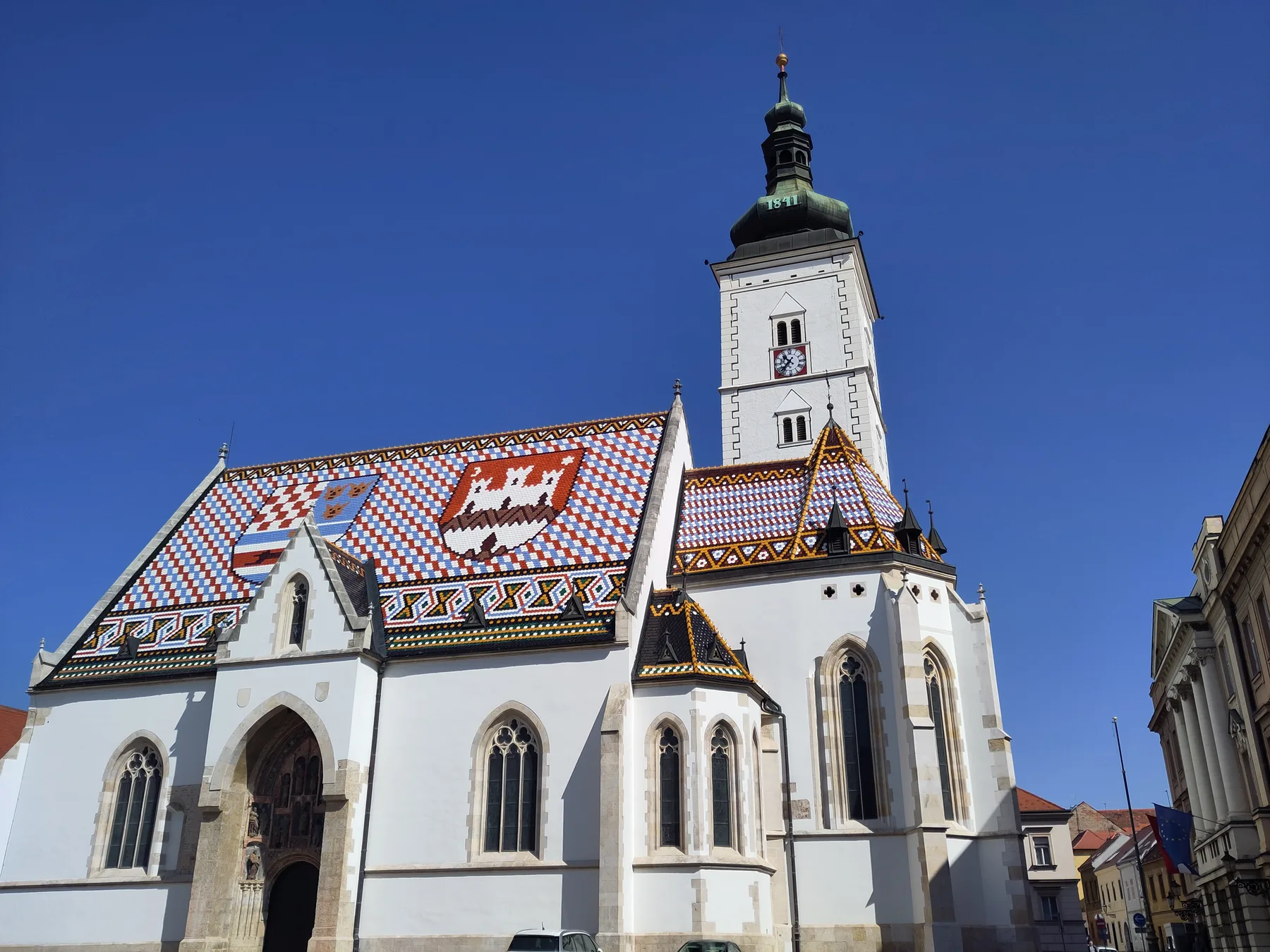
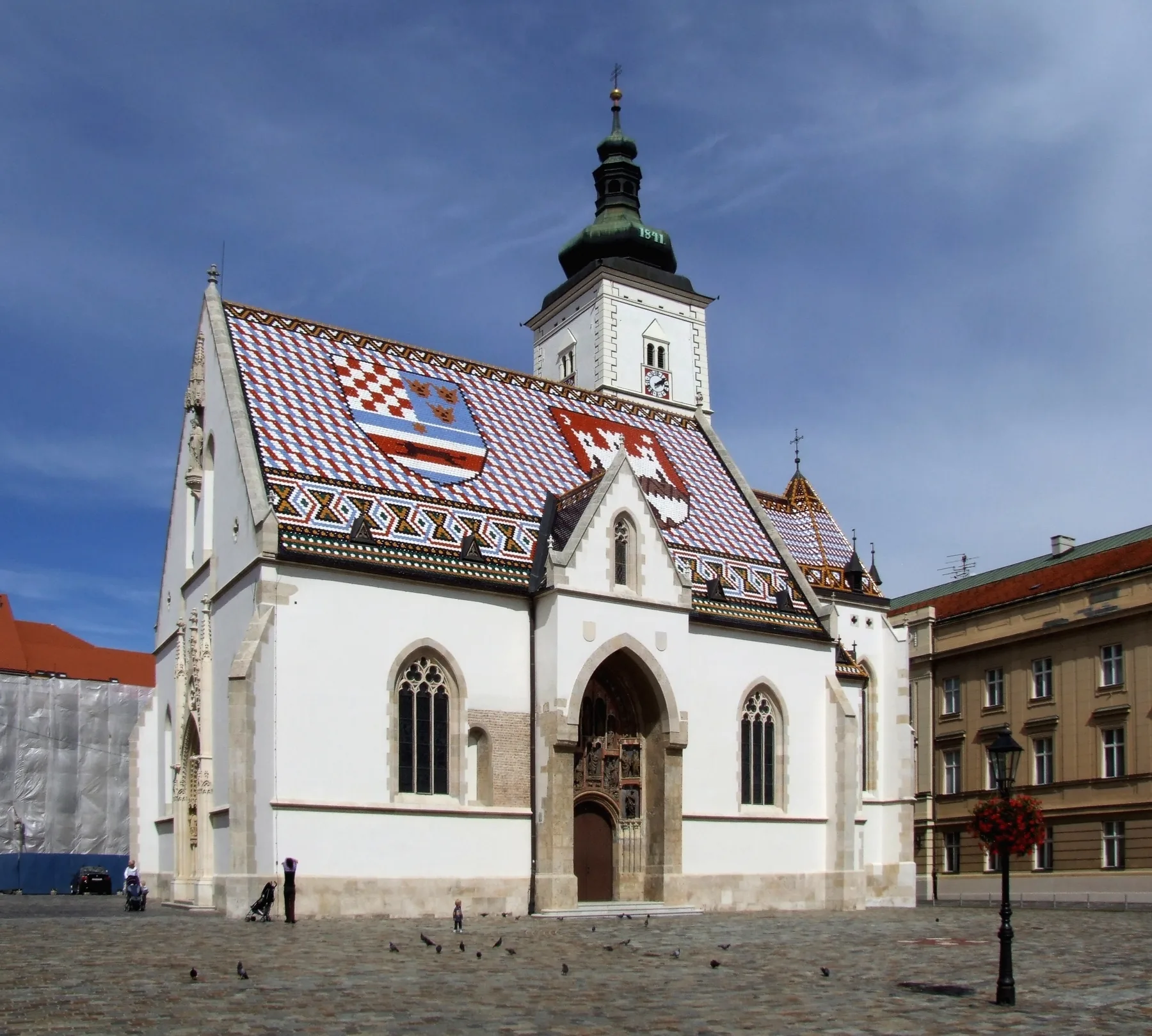
St. Mark’s Church sits on St. Mark’s Square in Zagreb’s Upper Town — and its colorful tiled roof is one of the city’s signature images.
It’s the kind of landmark you don’t need to “do” for hours: you notice the roof, feel the square’s calm atmosphere, and then keep walking to the next viewpoint or quiet lane.
Quick context (worth knowing): InfoZagreb notes the church is mentioned in the Kaptol Statute of 1334 and was built in the 13th century — which helps explain why it feels older than most of the streets around it.
What to notice (roof, portal, tiny details)
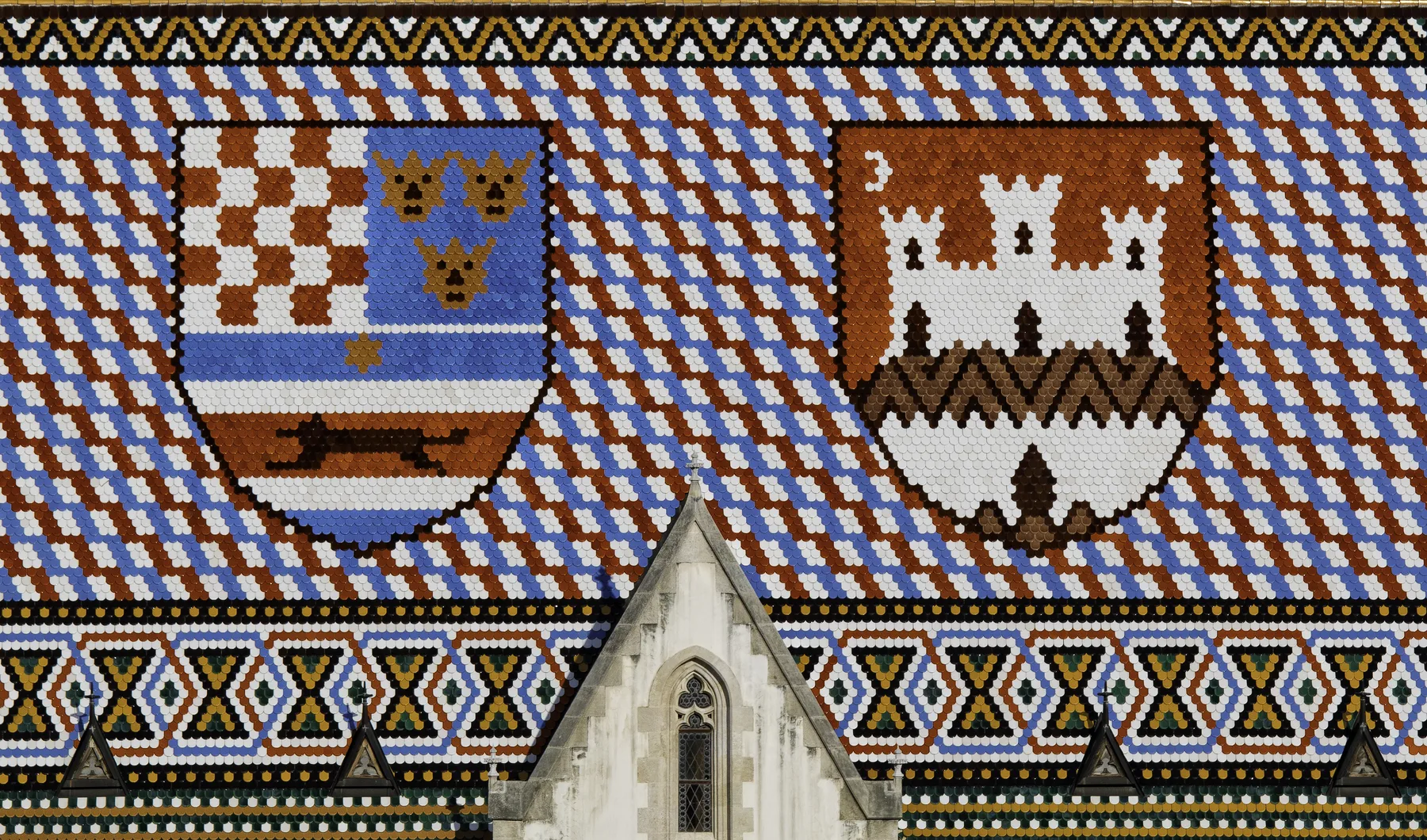
- The roof coats of arms: one side shows the Triune Kingdom of Croatia, Dalmatia and Slavonia; the other shows the city of Zagreb.
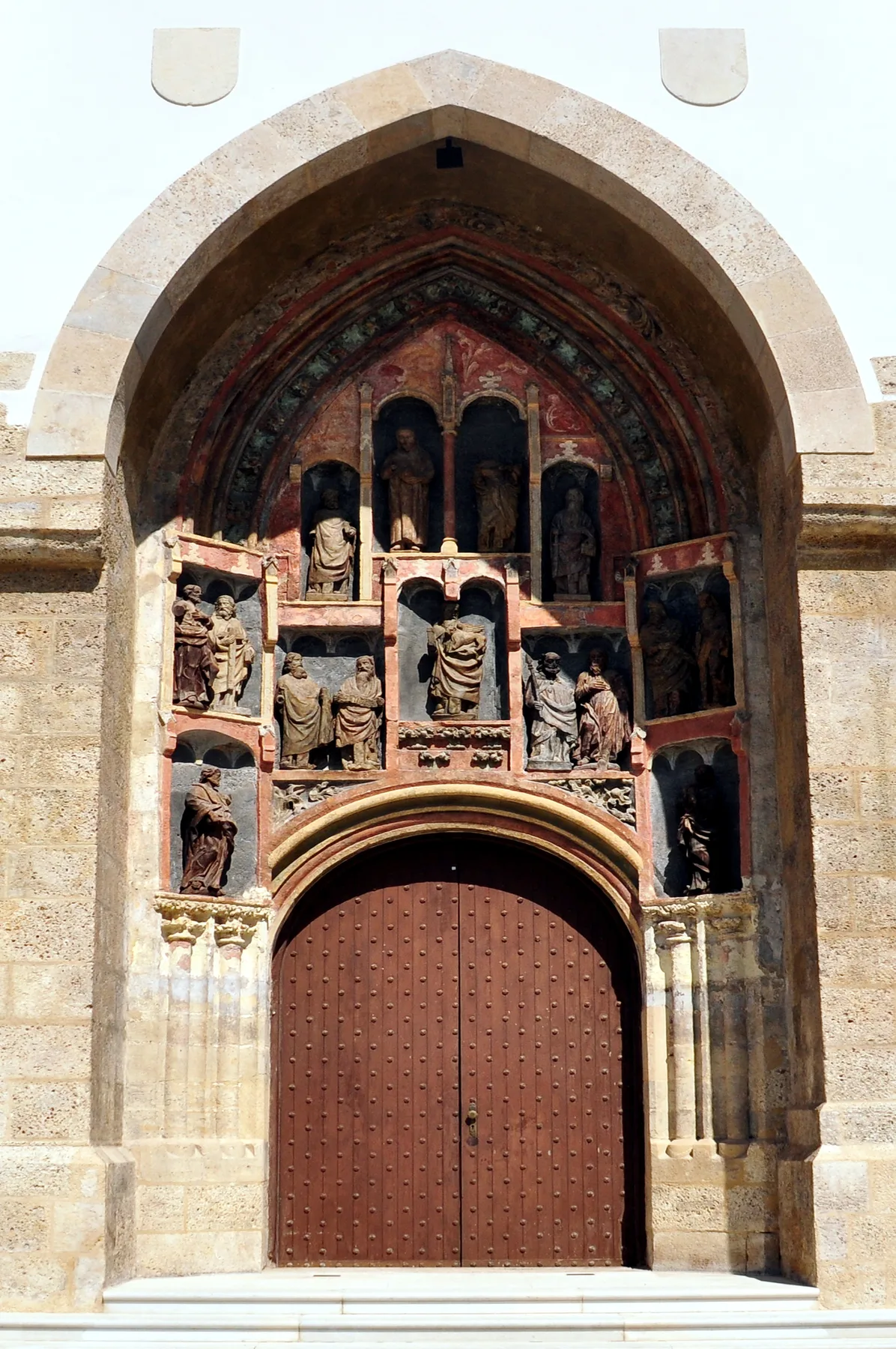
- The south portal: a highlight of Gothic sculpture — worth a slow look even if you’re not “a church person.”
- A small-but-cool detail: InfoZagreb points out Zagreb’s oldest known coat of arms on the northwest wall (dated 1499).
- The square’s mood: it’s a civic stage as much as a sightseeing stop (government and parliament buildings sit right here).
A 60-second history (why it looks like this)
- 13th century: built on Romanesque foundations (what gives it that medieval feel).
- Late 14th century: Gothic upgrades and the famous south portal.
- 19th century: major Neo‑Gothic restoration connected to Friedrich Schmidt and Hermann Bollé (including the roof look everyone recognizes).
- 1930s: interior restoration tied to Jozo Kljaković (murals) and Ivan Meštrović (sculpture).
St. Mark’s Square: why the location matters
St. Mark’s Square is the heart of Upper Town — and one of Croatia’s most symbolic political addresses.
- Banski dvori (Government) sits on the square.
- The Croatian Parliament (Sabor) meets here.
- The result: the square feels formal and quiet — more “civic” than “shopping street.”
How to visit (timing + expectations)
- Go early for the calmest square and the best roof photos without crowds.
- Treat it as part of a loop — Upper Town is more fun when you keep moving between small stops.
- If you hope to go inside, check current access on-site or via official updates (hours and entry can change).
- Be respectful: it’s a religious site in a formal civic square.
A perfect Upper Town loop that includes it
- Start in the center → walk up toward Upper Town.
- St. Mark’s Square → Stone Gate → Strossmayer Promenade viewpoint pause.
- Lotrščak Tower area → optional Museum of Broken Relationships.
- Walk back down into the center for a long coffee or an easy dinner.
Photography tips (quick and useful)
- Roof details read best in soft morning light or near golden hour.
- Use the square as a “quiet frame” — then look for small street textures as you wander away.
- If you want variety in one shoot, pair Upper Town texture with a Lower Town parks loop.
Why St. Mark’s Church belongs in the day
St. Mark’s Church is Upper Town’s visual emblem, with the tiled roof giving the civic square an image recognised far beyond Zagreb. Its importance also lies in the surrounding government setting and long religious history, not only the photograph made from the centre of the square.
Approach through the Stone Gate and make St. Mark’s Square the midpoint of an Upper Town loop. Continue into quieter lanes and toward Strossmayer Promenade. This keeps the church within a historic sequence and prevents a climb solely for one roof view.
What to notice and how to decide
Step back for the roof and proportions, then look more closely at the portal and surrounding civic architecture. Respect barriers and security instructions. The church is a religious building within an active government quarter, so access and behaviour cannot be treated like an open-air set.
Interior access, services, security and restoration can limit the visit. Check official local information and never assume an old photo angle remains available. Weather changes how the roof reads, but the square’s urban meaning remains even without ideal light.
Prioritise the square on every first Upper Town walk; decide on interior ambitions only from current access. The exterior visit can be brief yet essential. Travellers with mobility constraints should plan the climb and route, because the landmark itself does not require a long stay once reached.
Check church access and square security separately
St Mark’s is an active parish church inside Croatia’s most sensitive civic square. Interior opening depends on worship and church management; approach to the square depends on live police and government security. Check both. A tourist-board description of the building is not an admission timetable, and a clear view on a map is not proof that every approach is open.
Police introduced controlled access to St Mark’s Square in 2020, and the present arrangement can change with parliamentary sittings, official events, demonstrations or security assessment. Use the open checkpoint, carry only what is necessary and follow screening instructions. Never move a barrier or argue that an old photograph proves a closer public route. The church can still be understood from the distance currently permitted.
Read the roof and portal as different historical layers
The tiled roof carries heraldic designs associated with Croatia, Dalmatia and Slavonia and with Zagreb, and it belongs to the church’s nineteenth-century restoration appearance. The south portal is a major Gothic sculptural work from an earlier phase. Stand back for roof geometry, then use the permitted side view for portal figures. Do not collapse every recognisable feature into a single medieval date.
InfoZagreb notes Romanesque survivals, fourteenth-century Gothic work and later reconstruction by Friedrich Schmidt and Hermann Bolle. Treat the church as an accumulated building maintained across centuries. Fresh stone, coloured tile or a repaired surface cannot be dated by intuition. Official interpretation and conservation research should determine what belongs to each campaign.
Respect worship even when interior access is rare
When the church admits the public, determine whether the opening is for Mass, prayer, a ceremony or sightseeing. Arrive early for worship, dress appropriately, silence devices and remain outside restricted liturgical areas. Do not walk forward during a service for a better photograph. If access is limited to participants or invited guests, accept that condition without waiting at the door or following another group inside.
Check current photography rules, particularly around worshippers, murals and artworks. Flash, tripods, lighting and commercial work can be prohibited or require permission. Exterior access does not authorise a drone over a protected government zone. A visitor who sees only the exterior has not failed; the roof, portal, civic setting and route relationships already offer a complete, respectful short visit.
Treat the square as active government space
Government, Parliament and other protected institutions shape movement around the church. Keep entrances, vehicle lines, press positions and residential access clear. During an official arrival or public gathering, follow police and steward direction immediately. Do not photograph security equipment in a way staff prohibit or make identifiable officers the subject of staged travel content.
Families should set a meeting point outside any controlled perimeter before separating. Travellers with mobility needs should verify which approach is open, its surface, screening queue and whether a companion can remain beside them. Cobble-like paving and temporary barriers can change an otherwise short route. Bad weather may offer little shelter without entering a protected doorway, so carry an appropriate layer and leave when necessary.
Use St Mark’s as one chapter in a Gradec loop
Approach through the open route from Stone Gate or another signed Upper Town street, read the church from the available square edge, then continue to one museum or Lotrscak and Strossmayer Promenade. Do not circle checkpoints seeking the angle shown in an old guide. Security and worship determine today’s geometry, while a coherent route keeps the visit worthwhile under any permitted distance.
Boutique Hotel HOH supports an Upper Town base; Hotel Jagerhorn supports the lower transition; Hotel Capital fits a broader central itinerary. Verify the exact room, slope, taxi access and security diversions. Proximity to St Mark’s cannot guarantee vehicle access, church entry or a roof view. Choose the hotel for sleep and the whole stay, then treat the church as a live civic and religious site.
Questions people actually ask
How long do I need at St. Mark’s Church?
Plan 10–20 minutes to enjoy the square and the roof, then spend your time on the Upper Town loop around it.
What do the roof coats of arms show?
They show the coat of arms of the Triune Kingdom of Croatia, Dalmatia and Slavonia, plus the coat of arms of the city of Zagreb.
Is the inside always open to visitors?
Not always. Access and schedules can change, so check posted notices on-site and official visitor updates before planning your visit around interior access.