What the Stone Gate is
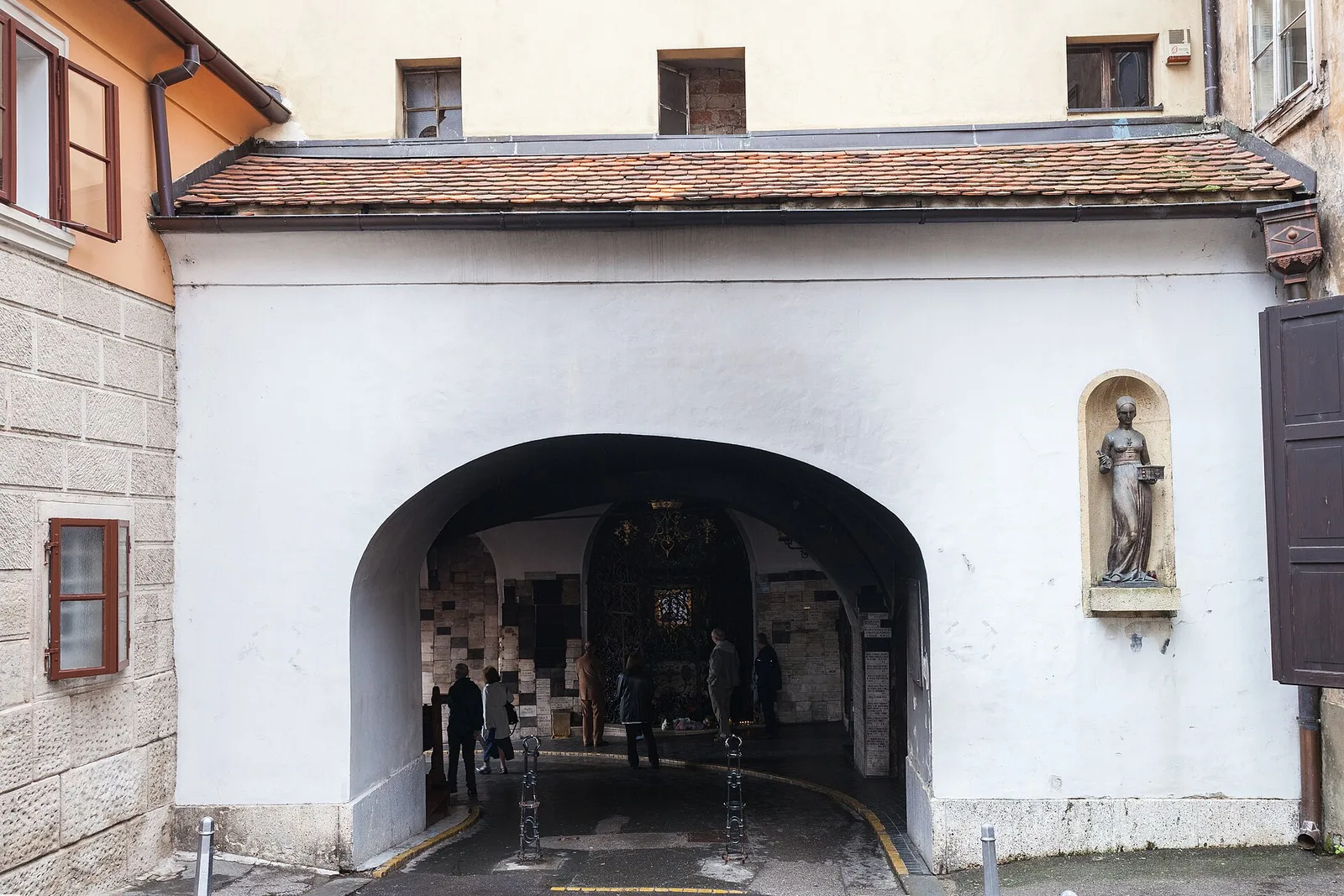
The Stone Gate (Kamenita vrata) is one of Zagreb’s most meaningful small landmarks: a passage in Upper Town that functions as a shrine, where people pause to light candles and leave quiet wishes.
It’s also an easy “connector” stop — the kind of place you pass through naturally as you walk between the center and Upper Town’s sights.
How to visit (simple facts)
- Open daily and free to enter (treat it like a place of worship).
- You can reach it easily on foot from Ban Jelačić Square via Radićeva Street.
Best way to include it in your day
- Morning loop: center → Dolac Market → Upper Town → Stone Gate → coffee.
- Dusk loop: Upper Town viewpoints → Stone Gate → lantern-lit walk back down.
Why the Stone Gate belongs in the day
The Stone Gate is not only a surviving passage into Upper Town; it is also an active place of devotion. That overlap between thoroughfare, historic fabric and quiet religious practice gives the stop unusual emotional weight, even though travellers pass through it in only a few minutes.
Approach from the Cathedral and Dolac side so the gate becomes the transition into Upper Town. Continue toward St. Mark’s Square and the promenade afterward. This direction makes the passage feel like a threshold, while the reverse route creates a reflective finish before returning to the busier centre.
What to notice and how to decide
Lower your voice and first notice how the space is being used. Candles, prayer and people pausing deserve more attention than finding the fastest camera angle. Look at the masonry and constrained passage only after understanding that this is a living devotional site, not an empty medieval prop.
The passage is part of a sloped old-town route and may feel tight when groups arrive together. Move through without blocking access, and be cautious with flames, steps and uneven surfaces. Religious observance can affect what respectful photography looks like at a particular moment.
Include the gate in nearly every first Upper Town loop because it sits naturally between central districts and the historic square. Do not schedule it as a standalone attraction or expect a lengthy visit. Its importance comes from atmosphere, continuity and present-day meaning.
Understand a passage and a place of prayer at the same time
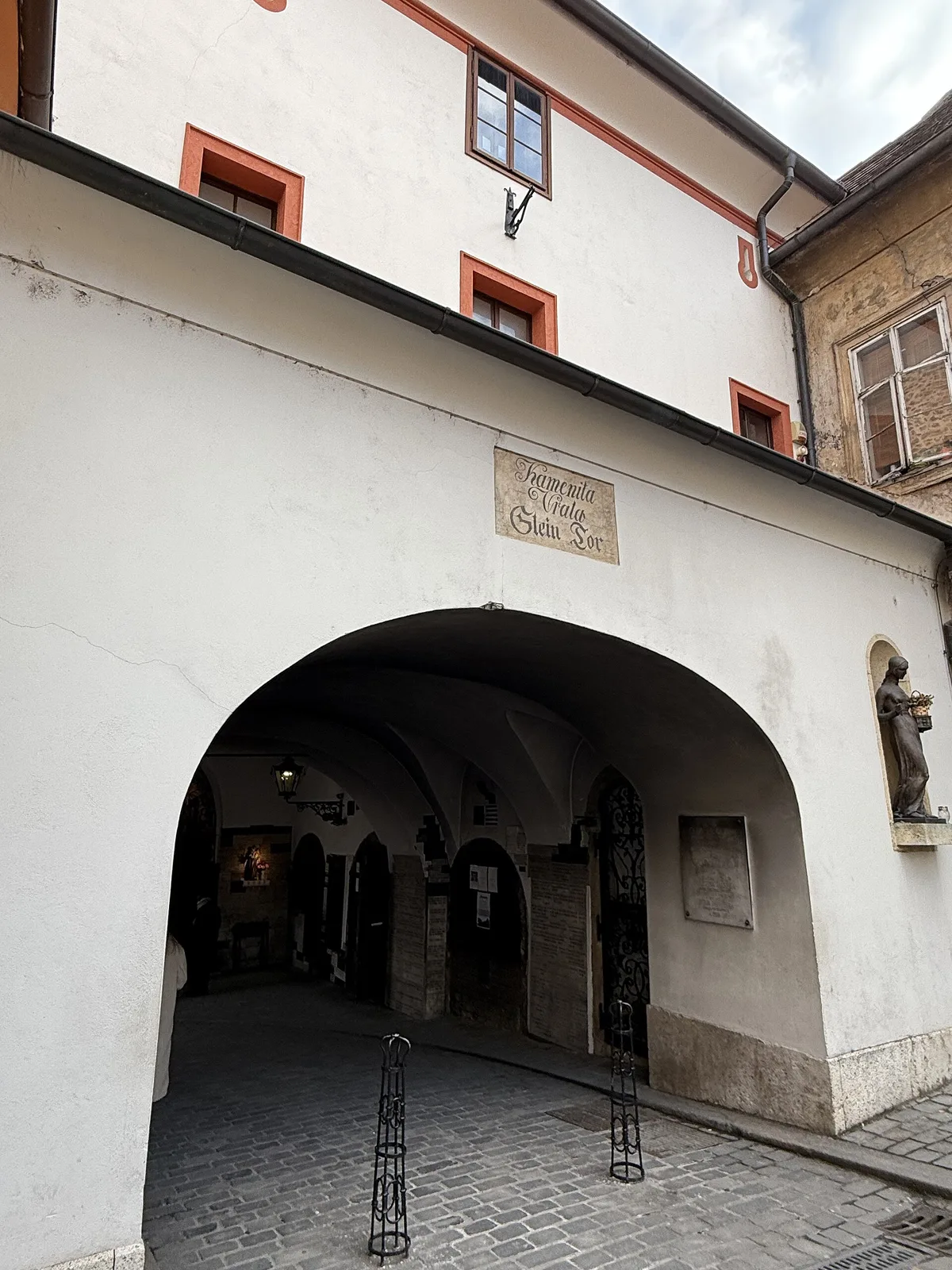
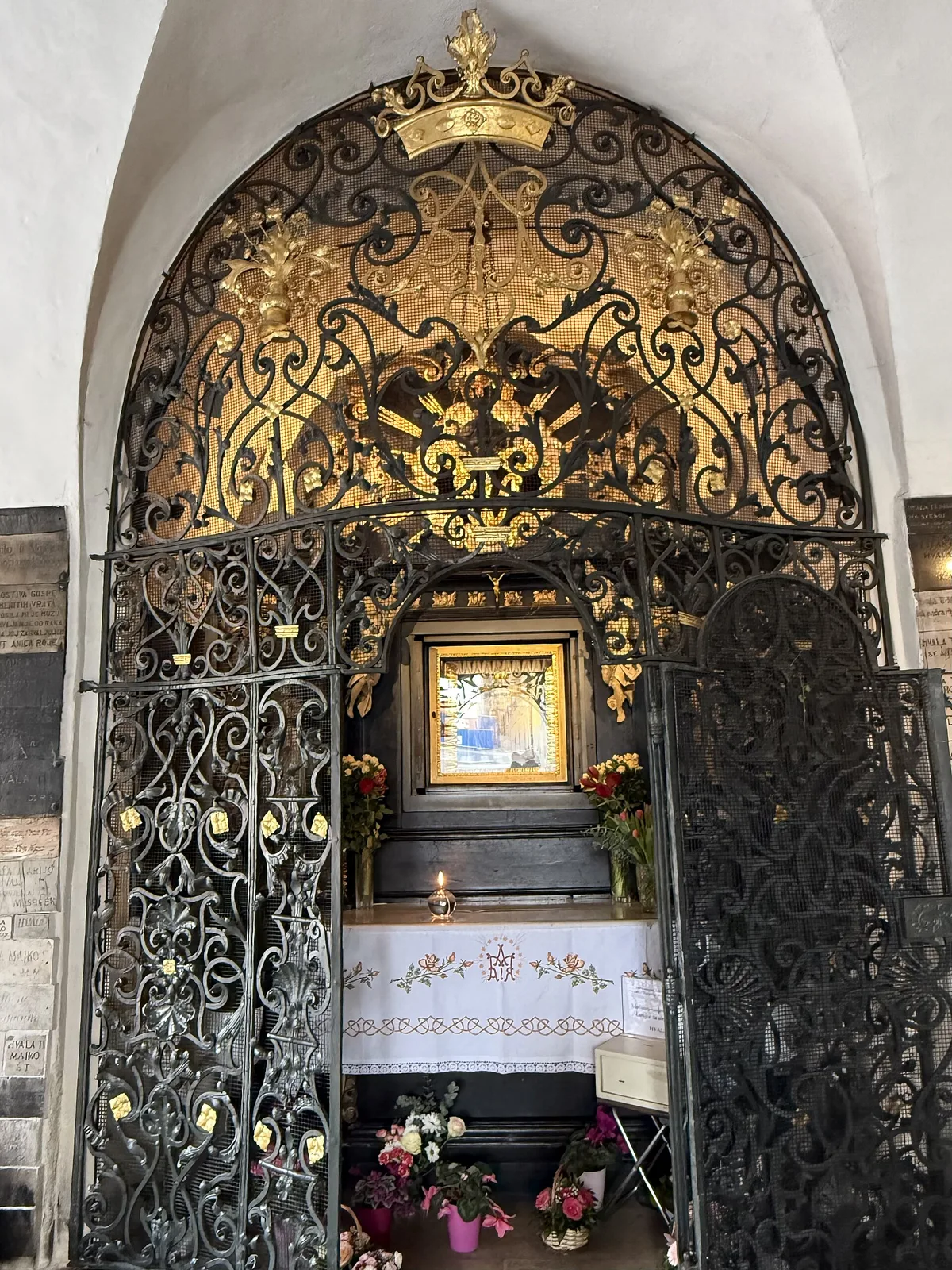
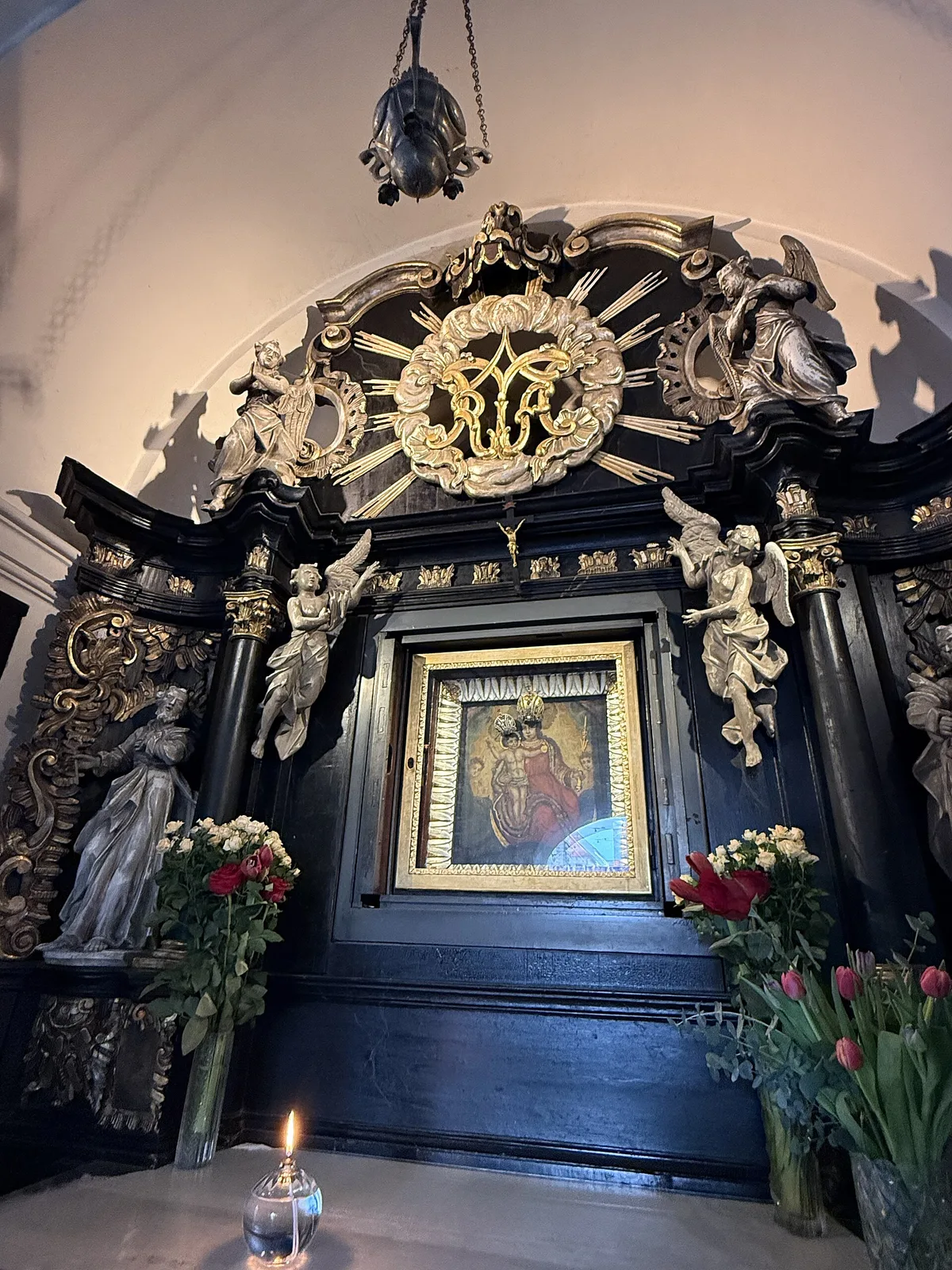
Stone Gate is both a route through Upper Town and an active devotional space centred on an image of the Virgin Mary. People may be walking to work, crossing Gradec, stopping briefly or praying in front of the shrine. Enter with that mixed use in mind. Slow down before the grille, keep a clear line through the passage and let worshippers determine the atmosphere. The site is not simply a picturesque arch between two attractions.
A visitor does not need to share the devotion to behave respectfully. Lower the voice, silence alerts and avoid commentary beside someone praying. Do not treat candles, plaques, benches or written intentions as props. If the passage is crowded, continue through and return only when doing so will not add pressure. Worship takes priority over obtaining a close view, photograph or uninterrupted explanation.
Keep the 1731 fire story precise
The tradition attached to Stone Gate says that a fire in 1731 destroyed much of the surrounding structure while the Marian image survived. That survival underpins the shrine’s importance and later devotion. Present it as the site’s documented religious tradition rather than turning it into a scientific claim the guide can prove. The date, fire and continuing veneration matter; invented sensory details or dramatic quotations do not.
Look at the arch, passage, grille, icon and votive plaques as different layers of use and memory. Some elements reflect defence and movement, others worship, restoration or later commemoration. Do not assign an age to every visible stone or metal element by appearance. Official interpretation and conservation records should establish fabric history. A short, accurate account leaves room for faith while separating evidence from embellishment.
Follow shrine etiquette before photography
Check current signs and instructions before taking any photograph. Keep flash, lights and sound off; never photograph an identifiable person at prayer without clear consent. Do not place a phone through or against the grille, lean over candles, move votive objects or occupy the central approach for repeated takes. The four sourced photographs in this guide document the passage and shrine from past visits; their existence does not grant permission for the same position or equipment today.
When photography is allowed, begin with the exterior and passage context, then take one quiet frame only if the shrine area is free. A detail of the icon or grille should explain devotion rather than convert it into decoration. Commercial, staged, tripod or lit work may require explicit permission. Put the camera away immediately when worship, a service, maintenance or staff direction changes the space.
Treat Zagreb Day and processions as worship, not spectacle
Stone Gate has a special role in the city’s Marian devotion and Zagreb Day observances. Dates, programme, route, security arrangements and public access can change by edition, so use the current City, church or tourist-board announcement. Do not promise that a procession will pass at a particular minute from an undated article. Arrive only through open public routes and follow steward, police and clergy instructions.
During prayer or procession, stand where directed, keep the route open and avoid pushing forward for a photograph. Participants are practising faith, not providing a performance. Visitors who prefer a quiet architectural visit should choose another time. People with limited mobility, sound sensitivity or crowd concerns should check barriers, standing duration and exit options in advance and be willing to use a nearby alternative viewpoint.
Plan for the narrow threshold and changing crowd
The approach includes historic paving, a constricted arch and two-way pedestrian movement. A route that appears short on a map can become difficult when a group stops beside the shrine. Keep luggage and folded equipment close, supervise children and do not form a semicircle across the passage. Wheelchair users and travellers with mobility aids should confirm the current continuous route through Upper Town, not infer access from a single photograph of the gate.
Rain, ice, candle activity, maintenance, worship and government-area security can change the safest line. Use the open signed route and avoid unofficial steps or doorways. There is no reason to force entry during congestion: the exterior, adjacent streets and another pass later can preserve the experience. Agree on a meeting point beyond the arch before a family or tour group enters the narrow section.
Place the gate inside one Gradec route
Use Stone Gate as a transition, not a detached checklist stop. A coherent walk can approach from Radiceva Street, pass quietly through the gate, continue to St Mark’s Square and one museum, then reach Lotrscak and Strossmayer Promenade before descending. The reverse direction works when crowds or opening times suit it better. Check government restrictions, worship and museum access separately; proximity does not make their operating conditions identical.
Avoid delivering a long historical lecture inside the arch. Prepare the group outside, cross without blocking and discuss the defensive route or 1731 tradition after reaching wider public space. This sequencing protects the shrine’s atmosphere and improves comprehension. It also gives anyone who does not wish to enter a devotional space a clear way to meet the group beyond it without being singled out.
Choose a hotel for the whole Upper Town stay
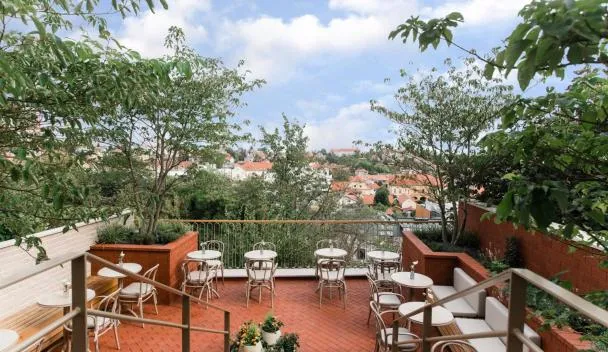
Boutique Hotel HOH is the researched stay that most directly supports an Upper Town base, while Hotel Jagerhorn makes the Ilica and lower-slope transition compact. Amadria Park Hotel Capital suits a broader central itinerary with Gradec reached on foot or by suitable transport. Verify the exact room, entrance, cobbled approach, gradient, night noise and current vehicle access. A map pin close to Stone Gate does not prove an easy luggage transfer.
Do not market proximity to a shrine as private access, guaranteed quiet or a view from the room. Devotional observance, bells, city events and ordinary residential movement continue independently of a booking. Choose the property from sleep, mobility, cancellation terms and the rest of the itinerary. Then use Stone Gate as one respectful passage in the day rather than the reason to compromise every hotel requirement.