
Why it’s famous (and why it’s useful)
The Zagreb funicular is one of those tiny city features that becomes a memory: a short ride that links the Lower Town and Upper Town, right by the classic viewpoint zone.
Official visitor info describes it as the world’s shortest public-transport funicular, with a 66-meter track — more “quick hop” than “mountain railway.”
Current status (timely)
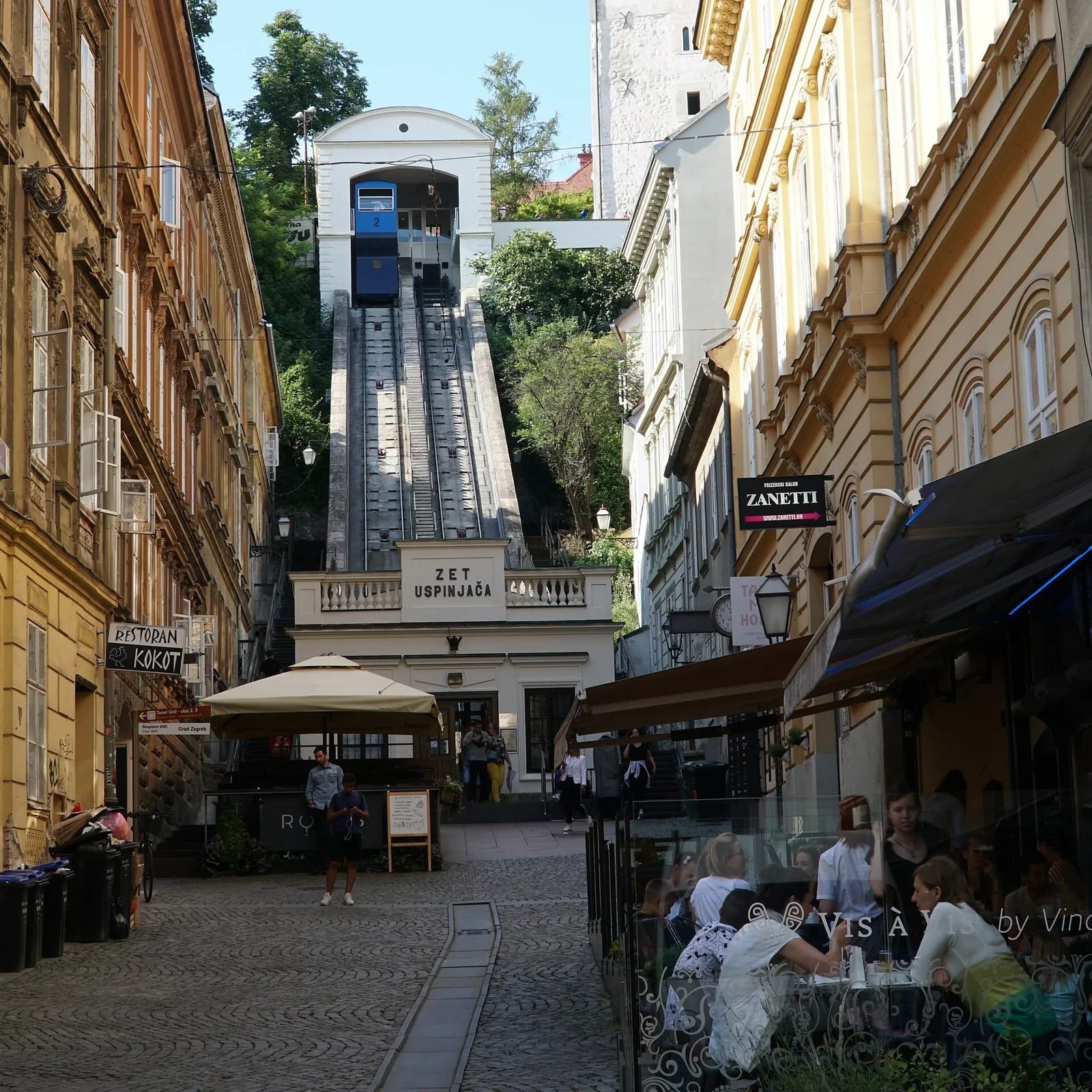
Prefer to walk? Skip the funicular
- Walk the stairs (it’s part of the Upper Town experience).
- Plan Upper Town as a loop so you’re not “commuting” up and down.
Why the Zagreb Funicular belongs in the day
The funicular is both useful transport and a compact piece of Zagreb character. Its appeal comes from the short transition between Lower and Upper Town: a practical climb becomes a memorable threshold, making the city’s change in elevation visible even when the ride itself is brief.
Ride it in one direction and walk the other. Ascending can preserve energy before Strossmayer Promenade and St. Mark’s Square; descending can provide a neat finish before returning to Ilica and Lower Town. Building the ride into a loop avoids travelling to it only for novelty.
What to notice and how to decide
Pay attention to the steep alignment, the two stations and the way the view changes over a very short distance. The funicular makes most sense when compared with the adjacent stairs and slopes. Its modest scale is part of the charm, not evidence that something is missing.
Service can be interrupted by maintenance or operational changes, and queues can make walking faster at busy moments. Check current information if the ride matters for mobility or timing. The surrounding terrain still includes slopes and old surfaces once you leave the station.
Prioritise the funicular on a first Upper Town loop, with children, or when the climb would reduce enjoyment of the historic area. Skip the wait when the queue is long and walking is comfortable. The route remains complete either way because the real purpose is connecting the city’s levels. Keep enough room at the platform for passengers who are using it as transport rather than a photo opportunity.
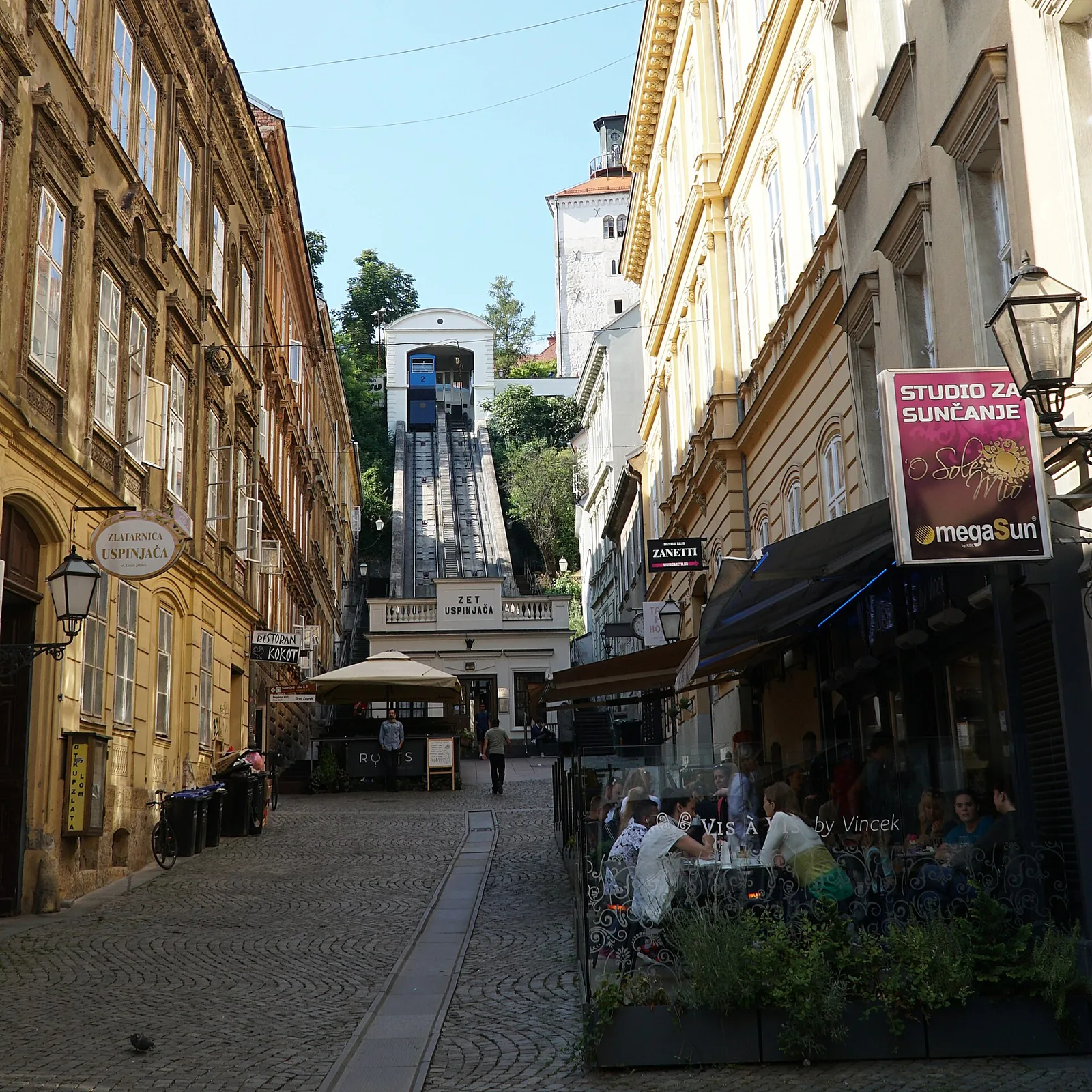
The funicular is operating again, but check ZET on the day
ZET states that the funicular returned to operation on 19 May 2026 after a comprehensive renovation lasting more than a year. That is the current baseline, not a permanent guarantee. Maintenance, incidents, events or weather can still interrupt service. Check ZET’s funicular page and live notices shortly before travelling, especially when the ride is being used to meet a timed Upper Town admission.
Older articles may still say the line is closed, while old timetables can extend far beyond the present notice. Use the operator for hours, frequency, fare and accepted tickets. Save the current page offline, but treat an on-site closure sign or staff instruction as newer evidence. The walking route remains the essential fallback; no itinerary should fail because a 66-metre transport link pauses.
Choose the ride for experience, access or energy
The ride is extremely short. Choose it because heritage public transport interests you, because the steep track is part of Zagreb’s identity, or because saving a climb improves the group’s day. Do not choose it expecting a long scenic railway. The upper-area view and connection to Lotrscak and Strossmayer Promenade matter more than time inside the car.
Walking can be faster than waiting during a queue and gives a direct sense of elevation, but the steps or incline may not suit every visitor. Compare queue, surface, gradient and onward route. A traveller using a wheelchair, stroller or mobility aid should confirm the current boarding, platform gap, station access and assistance with ZET; a renovated vehicle does not by itself prove a continuous step-free journey from Tomic Street to the promenade.
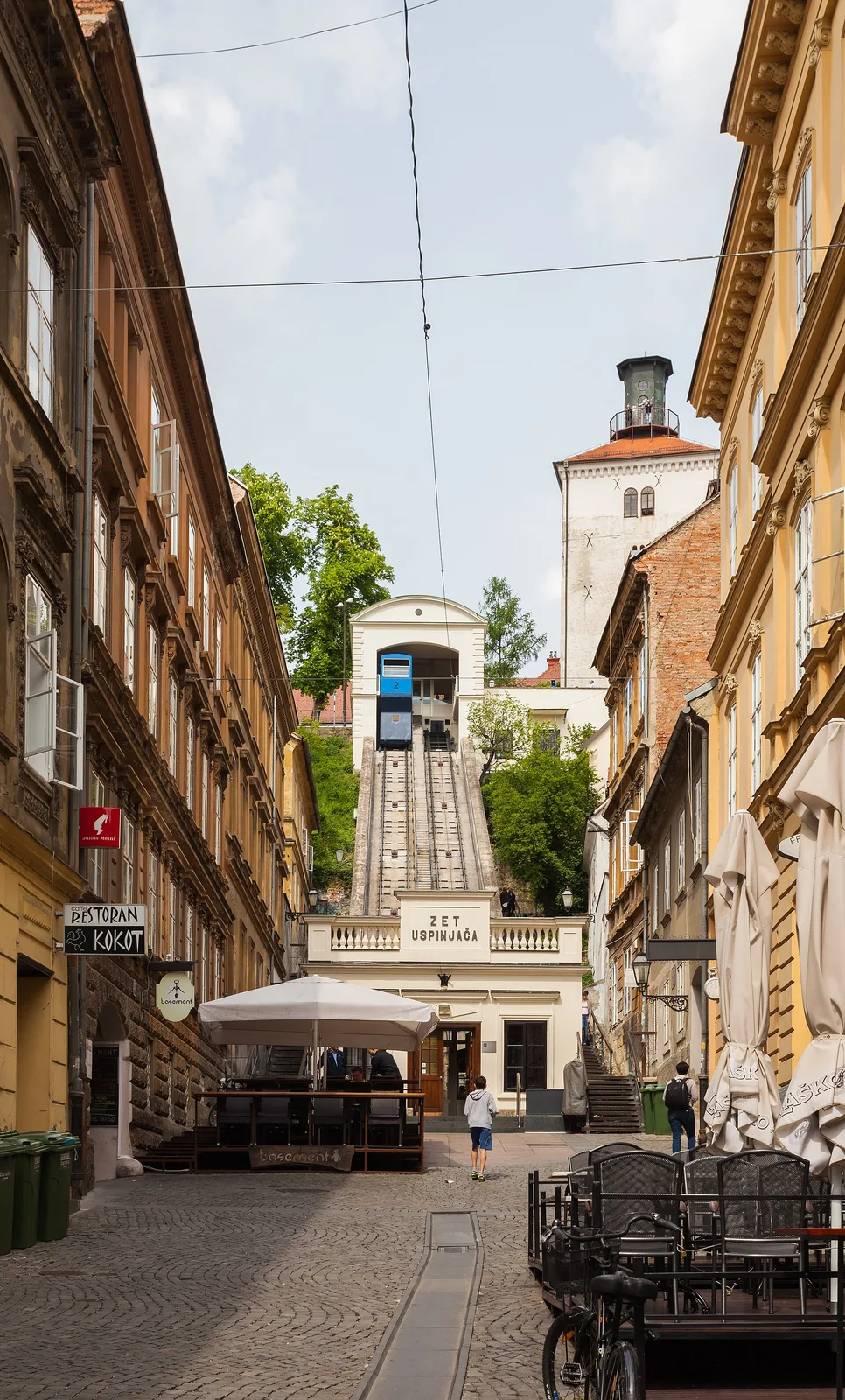
Read a tiny railway as a complete transport system
The track, two stations, paired cars, cable, platforms and operating timetable form a complete system despite the line’s short length. From Tomic Street, notice how the corridor rises tightly between buildings. At the upper end, see how public transport meets defensive heritage, a promenade and city view. The funicular’s value lies in that compressed urban relationship, not in distance travelled.
The 2025–26 renovation is part of the current history. Ask what could be renewed while the line’s protected appearance and role remained legible. Do not claim every visible component is original or new without technical evidence. ZET’s official information is the source for operating specifications; the sourced pre-renovation images here document route form and context, not the precise condition of every component after reopening.
Board like public transport, not an amusement ride
Confirm the current ticket before reaching the front of the queue and follow platform staff. Let passengers exit, keep bags close, supervise children and use available handholds. Do not force the doors, hold a place for a large group or delay departure for a photograph. When capacity is limited, split only if both parties know the exact meeting point and hold their own tickets and phone access.
The track is operating infrastructure. Never enter it, reach through barriers or lean over a platform edge. Photograph from legal public space without blocking Tomic Street cafes, station entrances or the walking route. A tripod or commercial shoot can require permission. If the line stops between scheduled departures, wait for staff information rather than approaching equipment or inventing an evacuation route.
Use the upper station to begin one coherent loop
At the upper station, choose Lotrscak Tower and Strossmayer Promenade, or continue deeper into Gradec towards St Mark’s Square and Stone Gate. Do not travel up, return down immediately and later climb again for another attraction. A one-direction Upper Town loop makes the short ride functional. Check tower, museum and worship access separately; funicular operation does not guarantee any neighbouring interior is open.
At dusk, the city view can be rewarding, while darkness makes steps and unfamiliar descents more demanding. Save the final route to accommodation. Events on the promenade can change crowd and path conditions. When rain, ice or government security restricts the planned loop, use the open public route and return without treating every closed gate as a problem to solve.
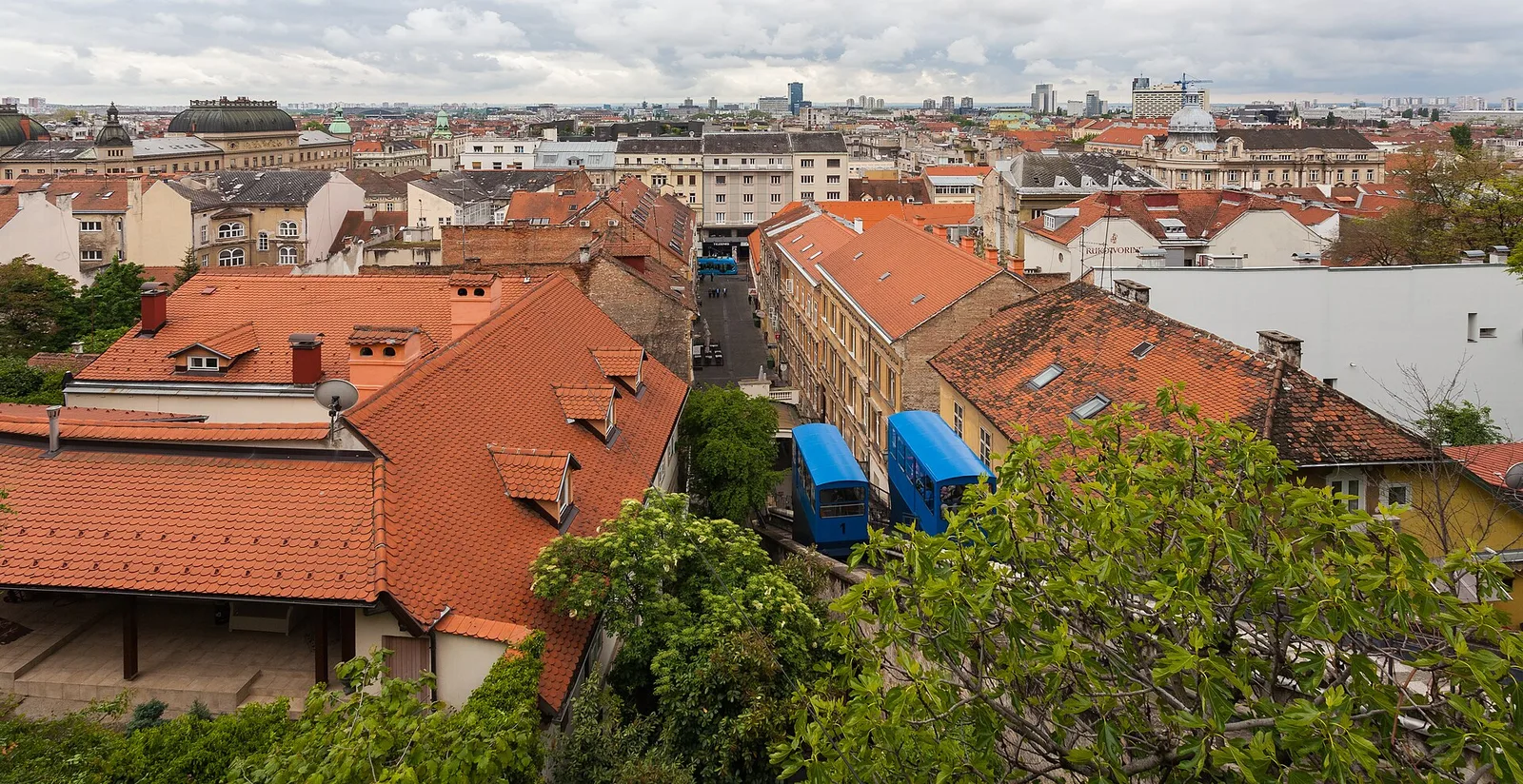
Hotel geography and the luggage boundary
Hotel Jagerhorn is the researched central stay closest to the Ilica and Tomic Street transition, making spontaneous use of the funicular plausible. Boutique Hotel HOH is already in Upper Town and should not be sold on the need to commute by funicular. Amadria Park Hotel Capital supports a broader central Lower Town route. Choose from the whole stay rather than a 64-second ride.
Do not use the funicular as an assumed luggage shuttle without confirming station access, space and hotel route. Historic Upper Town pavements and slopes continue after the car stops. Use a taxi or other appropriate transfer when bags or mobility make the chain unsuitable. Verify room, entrance, live transport and cancellation terms before booking; proximity to a station does not promise a quiet room.

Keep the reopening date in proportion
The May 2026 reopening matters because many current travel pages still preserve the closure. It should not turn the guide into a renovation press release. Record the operator, closure and reopening dates, then return to the visitor decision: whether the line is running now, what ticket works, which route follows and whether boarding suits the group. A future interruption must be able to supersede this paragraph cleanly.
Compare sourced pre-renovation views with the present station and cars only from public space. Look for continuity in the track corridor, white-and-blue visual identity and relationship with Lotrscak, while avoiding unsupported claims about motors, cable or structural fabric. Technical renewal often hides behind a familiar appearance. ZET’s project information, not visual guesswork, should establish what was replaced.
The line is also ordinary public transport used within a living city. Let commuters and people with greater boarding need go first, keep the station threshold clear and avoid staging repeated rides solely for content when a queue forms. One ascent or descent is enough to understand the system. The rest of the story belongs to the Upper Town walk it enables.