
The simple version
If you stay central, you’ll walk most places. When you want to save time or energy, trams are the quickest way to hop between neighborhoods.
Think of trams and buses as an energy-saver: use them for medium hops (center ↔ parks ↔ neighborhoods), then do the historic core on foot.
What’s worth using transit for (and what isn’t)
- Use trams for: center ↔ Maksimir, center ↔ main station area, center ↔ neighborhoods, longer straight-line hops.
- Skip trams for: tiny center-to-center hops (walking is often faster than waiting).
- For Upper Town, expect stairs — it’s part of the charm.
- If you’re out late, check night service (it uses different fares and schedules).
Tickets: what to buy (daytime + night) and how long they last
Zagreb’s public transport is run by ZET. Tickets are time-based, and daytime tickets come in three common lengths. Night tickets are a separate fare.
- Daytime single tickets: 30 / 60 / 90 minutes (same ticket works on trams and buses).
- Night single ticket: one fare used during night service.
- Daily and multi-day tickets: good value if you’ll take multiple rides (and like “no thinking” logistics).
As of early 2026, ZET lists these prices for the common single tickets: 30 min (€0.53), 60 min (€0.93), 90 min (€1.33). Night single ticket: €1.99. Tickets bought from the driver are typically more expensive (for example: 60 min €1.33, 90 min €1.99).
- If you’re buying from the driver, expect higher prices and plan to pay in cash.
- If you’re buying at kiosks/offices, you’ll typically get the cheaper fare options.
Where to buy tickets (and what’s easiest as a visitor)
- Kiosks and ZET ticket offices: best for simple paper tickets at standard prices.
- From the driver: convenient, but usually more expensive and often cash-only.
- Stored-value card: useful if you’ll take several rides (tap/validate each boarding).
- Multi-day tickets: great for simplicity if you’ll ride a lot over 3/7/15/30 days.
How validation works (don’t skip this)
The most common mistake is having the right ticket but not validating it correctly.
- Paper ticket: cancel/validate immediately after boarding using the onboard machine.
- Stored-value card: tap/hold it to the validator each time you board (it tracks time validity).
- If you transfer within your ticket’s time window, you still need to validate again on the next vehicle.
Funicular note (timely)
Visitor-friendly route planning
- Use Google Maps (or your preferred maps app) for live routes and stop names — it’s the simplest approach.
- Aim for direct rides (one tram is better than two if you’re carrying bags).
- In the center, treat walking as default and trams as a backup when tired.
Airport note (important if you’re using public transport)
Zagreb Airport is connected to the city by several options. Public transport is possible, but it’s not always the simplest choice with luggage — especially if you’re arriving late.
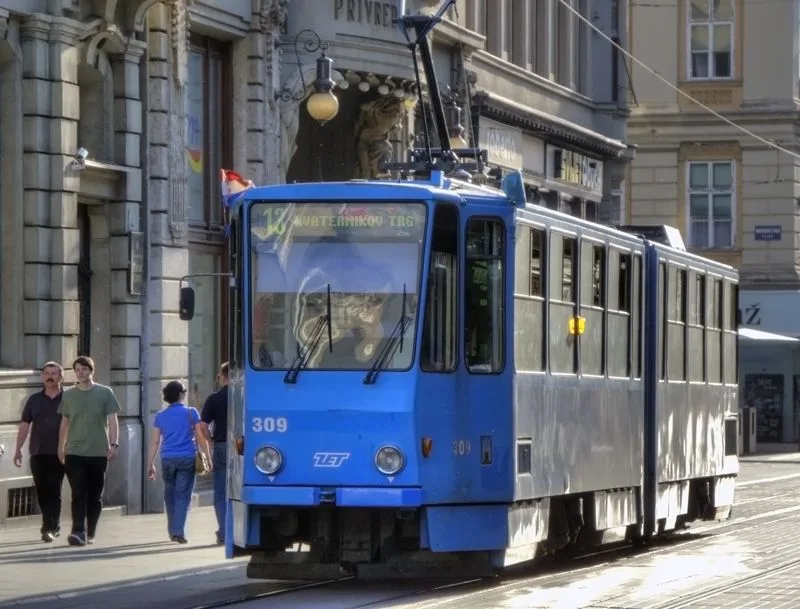
What Zagreb public transport should add to the trip
Use trams and buses to remove long or repetitive transitions while keeping the compact centre on foot. The network is most valuable for outer parks, residential districts, Novi Zagreb and tired returns.
A route and pace that make Zagreb public transport work
Walk Upper Town and the Green Horseshoe, then use current journey planning for Maksimir, Jarun, Trešnjevka or MSU. Save the hotel stop and the direction of the return line offline.
The choices, trade-offs and common mistake
Choose the current ticket or pass by actual ride count, not the psychological comfort of unlimited travel. Groups with mobility needs should verify the accessible vehicle and stop sequence.
Fares, validation, routes and service changes require official current information. Do not block doors, assume every vehicle is equally accessible or rely on a screenshot after major works or events.
Weather, current information and the fallback plan
Keep enough battery and payment flexibility for a taxi or ride-hail when service changes late. In the centre, a calm walk can be faster than waiting for a one-stop ride.
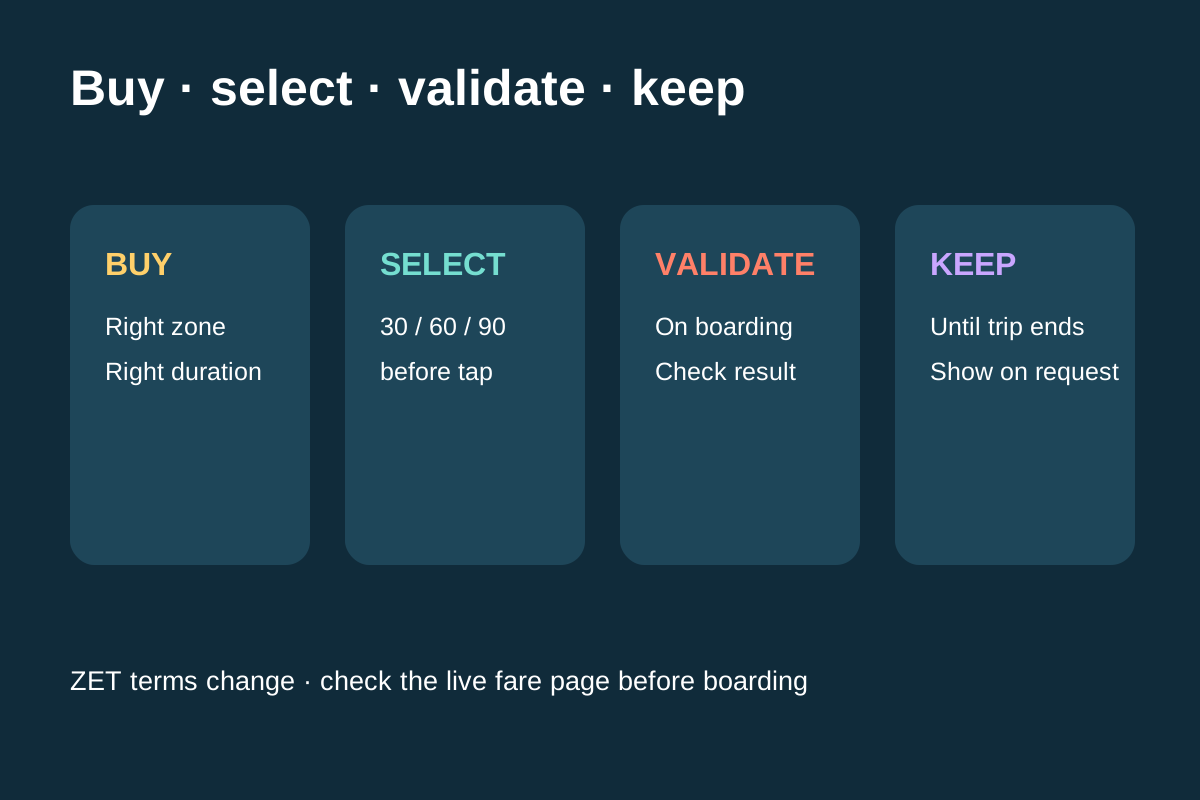
Choose fare duration and zone before validation
ZET’s live fare page currently distinguishes 30-, 60- and 90-minute travel and multi-day products. Stored-value validation defaults matter: if a passenger taps without selecting a shorter option, the ordinary fare can be deducted. Check the current euro price, zone and permitted modes before boarding; do not preserve a fare screenshot as timeless advice.
Validate as the product requires and keep the paper ticket or electronic record until the complete trip ends. A transfer within time is not the same as an unvalidated ride. Each traveller needs valid entitlement unless the live product explicitly allows sharing. Visitor status does not qualify someone for resident-only free travel or concessions.
Do not misapply Zagreb resident concessions
City notices describe free public transport for eligible Zagreb residents under 18, over 65 and expanded groups of residents with disabilities. Those schemes require the relevant ZET status or card; age alone does not make every tourist ride free. Ask ZET which documents and residency rules apply before relying on a concession.
Buy the ordinary valid fare when eligibility is uncertain, then seek clarification through an official sales point. Do not argue policy with a driver or inspector while blocking the vehicle. Carry proof for student, senior or disability products exactly as ZET specifies. A hotel key, passport age or foreign disability card may not activate a local scheme automatically.
Use trams as operating rail vehicles
Cross at intended points, look both ways and keep headphones low. Trams can approach quietly and need distance to stop. Rails are slippery when wet and can trap narrow wheels. Never step backward onto track for a photograph or wait between vehicle and platform edge. Let passengers exit before boarding.
At mixed street stops, identify the safe waiting area and direction before the vehicle arrives. Keep luggage compact and doors clear. A line number does not guarantee the same vehicle type, low-floor boarding or stop platform every time. Travellers needing a ramp should verify the specific trip and have a safe fallback.
Recover from diversions using live ZET evidence
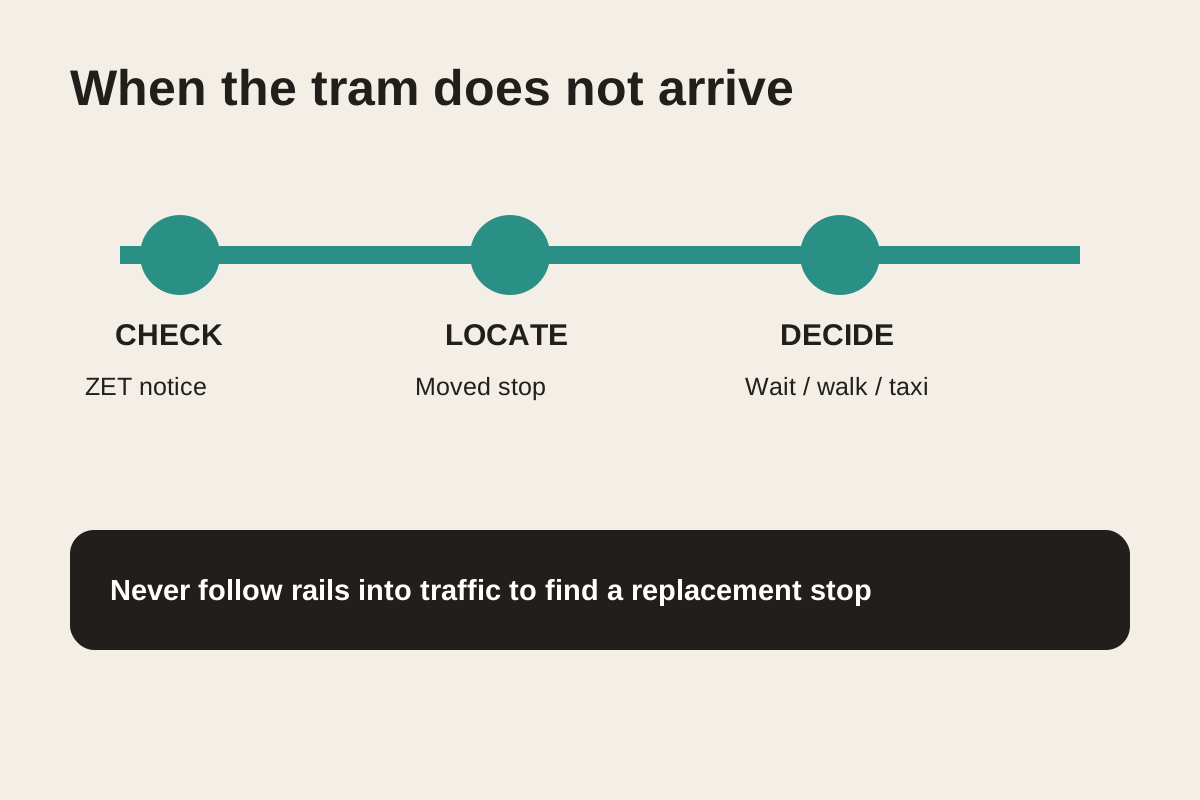
Construction, demonstrations, weather, events and incidents can divert a line or move a stop. Check ZET’s current notice, locate the replacement stop by name and street, then decide whether to wait, walk or use a licensed taxi. Do not follow rails into traffic or assume the crowd knows the temporary route.
Screenshot the notice and save the destination in case connectivity fails. A group should use a fixed landmark if separated. When the last connection matters, leave buffer for a missed vehicle. Timetable intervals are planning evidence, not a guarantee against congestion or an exceptional suspension.
Treat buses, funicular and night service separately
ZET operates trams, buses and the funicular under related fare rules, but route, boarding and operating hours differ. Confirm the exact stop, direction and final departure. A daytime multi-day ticket may cover night service under current terms, while a specific tourist product may not; read the live product rather than guessing from mode.
Regional trains, intercity buses and airport shuttles are not automatically ZET services. Their tickets and platforms are separate. Line 290 is a ZET airport route, while the dedicated airport shuttle has its own operator. Showing one ticket to the wrong company does not validate travel.
Use public transport access as a whole route
A low-floor vehicle is only one link. Check pavement, kerb, stop surface, boarding gap, crowd space, destination crossing and accessible toilet. Contact ZET when a specific lift, ramp or vehicle is essential. City testing of new accessible vehicles is progress, not proof that every scheduled run meets every need.
Fulir electric vehicles currently provide a seasonal free central pedestrian-zone service under a dated City programme, with weather limits and operating hours. Verify the live season and call process; do not present it as a year-round replacement for accessible transit. Special disability transport also has eligibility and booking rules, not visitor on-demand taxi status.
Choose a hotel by repeated transit geometry
Hotel Capital supports central tram and walking routes; Canopy by Hilton supports the station and Branimirova side; Zonar Zagreb supports western plans; Hotel Sliško supports the main bus-station area. Choose by the itinerary’s repeated endpoints, room and sleep, then confirm the current stop during works.
A stop outside a hotel can add noise and still require inaccessible boarding. Verify the actual entrance and luggage path. The best base reduces transfers for several days, not merely the airport arrival.


Related guides
Questions people actually ask
Do trams and buses use the same tickets in Zagreb?
Yes — ZET time-based tickets work across trams and buses (with validation required on boarding).
Should I buy tickets from the driver?
It’s convenient in a pinch, but it’s usually more expensive and often cash-only. Kiosks and ZET ticket offices are the easier default.
Is Zagreb walkable without using public transport?
The core is very walkable. Trams become most useful for longer hops (for example: center ↔ Maksimir/Jarun) or when you want to save energy.