
Zagreb is a walking city
The city’s best moments happen on foot: stairs, small streets, parks that connect museums, and evening routes that feel made for slow conversation.
These routes are written as “loops” — you can do them without overthinking public transport, and you can pause for coffee anywhere without breaking the plan.
How to choose the right route (quick picker)
- First time in Zagreb: do the Upper Town viewpoints loop (Route 1).
- Want calm and flat walking: do the Lower Town parks loop (Route 2).
- Want a big-sky sunset: do Jarun (Route 3).
- Want nature without leaving the city: do Maksimir (Route 4).
- Want a ‘night vibe’ walk: do the evening center loop (Route 5).
Route 1: Upper Town viewpoints loop (60–90 min)
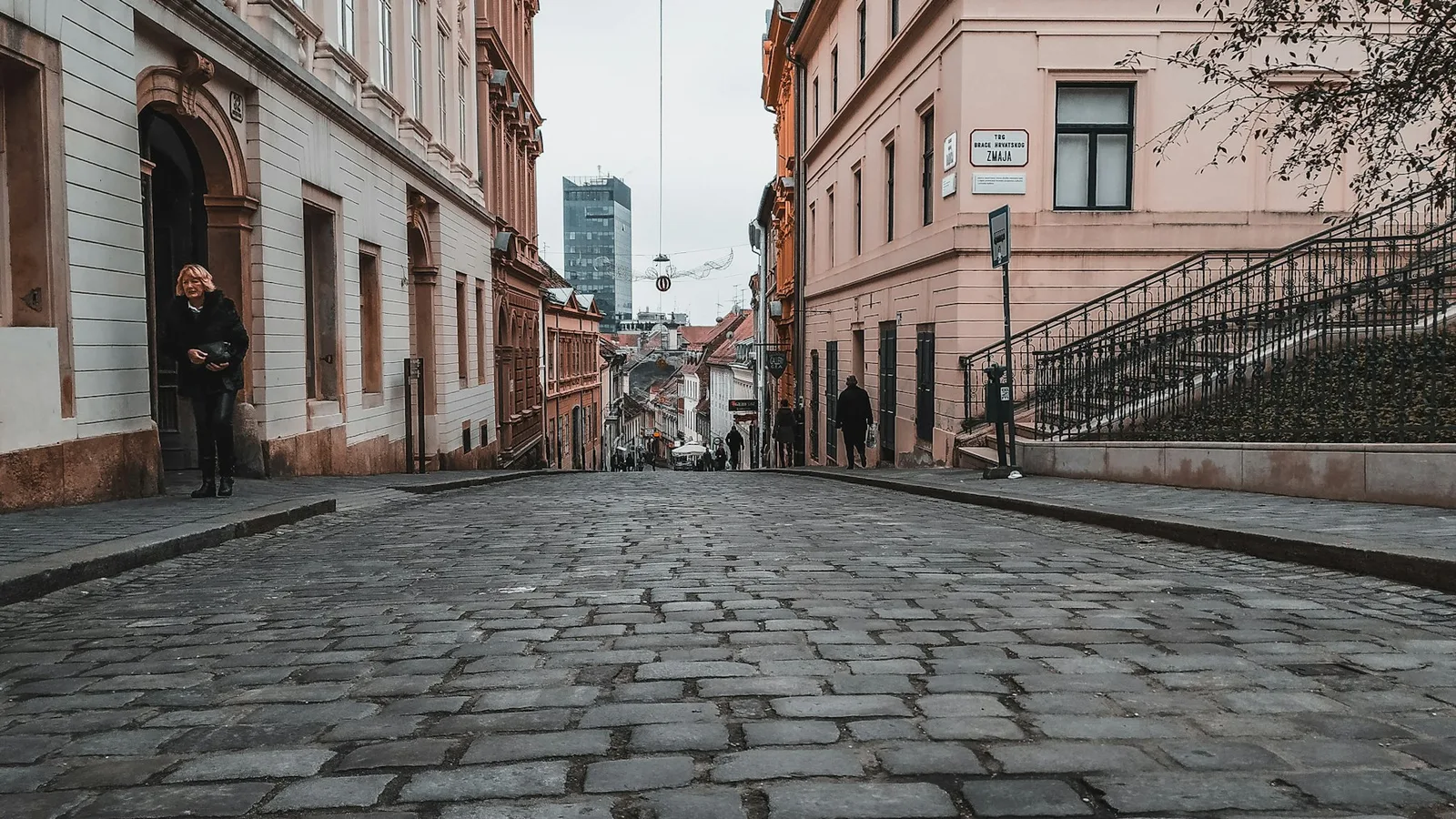
This is the classic Zagreb walk: historic lanes + viewpoints + an easy return to the café zone.
- Start: Ban Jelačić Square → Dolac Market area (even a quick pass is worth it).
- Walk up toward Upper Town → St. Mark’s Square → Stone Gate.
- Slow viewpoint drift: Strossmayer Promenade + nearby overlooks.
- Finish near Lotrščak Tower area → head back down to the center for coffee/dinner.
- Best time: late afternoon into dusk.
- Best for: first-timers, couples, and anyone who wants “postcard Zagreb.”
Route 2: Lower Town parks loop (60–90 min)
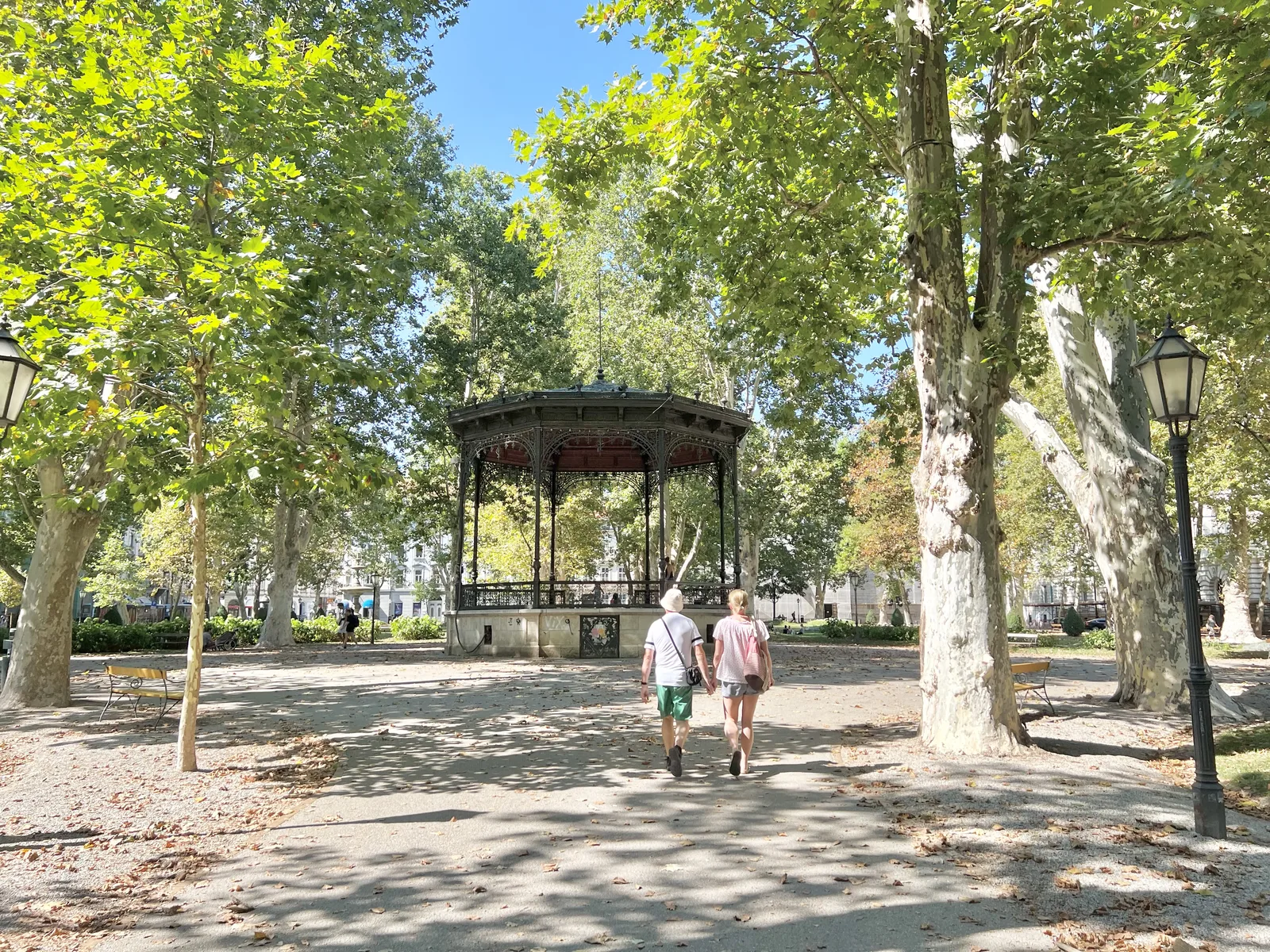
This route is the “Green Horseshoe” feeling: parks and squares linking the center. It’s the easiest way to reset your brain between museums and meals.
- Start: Zrinjevac park → slow walk through the tree-lined paths.
- Continue toward Tomislavac and the main station area (wide-open square atmosphere).
- Optional detour: Botanical Garden when you want pure greenery in the center.
- Loop back toward cafés and museums — no strict path needed.
- Best time: morning light or early evening.
- Best for: families, relaxed travelers, and anyone who wants a calm walk without stairs.
Route 3: Jarun sunset loop (45–75 min)
Jarun is your “big sky” walk: water, movement, and a slower Zagreb evening.
- Simple: pick a lakeside loop and keep walking until it feels like enough — then stay for sunset.
- Best for: movement + calm, especially in warmer months.
- Good pairing: casual dinner or a low-key bar night afterward.
Route 4: Maksimir ‘forest reset’ loop (60–120 min)
Maksimir is the easiest way to feel like you left the city without actually leaving it.
- Simple: enter the park, pick a main path, and walk until the noise drops away.
- Best for: nature lovers, families, and anyone who wants a calmer half-day.
- Good pairing: one museum earlier, then Maksimir as the afternoon reset.
Route 5: Evening center loop (45–75 min)
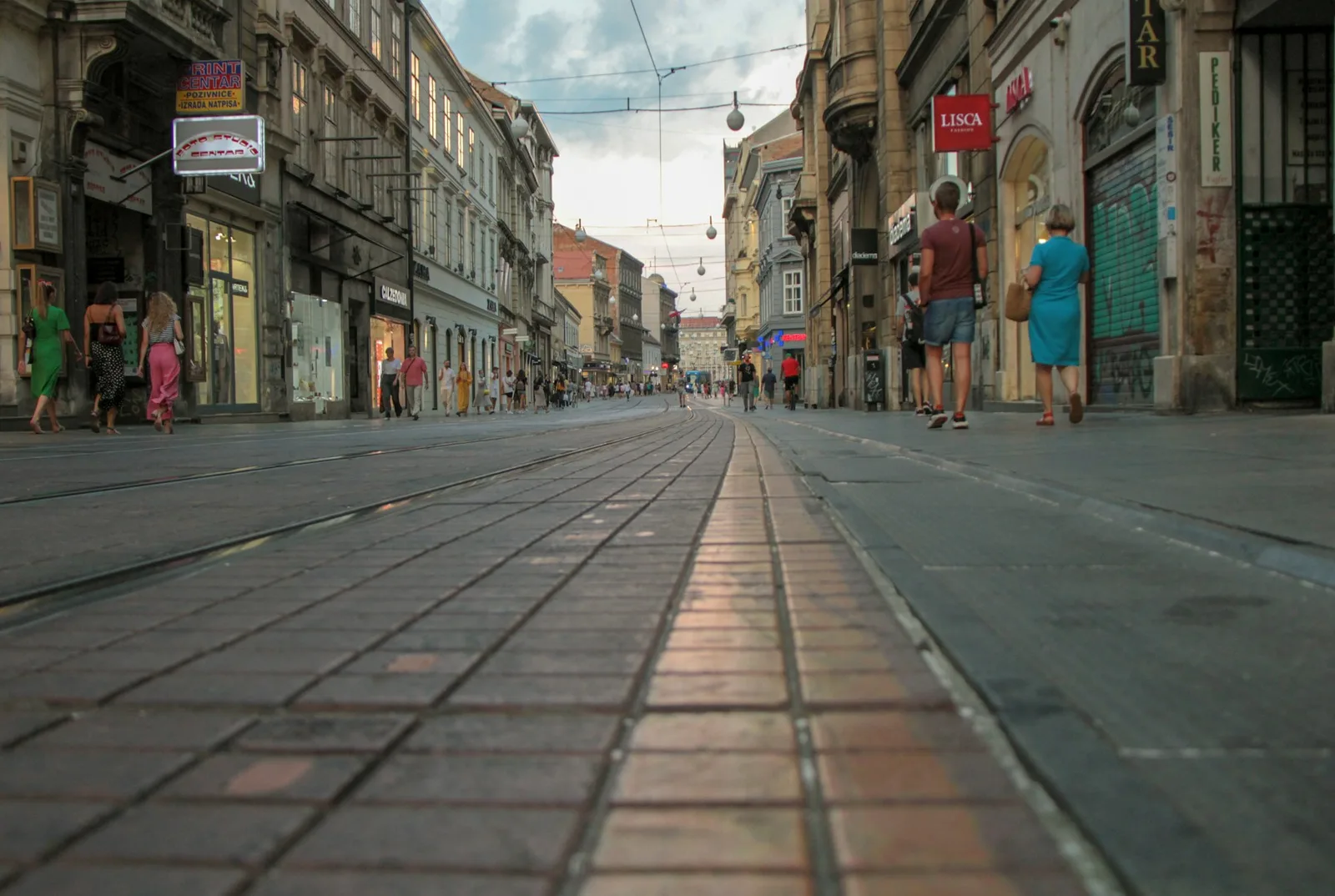
This is the ‘Zagreb after dark’ walk: soft lights, calmer streets, and the city’s best atmosphere.
- Start near the main square → drift through central streets → do one quiet viewpoint or park edge → loop back for dessert or a final drink.
- Best for: couples, weekend visitors, and anyone who wants the city mood more than ‘sights.’
Route 6: Modern Zagreb loop (MSU + Bundek) (60–120 min)
If you want a contrast day, cross the river for modern city texture and a relaxed lakeside walk.
- Do MSU (Museum of Contemporary Art), then walk Bundek for a calm, open reset.
- Best for: modern culture travelers and anyone who wants a different Zagreb rhythm.
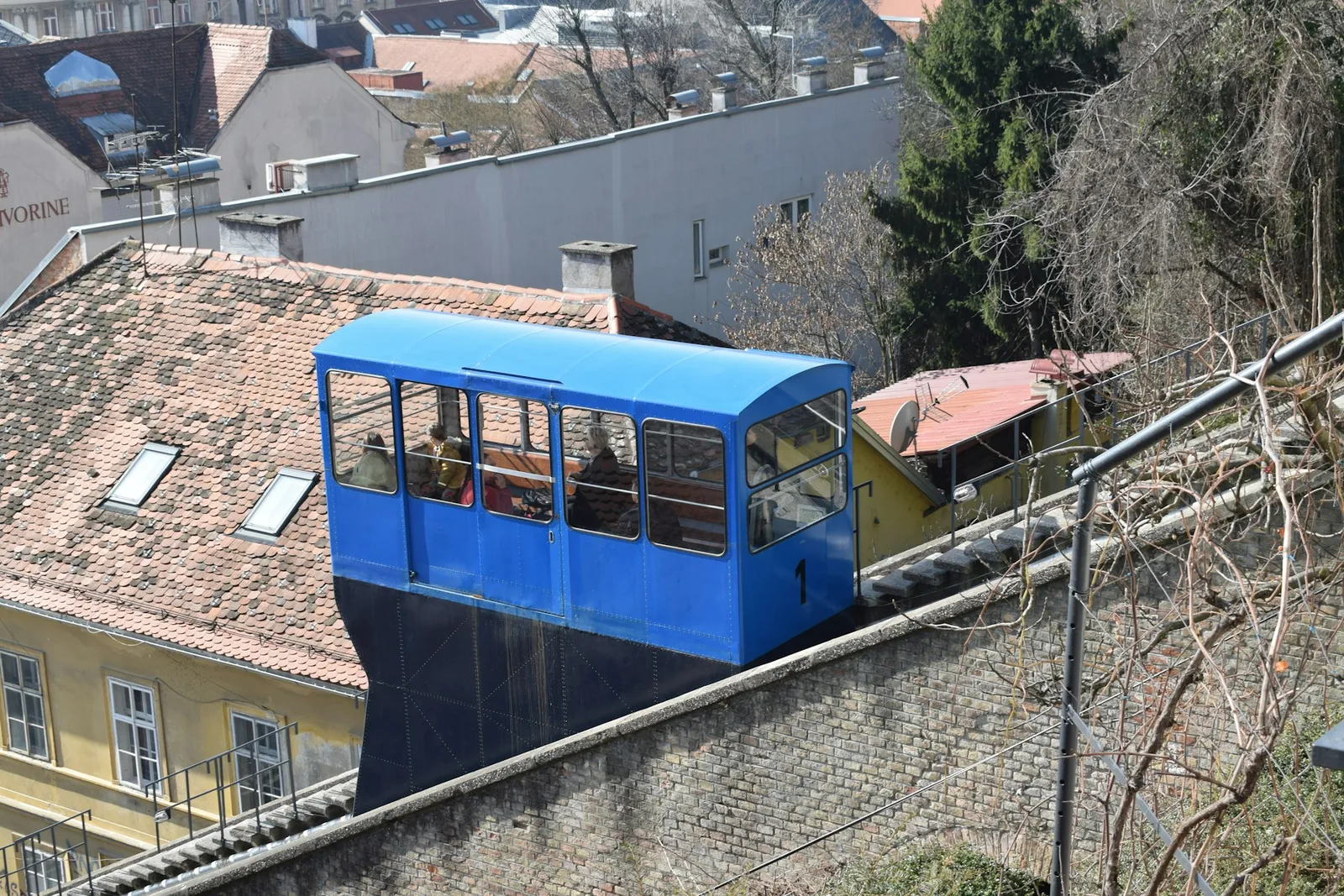
Update: Funicular reopened (timely)
Route 1: Dolac, Kaptol and the Upper Town reveal
Begin near Ban Jelačić Square while the centre is still gathering pace, then move toward Dolac and the Cathedral quarter. The market gives the walk a living first chapter rather than an immediate climb. Browse without treating every aisle as a task, take the café pause early if that suits your rhythm, and orient yourself before the streets tilt upward toward the historic core.
Continue through the Stone Gate and let St. Mark’s Square become the middle of the route, not its only objective. Upper Town rewards detours into short lanes, changes in elevation and moments when Lower Town appears between buildings. Strossmayer Promenade and the Lotrščak side give the route its visual release. The funicular can shorten the transition, but walking at least one direction makes the city’s layers easier to understand.
Finish by descending toward the centre for lunch rather than adding a distant museum automatically. This loop is compact on a map but dense in texture, slopes and stopping points. Allow roughly a half day when it is your first encounter with Zagreb; compressing it into an hour turns the market, civic square and viewpoints into a sequence of photos instead of a coherent introduction.
Route 2: the Green Horseshoe without park fatigue
Lower Town’s parks work best as a linked city walk rather than a mission to complete every segment of the Green Horseshoe. Start at the end closest to your hotel or morning plan, then alternate greenery with one architectural or cultural anchor. Zrinjevac is the most effortless introduction; the squares and gardens farther south gradually change the scale and pull the route toward the railway-station side.
Choose one museum, gallery or the Botanical Garden as the indoor or enclosed midpoint. That stop gives the sequence shape and protects it from feeling repetitive. The Croatian National Theatre can serve as the evening anchor on the western side, while the Art Pavilion and nearby parks make a clear daytime focus. You do not need to cross the entire horseshoe to understand why greenery is central to Lower Town.
This is Zagreb’s most forgiving route for mixed energy levels because there are frequent places to sit, pause or leave the walk. It is also easy to divide: a short Zrinjevac loop on arrival day, a museum-and-garden section later, and the theatre side before dinner. In heat or rain, shorten the outdoor stretches and keep the cultural anchor; in gentle weather, let the parks carry more of the day.
Route 3: Martićeva, Kvatrić and an everyday-city morning
Use Martićeva as a transition from central Zagreb into a more residential rhythm. The pleasure is in design-minded storefronts, cafés, side streets and the gradual thinning of headline sights. Walk with one or two chosen stops, but resist turning every recommendation into an appointment. This route is strongest when it feels like a morning in the city rather than a hunt for hidden gems.
Kvatrić Market gives the walk a practical destination and a different market experience from Dolac. Arrive with enough time to browse, notice what is seasonal and decide whether the area should also hold lunch. The market is not a replacement for Dolac on a first morning; it is a useful contrast once you have seen the central ritual and want to understand how daily shopping sits within a neighbourhood.
Return by tram if the group has had enough walking, or choose a parallel street for the journey back so the route does not simply reverse. This is a good second- or third-day plan, particularly for repeat visitors and travellers staying long enough to value ordinary urban texture. On a one-day itinerary, keep the historic and Lower Town loops instead.
Route 4: Trešnjevka when the point is the neighbourhood
Trešnjevka should not be attached to a central route as a hurried final stop. Travel there with a market, café or meal as the morning anchor, then walk the surrounding streets at the pace of the area. The visual rewards are subtler than Upper Town: smaller businesses, residential blocks, tram movement and the repeated patterns of daily errands. That is precisely why the route adds something different.
Begin around Trešnjevka Market, make one unhurried circuit and then extend only if the group is engaged. A useful walk does not need an Instagram landmark at its far end. It needs a reason to look closely, a pause that belongs to the neighbourhood and a sensible way back. A bakery stop or casual lunch often creates more connection than adding another named attraction.
This route suits longer stays, food-curious travellers and visitors who have already covered the central essentials. It is less compelling for anyone with limited mobility if the exact path and surfaces have not been checked, or for a first-time group expecting continuous historic architecture. Choose it for everyday Zagreb, and it delivers; choose it as a secret old town, and the premise is wrong.
Route 5: a romantic dusk loop with a weather-proof ending
For a couple’s walk, timing and transitions matter more than collecting romantic landmarks. Start in the centre while there is still daylight, climb toward Upper Town slowly and reach a viewpoint around dusk. Continue through quieter historic lanes, then descend toward a dinner area you chose in advance. The route should build toward the evening rather than end with a long search for a table.
Strossmayer Promenade is a natural visual anchor, but keep an alternative when weather closes the view. The Stone Gate, a short old-street loop and a reserved bar or restaurant can preserve the shape of the evening without requiring perfect skies. In winter, shorten pauses and prioritise warm interiors; in summer, delay the climb and let the walk continue after dinner when the streets feel gentler.
Footwear still matters on a romantic route. Smooth stone, steps and slopes become less charming when someone is uncomfortable. If one person prefers a lighter walk, use the funicular in one direction and save energy for the promenade and return. The aim is shared attention, not athletic completion, so leave enough slack for an extra drink or an unexpectedly good view.
How to design your own route
Build around one anchor, one change of texture and one exit. The anchor might be Dolac, a museum, a neighbourhood market or a viewpoint. The texture change is what prevents monotony: historic lanes into parks, market streets into residential blocks, or a museum followed by open green space. The exit can be a tram stop, dinner reservation or return to the hotel. Three decisions are enough to make the walk feel intentional.
Measure the route in time and terrain, not only kilometres. Upper Town adds climbing and photo stops; markets slow the pace; museums create standing fatigue; park paths can be longer than a straight street connection. For a half day, two substantial areas are usually enough. If the plan crosses the same central square repeatedly, reorder it so each transition carries you toward the next part of the day.
Finally, give the walk permission to shrink. Rain, heat, crowds or tired feet can turn the full route into one good district and a café. That is not a failed itinerary. Zagreb rewards repeated pauses and short returns, and the tram network can rescue a route without erasing it. Save the unused section for another morning instead of marching through it after attention has gone.
Accessibility and comfort on Zagreb walks
Central Zagreb is compact, but compact does not mean uniformly easy. Upper Town introduces slopes, steps and old surfaces; long museum visits add standing time; summer heat can make open Lower Town stretches more demanding. Travellers with reduced mobility should separate the flatter park route from the historic climb, confirm current lift or vehicle access where relevant, and use trams or taxis to remove transitions that add effort without adding experience.
Build regular seated stops into the route before anyone needs them. A café, park bench or indoor anchor every hour or so helps families, older travellers and mixed-energy groups keep the same day together. Comfortable shoes and water matter even when the total distance looks modest, because the stop-start pattern of sightseeing feels different from a continuous exercise walk.
For detailed access needs, treat this guide as route inspiration rather than a guarantee. Construction, surfaces, entrances and transport conditions change. Verify the exact venue and street sequence, then keep an easy exit on the map so shortening the walk remains a normal choice rather than an emergency.
If the group has different stamina, agree on a regrouping point instead of asking everyone to maintain one pace. Central cafés, squares and museum entrances make better meeting points than an unnamed corner. A short independent section can preserve both comfort and goodwill without fragmenting the entire day.
Questions people actually ask
What’s the best walking route in Zagreb for first-timers?
The Upper Town viewpoints loop (Route 1). It gives you historic streets, iconic corners, and the best ‘postcard’ views in one walk.
Is Zagreb good for walking if I don’t want stairs?
Yes. Do the Lower Town parks loop (Route 2) and Jarun (Route 3). Upper Town is the stair-heavy layer — beautiful, but more vertical.
What’s the best time of day to walk in Zagreb?
Late afternoon into dusk for Upper Town views, and after dinner for the night vibe. In summer, do big walks early/late to avoid midday heat.