
Why Trešnjevka is the ‘local market’ choice
Dolac is iconic — but Trešnjevački plac is the market you visit when you want everyday Zagreb: neighborhood energy, seasonal produce, and fewer cameras.
It’s also a great way to see a different slice of the city without committing to a full ‘neighborhood day.’ One market morning can be enough.
What to buy (simple, delicious, Zagreb)
- Seasonal fruit and vegetables (the best ‘taste of place’ souvenir is something edible).
- Local dairy and comfort staples if you’re staying in an apartment.
- A market snack for the walk that follows (pastry + coffee = Zagreb breakfast).
Best time to go (and how to keep it stress-free)
Neighborhood markets are morning-first. Go early for the best selection and the best atmosphere.
- Bring cash and a reusable bag.
- If you’re shy about language: point, smile, and keep it simple — it works.
- Buy small: one or two things you’ll actually use that day.
A simple ‘Trešnjevka morning’ plan
- Market browse → one small purchase → coffee nearby.
- Tram back toward the center → parks loop or Upper Town walk.
Tips (so it feels like a local ritual, not a checklist)
- Don’t rush. The point of a market morning is the pace.
- Treat it as a ‘one-stop’ detour, not a full-day mission.
- If you love markets, combine Trešnjevka with Britanac or Dolac on different days — each has a different mood.
Why Trešnjevka Market belongs in the day
Trešnjevka Market is the clearest anchor for experiencing this residential district through ordinary food shopping and neighbourhood movement. It offers contrast with central Dolac without needing to compete with its architecture or visitor visibility.
Arrive in the morning, browse with a modest purchase in mind and extend the outing into nearby streets, a bakery or lunch. Return by tram when the neighbourhood purpose is complete. The market should lead a Trešnjevka visit, not appear as a rushed add-on after Upper Town.
What to notice and how to decide
Observe what is seasonal, how regular customers move through the stalls and how the market connects with surrounding businesses. Ask before portraits or close stall photography, keep pathways clear and treat shopping as the primary activity happening around you.
Time, day and weather affect stall activity. Verify broad market information but expect variation from photographs and reviews. Buy only what can be eaten or stored safely, and bring a bag suited to a tram journey rather than accumulating fragile items for sightseeing.
Prioritise Trešnjevka Market on a longer stay, for food interest or when the neighbourhood itself is the destination. Dolac remains the more coherent first-market experience. The residential trip is valuable because it slows down, not because it supplies a secret checklist.
Read the official hours by market zone
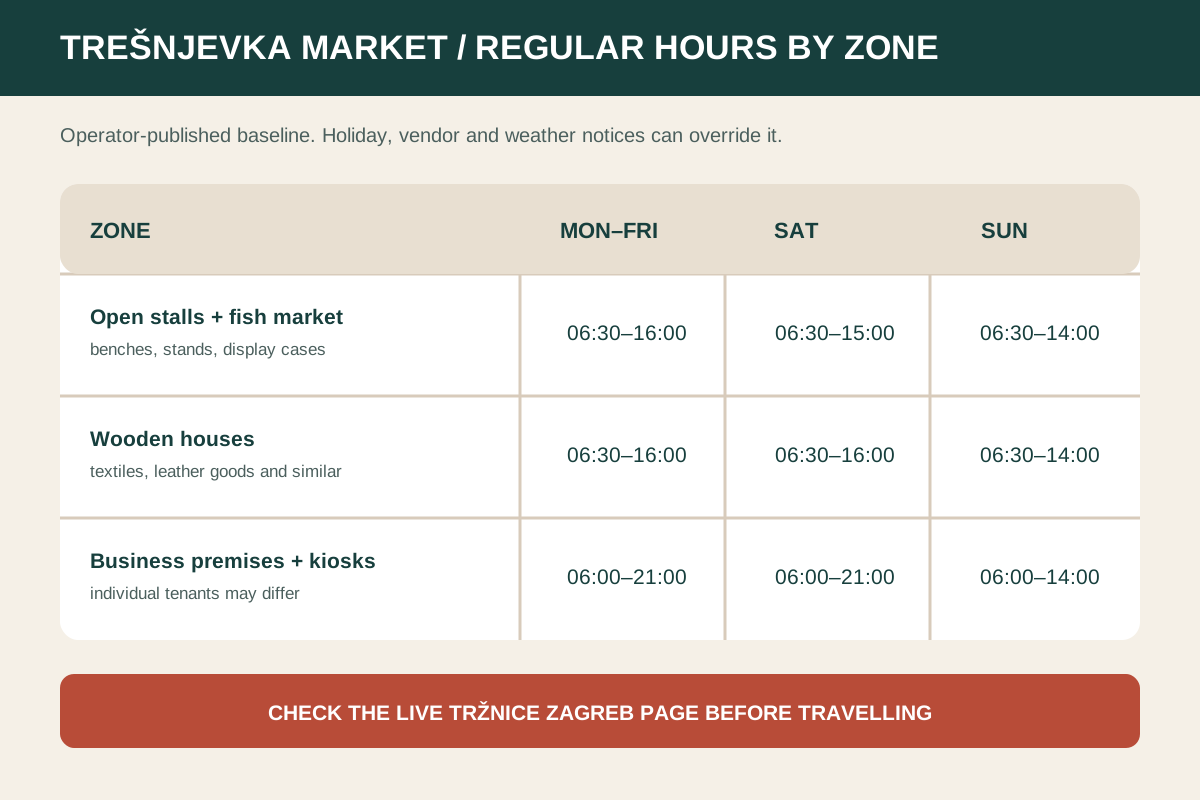
Trešnjevka Market does not have one universal closing time. Zagreb Markets lists open stalls and the fish area as Monday–Friday 06:30–16:00, Saturday 06:30–15:00 and Sunday 06:30–14:00. Wooden market houses run Monday–Saturday 06:30–16:00 and Sunday 06:30–14:00. Business premises and kiosks have a broader published span, Monday–Saturday 06:00–21:00 and Sunday 06:00–14:00.
The hours diagram separates those zones so a late kiosk does not imply a full produce market. Check the live operator page and holiday notices, then arrive well before the relevant closing time. Individual sellers can finish when stock runs out. If a particular fish, bakery or prepared-food counter matters, confirm it directly rather than extrapolating from the site-wide timetable.
Keep the regular market and Špica plac distinct
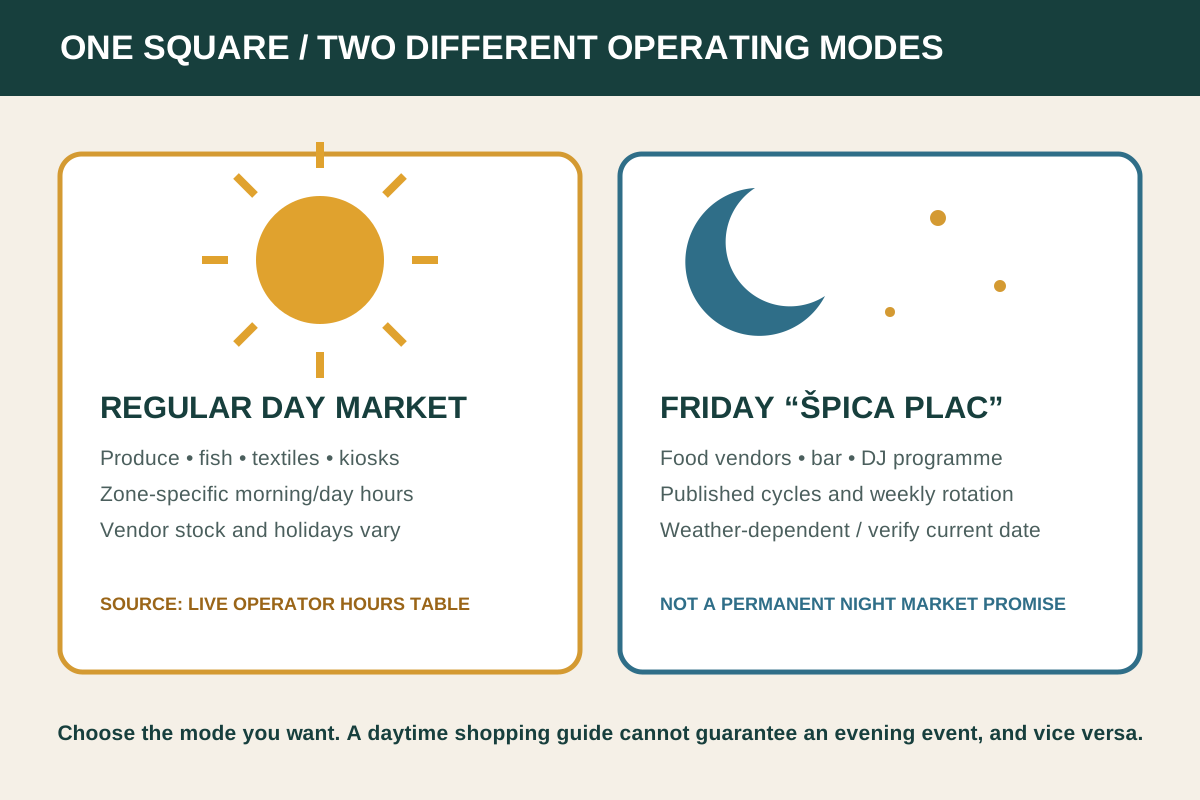
The regular daytime market is the dependable reason to visit. Špica plac is a separate, weather-dependent Friday-evening programme that Zagreb Markets has scheduled in seasonal cycles, including spring to early summer and again from September into autumn. It can bring food, music and a social evening mode, but it is not a permanent night market.
Use the day-and-night diagram as a planning distinction, not a promise of today’s event. Check the operator’s current event page, exact date, start and cancellation notices before travelling. When Špica plac is absent, do not describe ordinary closed stalls as a failed attraction. Visit in the morning for trade or choose another confirmed evening programme.
Buy food in quantities the trip can protect
Ask how produce is priced—per kilogram, bunch, piece or container—before ordering. Pointing at a pile can be ambiguous. Carry small euro denominations and establish card acceptance first. Check ripeness, bruising and intended use without squeezing delicate stock. A vendor may choose or weigh the produce; ask politely if selection matters.
For fish, meat, dairy or prepared food, verify allergens, storage and whether the item can remain safe until it reaches a refrigerator. Bring an insulated bag when needed and avoid buying more than the accommodation can store or cook. Market appearance does not replace food-safety judgement. If ingredients or temperature history are unclear for a medically important diet, choose a labelled alternative.
Use the archival image as dated evidence
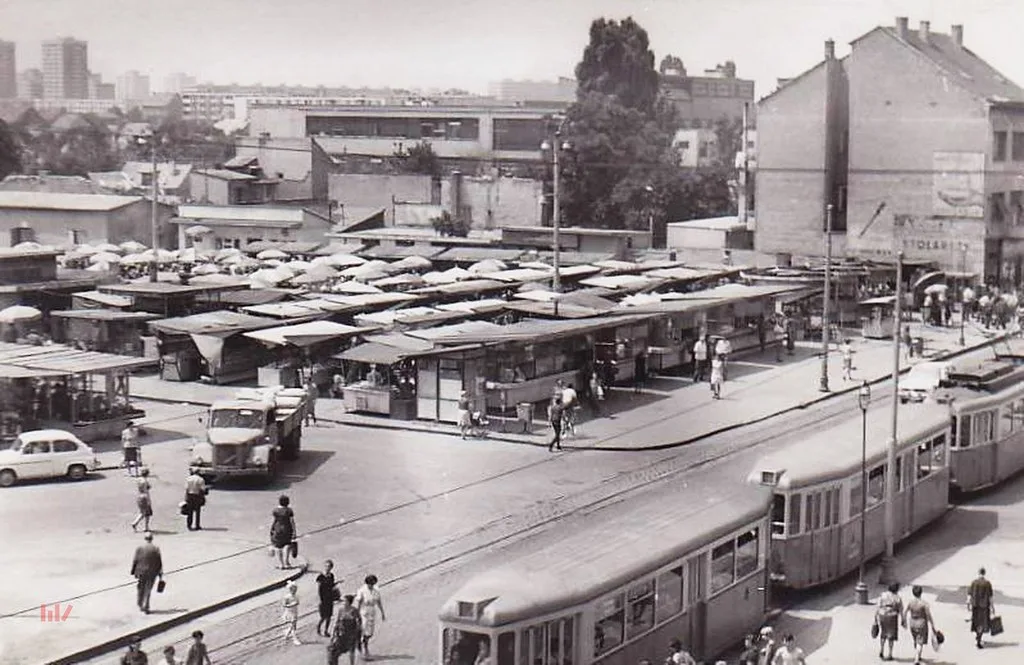
The 1970s photograph records a historical market condition, not the current stall plan. Zagreb Markets describes Trešnjevka as a workers’ neighbourhood whose market was evident by 1935. Compare broad functions—exchange, crowd, shelter and the relationship to surrounding streets—without claiming that an unidentified seller, structure or product survives today.
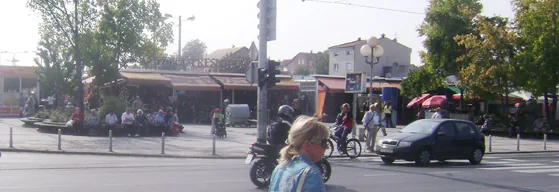
The current square view provides a second dated point, but even recent photography can precede works, event equipment or a changed traffic pattern. Put dates in captions and notes. Do not use nostalgia to call present-day repairs or ordinary commerce inauthentic. A living neighbourhood market earns attention precisely because it changes with residents’ needs.
Plan tram crossings, thresholds and crowd movement
The Ozaljska corridor carries active trams and traffic around a busy neighbourhood threshold. Use official ZET information for the stop and direction, cross at intended points and keep trolley bags clear of rails. Set a meeting place outside the densest aisle. A group should not stop at an entrance to compare purchases.
Wheelchair users and travellers with prams should confirm kerbs, continuous routes, aisle width and accessible toilet options for the intended zone. Temporary crates, queues and event furniture change circulation. Early hours may provide space but also deliveries. Rain makes paving and rails slippery; heat makes cold-chain purchases more time-sensitive. Leave by the safest open route instead of forcing a planned circuit.
Photograph trade as a relationship, not a backdrop
Ask before photographing a seller, shopper, close display or price discussion. Keep devices away from scales, money and food handling. Do not rearrange produce, interrupt service or publish a recognisable person with a mocking caption. A wide image of square and stalls can explain the place without making an unwilling individual the subject.
Commercial shoots and organised interviews can need operator and participant permission. During an evening event, music and a crowd do not erase consent. Record the event name and date, credit performers when known and respect restrictions around children. Put the camera away when the aisle becomes crowded or a vendor asks.
Use a western base only when the itinerary supports it
Zonar Zagreb is the researched hotel whose western position best supports repeated Trešnjevka, Jarun or western tram plans. It avoids making every local morning begin in the historic core. Hotel Jagerhorn or Hotel Capital can still suit a first-time central itinerary, but the market then becomes a deliberate tram journey rather than a doorstep claim.
Verify the exact room, current tram route, accessibility and return after any evening event. Market proximity cannot guarantee quiet, a particular vendor or food-storage facilities; confirm a refrigerator or kitchen directly when purchases depend on it. Select the accommodation for the whole stay, then build one market visit around its real transport geometry.
If breakfast is included at the hotel, the market still serves a different purpose: observing a neighbourhood supply system or buying a small planned item. Do not duplicate a full breakfast simply to justify the trip. Start with a shopping list, reusable container and storage limit, then leave room for one seller-recommended seasonal product whose preparation you understand.
Record that recommendation and the visit date for later verification.

Questions people actually ask
Is Trešnjevka market better than Dolac?
They’re different. Dolac is iconic and central; Trešnjevka feels more local and everyday. If you want atmosphere without crowds, Trešnjevka is a great pick.
Do I need Croatian to shop at the market?
No. Keep it simple: point, confirm the price, and pay. A friendly hello goes a long way.