
Zagreb accessibility, in one sentence
Zagreb’s center is compact and walkable, but the city has real stairs and cobblestones — especially in Upper Town — so the best accessibility strategy is choosing the right base and planning step-friendly routes.
Where to stay for easier logistics
- Easiest base: central Lower Town (Donji Grad) for flatter walking and tram access.
- Upper Town edges: beautiful but stair-heavy — best if you’re comfortable with elevation.
- If mobility varies day to day: choose central, then use taxis/ride-hailing for ‘tired moments.’
Upper Town (stairs) vs Lower Town (flatter): how to plan it
- Upper Town: plan one short loop for views and one landmark, then return to flatter routes.
- Lower Town: use parks and museums as your main daytime anchors.
- Avoid stacking: don’t do a long Upper Town walk and a long museum day back-to-back unless energy is high.
Public transport and step-friendly moving around
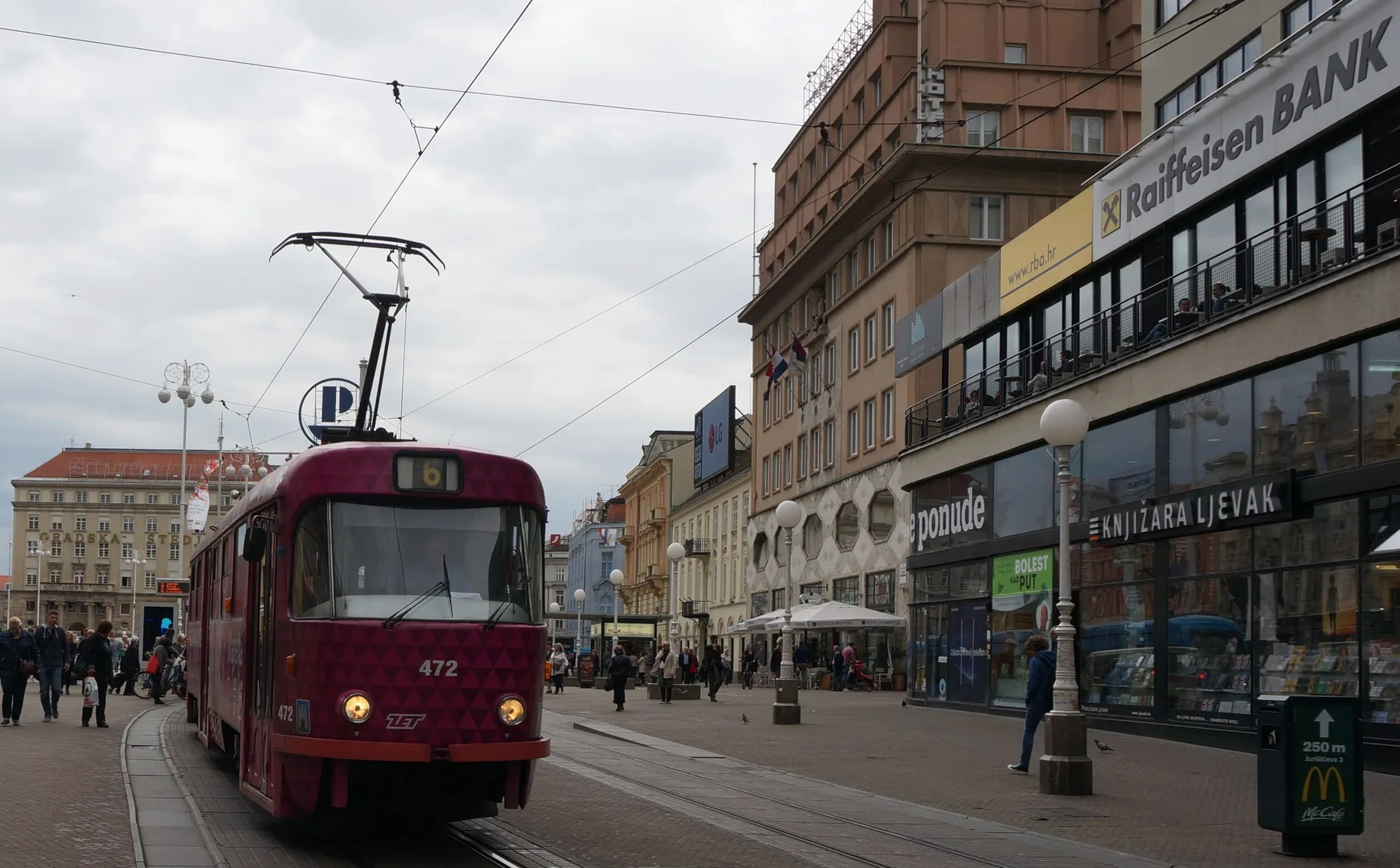
Trams and buses can reduce walking distance, but vehicle accessibility can vary by line and vehicle type. The safest approach is to use transit as a ‘distance reducer’ and keep routes flexible.
- Use trams for longer hops (center ↔ parks/lakes/neighborhoods).
- If you need a guaranteed simple option: taxi/ride-hail for door-to-door trips.
- For specific step-free needs: check the exact attraction and route in advance.
A low-stairs Zagreb day (template)
- Morning: café + Green Horseshoe parks loop.
- Midday: one classic museum close to parks.
- Afternoon: slow walk + coffee.
- Evening: dinner + short night walk.
Traveling with a stroller
- Lower Town parks and boulevards are the easiest stroller zone.
- Upper Town is possible, but expect stairs and uneven surfaces — plan a shorter loop.
- Use transit or a short taxi hop to keep the day smooth.
What accessible Zagreb planning should add to the trip
Accessibility depends on the exact route, venue and traveller: Upper Town slopes, old surfaces, vehicle access, lifts, toilets and fatigue all matter. Broad ‘accessible’ labels are not enough.
A route and pace that make accessible Zagreb planning work
Separate flatter Lower Town days from the historic climb, use confirmed transport to remove low-value effort and place seated breaks before they become urgent. Map the final approach to every priority venue.
The choices, trade-offs and common mistake
Ask specific questions about step-free entrance, lift dimensions, seating, toilets, companion policy and current works. Photos or a direct staff answer are more useful than a generic icon.
Access changes with construction, broken equipment and events. Verify close to travel and avoid promising a route for all wheelchair, sensory or energy-limiting needs.
Weather, current information and the fallback plan
Keep an equivalent central venue and an accessible licensed transport contact. A hotel with responsive staff and suitable room details can be the trip’s most important accessibility decision.
Audit the whole route, not the destination label
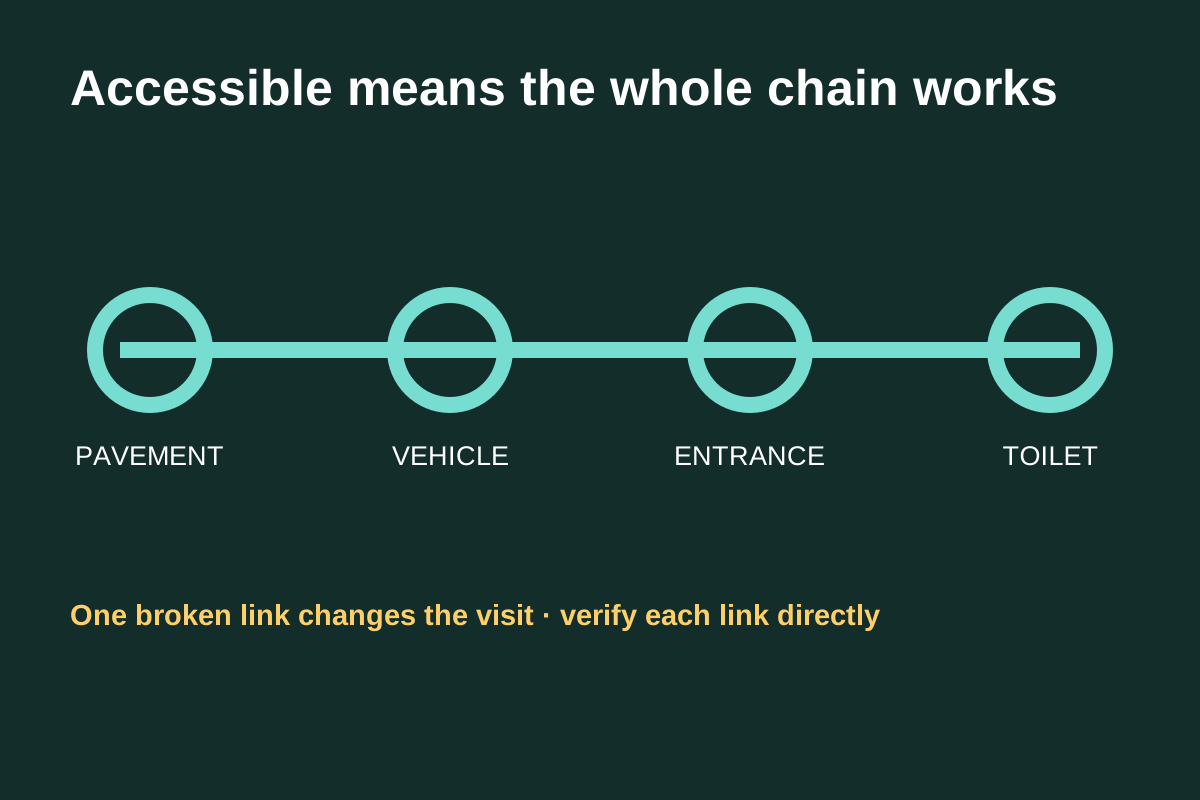
An accessible visit requires pavement, crossing, vehicle, stop, entrance, internal circulation, seating, toilet and exit to work together. A website wheelchair icon can describe only one link. Write the route from hotel room to attraction and back, identify every transfer and verify the weakest link directly.
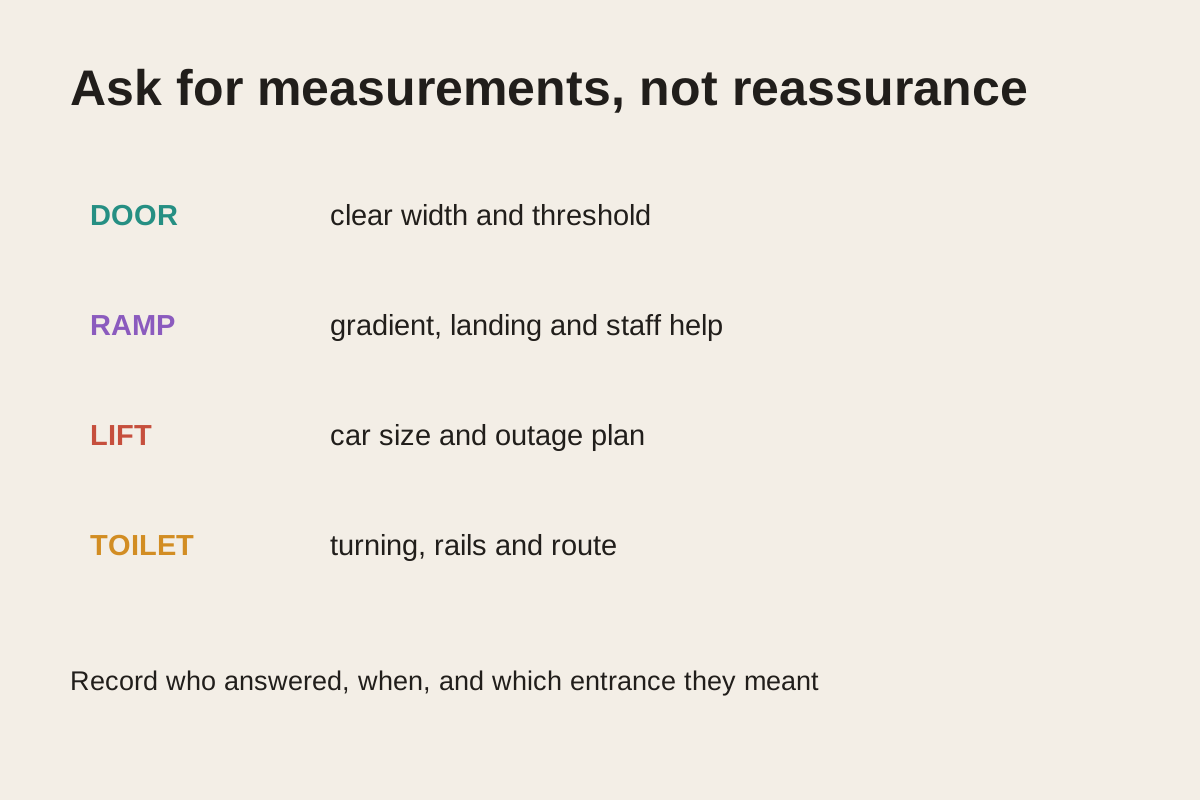
Record the exact entrance, date and staff contact. Construction, broken lifts and event barriers change access faster than evergreen articles. Ask for measurements: clear door width, threshold, ramp gradient and landing, lift car size and toilet turning space. ‘We usually manage’ is not equivalent to safe independent access.
Separate public transport progress from trip certainty
Zagreb is testing and adding accessible trams and buses, but fleet progress does not guarantee a low-floor vehicle on one departure. Contact ZET about the exact line, stop and time, boarding ramp and destination platform. Keep an alternative that does not require dangerous manual lifting.
Rails, cobbles, temporary stops and crowded platforms affect wheelchairs, walkers, prams and people with low vision or balance difficulty. Cross intended routes and keep wheels perpendicular to rails where safe. A companion should not stand in traffic to create space. Abandon the segment when the route is unsafe.
Use airport assistance as a booked service
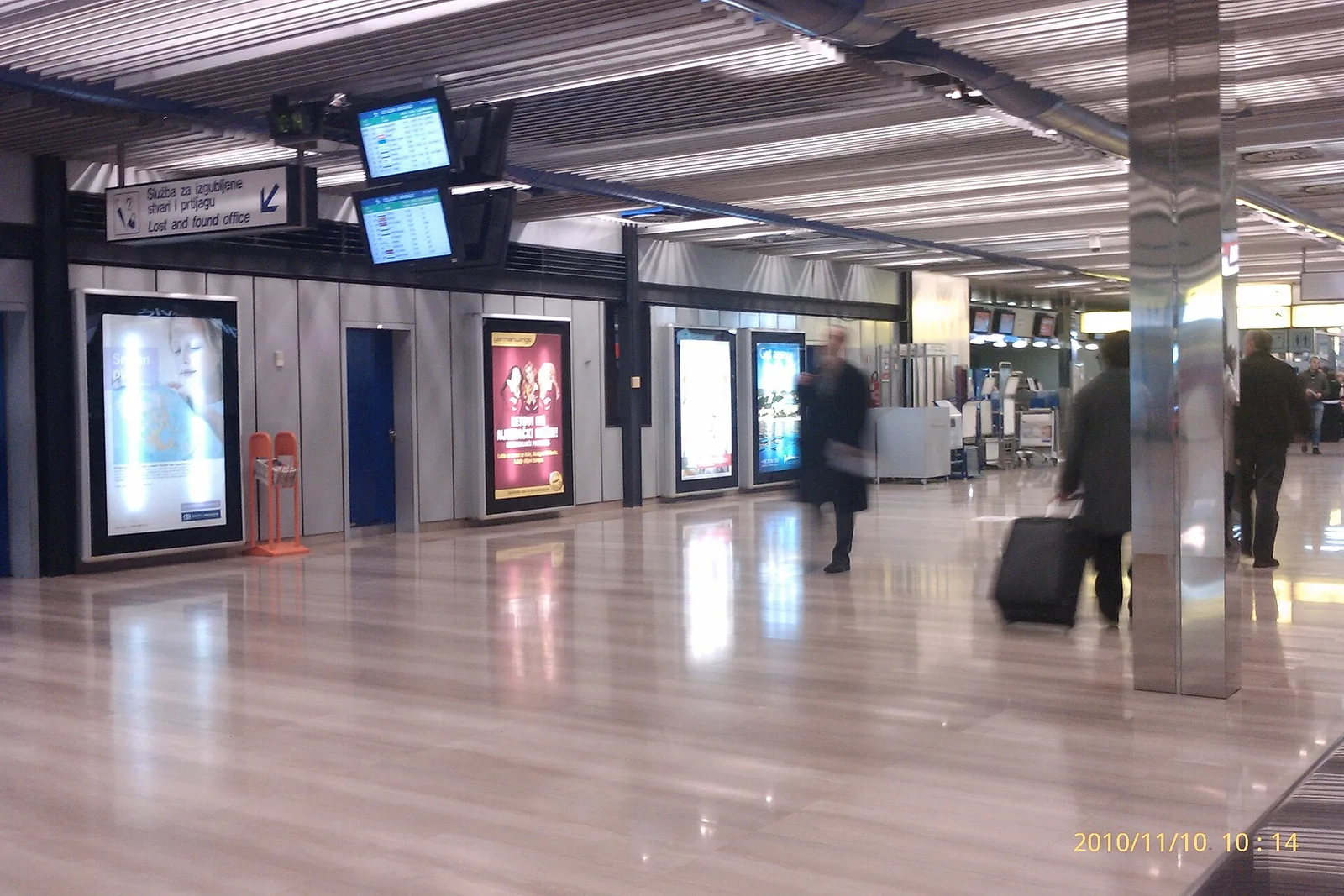
Zagreb Airport requests PRM notification through the airline or booking channel at least 48 hours before the scheduled flight. Save confirmation and use the designated contact point on arrival. Airport escort does not include the city transfer, so arrange that vehicle, hotel entrance and luggage assistance separately.
Describe the assistance needed rather than relying only on a code: walking distance, stairs, transfer, own mobility aid, battery and communication. Confirm damage-report procedure for equipment. Keep essential medication and repair information accessible. Never let time pressure force an unsafe transfer.
Plan sensory, cognitive and communication access
Ask about lighting, strobe, sound, echo, crowds, smells, tactile access, captions, audio description, sign language, easy-read material and quiet space. ‘Wheelchair accessible’ says nothing about these needs. Choose quieter opening periods and one clear retreat point; allow a visitor to skip a room without group pressure.
Carry key addresses and needs in Croatian and English if useful, but speak to the person rather than only their companion. Staff should be asked what is available, not expected to improvise professional interpretation. For medication, allergies or emergency communication, use accurate written information and the official health plan.
Treat historic hills and toilets as route decisions
Upper Town slopes, cobbles and restricted vehicle access can make a nearby attraction hard to reach. Verify taxi drop-off, funicular status, surface and the return before committing. A renovated interior may be accessible while the approach is not. Choose a Lower Town alternative when the whole chain fails.
An adapted toilet must be on the usable route, open during the visit and not used as storage. Ask about rails, transfer side, alarm and key. Chocolate Museum’s lift-accessible exhibition but unadapted toilet is an example of partial access that must be stated plainly, not marketed as fully accessible.
Use City and operator services by their eligibility
City disability transport and free-fare programmes have local eligibility, registration and booking requirements. They are not automatically available to every visitor with a foreign card. Fulir’s small electric vehicles are a dated seasonal central service with weather limits. Verify eligibility and operation instead of building the itinerary around a headline.
When a venue cannot accommodate the route, request a digital programme, ground-floor alternative or refund under its terms. Document the answer without shaming individual staff. Systemic access reporting should name the barrier precisely and propose the missing link.
Choose accommodation from room to pavement
Ask hotels for doorway, lift, bed transfer space, shower, toilet, emergency plan and step-free street exit; request photographs or measurements for the exact room. A property category does not guarantee every room. Confirm that accessible features cannot be substituted without consent.
Canopy, Pullman and other researched modern properties may merit consideration, while historic Hotel Jagerhorn or Upper Town properties require closer route checks. Choose on verified room and itinerary evidence, not age of building alone. Record who confirmed the room and recheck before arrival.
Carry a service-failure fallback that preserves dignity
Write down what happens if the booked ramp vehicle does not arrive, the lift fails or the promised room is substituted. Keep operator numbers, booking references, an accessible taxi alternative and enough medication, power and weather protection for delay. The fallback should not depend on strangers lifting a person or device. If a service fails, move somewhere safe, document the barrier and contact the responsible operator before improvising. Request a written resolution or refund under the actual terms, and report recurring infrastructure problems with location, time, direction and photographs that do not expose other disabled people. A resilient plan does not excuse exclusion; it prevents the traveller carrying all of its immediate risk.
Questions people actually ask
Is Zagreb wheelchair accessible?
Some areas and attractions can be accessible, but the city includes stairs and cobblestones (especially in Upper Town). The best approach is choosing a central Lower Town base and confirming specific attractions in advance.
What’s the easiest area to stay in for accessibility?
Central Lower Town (Donji Grad) is usually the easiest for flatter walking and tram access.
Can visitors enjoy Zagreb without Upper Town stairs?
Yes. The Lower Town parks loop, museums, cafés, and evening street-life can make a full trip even if you keep Upper Town minimal.