
What it is (and where it sits)
The Art Pavilion (Umjetnički paviljon) is an exhibition space on King Tomislav Square — right in the Lower Town zone that’s designed for park walks, museums, and slow afternoons.
Even if you don’t go in, it’s worth passing by as part of a Horseshoe walk. If you do go in, it’s a perfect “one cultural stop” choice that doesn’t require a full museum day.
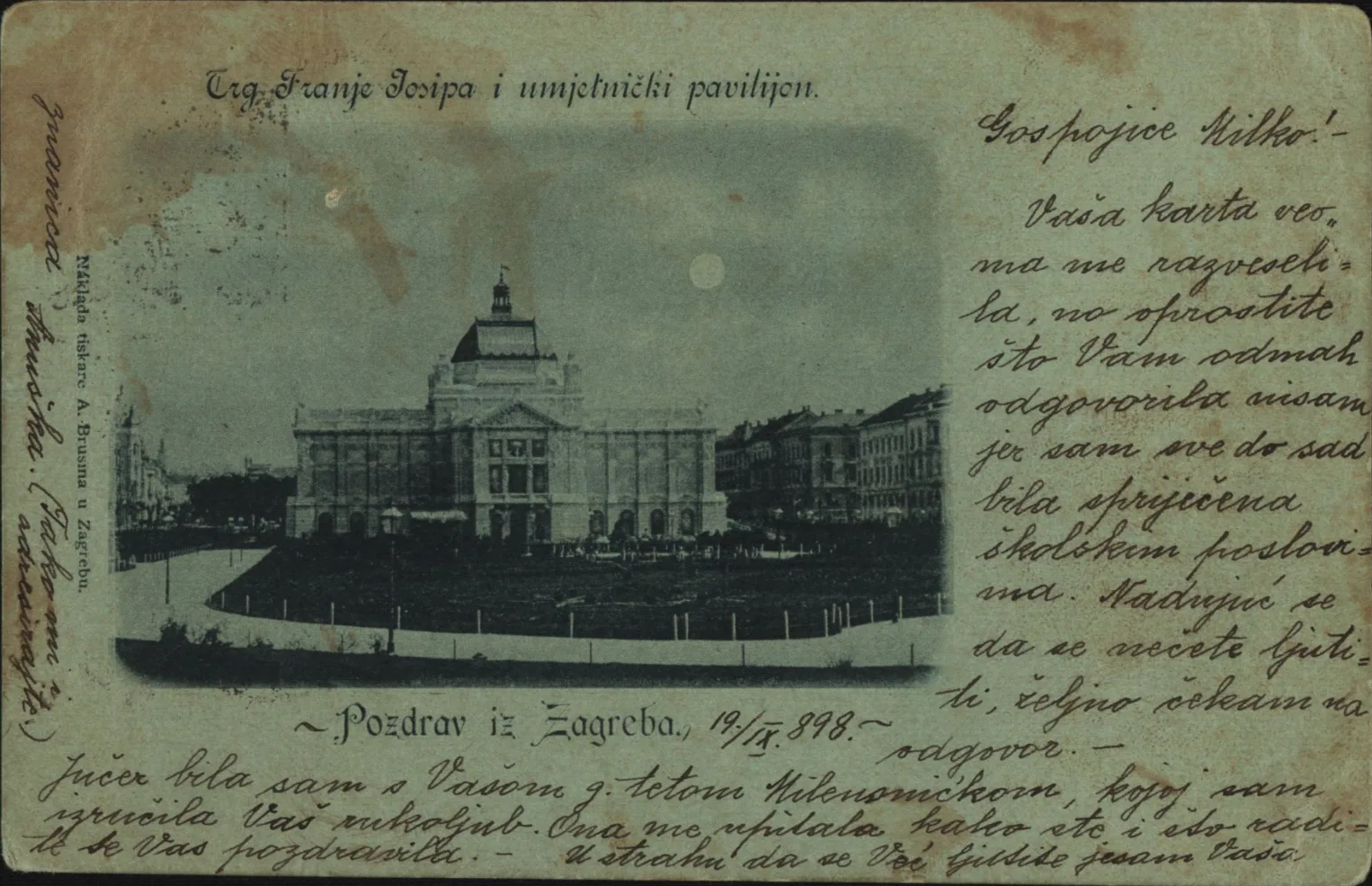
A fun detail from the Pavilion’s own history page: the building was originally constructed for the 1896 Millennium Exhibition in Budapest, then moved to Zagreb and opened as an exhibition pavilion in 1898.
Why it’s a perfect Horseshoe stop
The Art Pavilion sits right where the Green Horseshoe “makes sense”: parks, boulevards, and cultural buildings stitched into an easy walking system.
- It’s easy to add without breaking your day’s flow.
- It pairs naturally with Zrinjevac and long café breaks.
- It’s a great “one exhibition” choice when you don’t want a full museum marathon.
Current status (earthquakes + restoration)
Zagreb’s 2020 earthquakes affected many historic buildings — including the Art Pavilion. The Pavilion’s official site notes the building has been closed and that programming continues through exhibitions and projects in other spaces.
How to plan a visit (simple)
- Check the current exhibition and opening hours on the official site.
- Pair it with a park walk so the day feels spacious.
- If you’re doing multiple museums, make this your “visual” stop rather than your “history” stop.
Turn it into a perfect park-and-culture afternoon
- Art Pavilion → Zrinjevac loop → coffee → optional Botanical Garden detour → dinner.
Why the Art Pavilion belongs in the day
The Art Pavilion is a defining Lower Town exhibition building and an architectural anchor on the Green Horseshoe. Its current visitor value depends on restoration and programme status, so the exterior setting and institutional access must be considered separately.
Place the pavilion on a walk linking Zrinjevac, the railway-station side and the southern parks. The route remains coherent if entry is unavailable. When an exhibition is active, make it the main interior stop and leave room for the surrounding landscape afterward.
What to notice and how to decide
Read the building in the open park setting, noticing how colour, symmetry and sight lines create a civic focal point. If entering, let the current exhibition—not the prestige of the address—determine the visit. Exterior photography should preserve paths for people using the park.
Restoration, temporary venues and exhibition schedules can fundamentally change the experience. Consult official channels shortly before travel and confirm where any advertised programme actually takes place. Accessibility information should relate to the current venue, not only the historic pavilion.
Prioritise the exterior on a Green Horseshoe walk and entry when a current exhibition appeals. Do not reserve a large cultural block based on an old assumption of normal operation. The pavilion still contributes strongly to Lower Town’s architecture when its interior is unavailable.
Separate the landmark from the open gallery
The Art Pavilion remains a major Lower Town architectural landmark even when its historic interior is closed, under reconstruction or presenting work elsewhere. A facade view from King Tomislav Square is not evidence that visitors can enter. Check the official site for the date’s building status, current exhibition address and ticket conditions before promising an interior. Exterior appreciation and an exhibition visit are two different itinerary products.
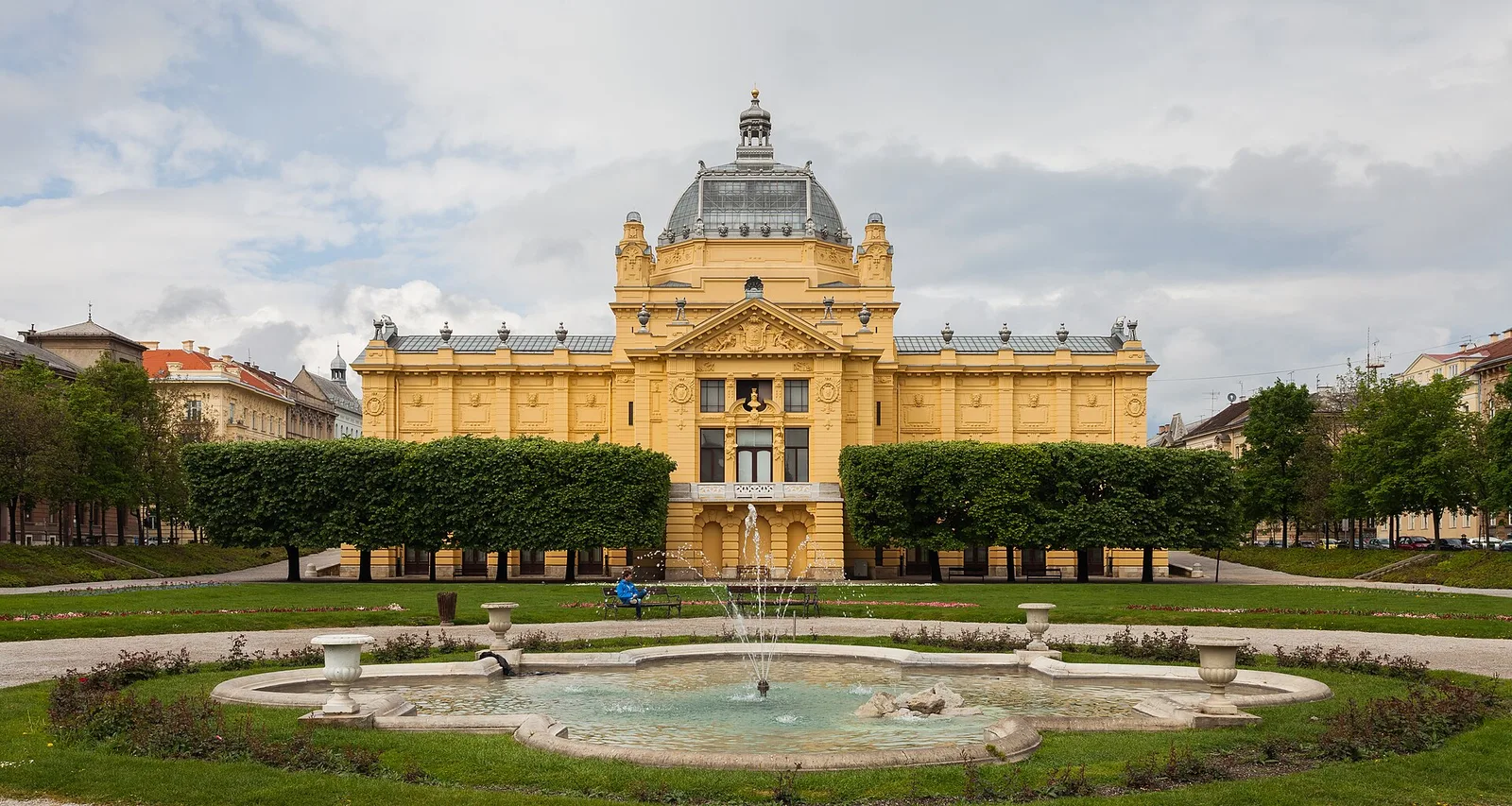
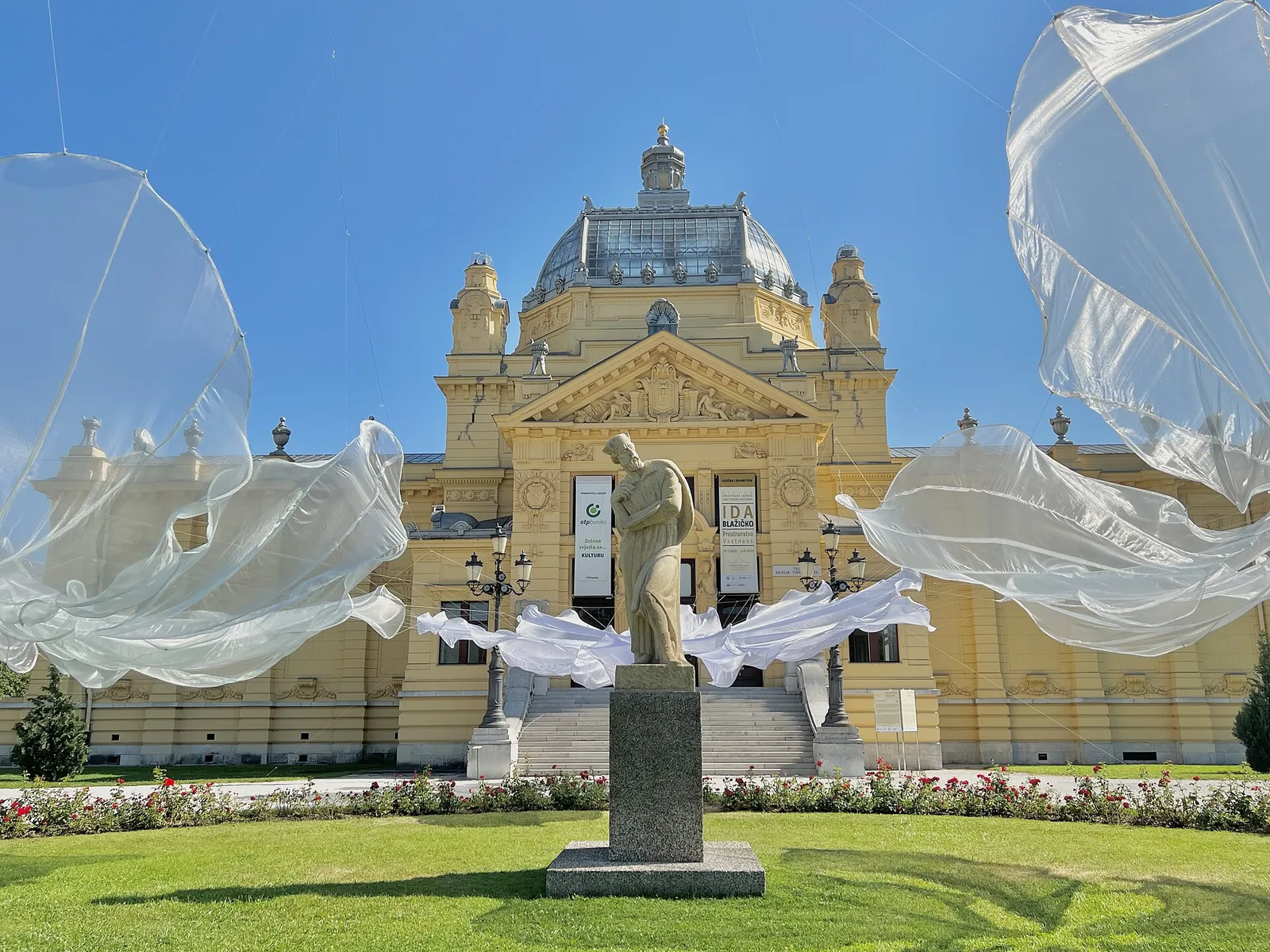
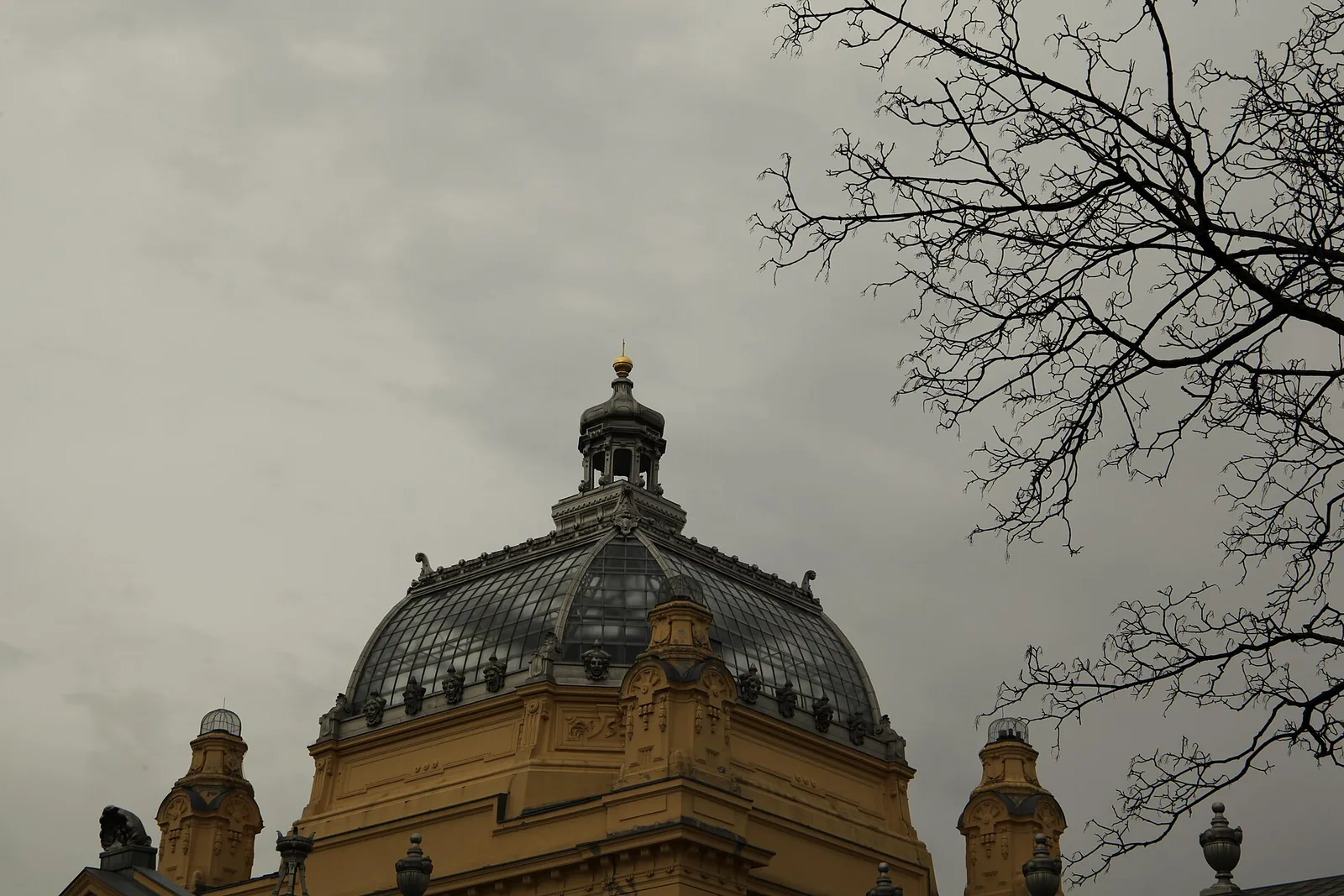
The sourced views are deliberately dated: an 1898 postcard, a 2014 facade and a 2022 outdoor intervention. Together they document change rather than a timeless condition. Compare roofline, cupola, park setting and public art, then look at the present building honestly. Construction barriers, restoration fabric or an empty programme are part of the current heritage story, not clutter to crop away.
Read the Pavilion through the Lower Town park axis
Approach from King Tomislav Square or the station side so the building’s position in the Green Horseshoe becomes clear. The yellow facade terminates a broad public-space view and relates to the station, gardens and institutional Lower Town. Walk around only on public paths, use marked crossings and keep planting or fountain edges undisturbed. The building can anchor an architecture route without consuming a separate attraction slot.
Notice the cupola, symmetry and exhibition-building identity, then compare the historic postcard with current urban scale. A postcard compresses traffic, trees and surrounding use into an ideal view. The present square is lived infrastructure with events, commuters and maintenance. Do not wait for an empty frame or block the central path with a tripod.
Follow off-site programming to the actual address
During building works, the institution may organise exhibitions, performances or projects at other sites. Read the official listing and enter that venue as the destination. Check whether the programme is free, ticketed, timed, outdoors or accessible under the host building’s rules. Do not arrive at the Pavilion facade and call the exhibition cancelled because the article omitted its temporary address.
The host venue controls entrance, bags, photography, toilets and step-free access. Save both the institution and venue contacts. A temporary outdoor work can be weather-dependent and may have no staffed interpretation outside programme hours. Credit the artist and organiser, and describe the temporary location accurately when sharing it.
Respect restoration as public safety and conservation
Never cross fencing, enter a work zone, move a barrier or photograph through an unsafe opening. Follow contractor and City signs around pavement diversions. Dust, equipment and temporary coverings are not evidence that access is informally permitted. Drone or commercial documentation requires permission and may conflict with safety, privacy or conservation work.
Restoration can change gradually, so a photograph becomes outdated quickly. Date observations and avoid predicting a reopening from visible progress. The official institution is the authority for visitor access. If a group wants interiors and the Pavilion is closed, choose a verified gallery such as Klovicevi Dvori, Lauba or MSU according to current programme and geography.
Use the Pavilion as a route hinge and hotel clue
Continue from the Pavilion to Zrinjevac, the Botanical Garden, Esplanade or one Lower Town museum. Esplanade is the researched hotel most directly tied to the station-and-park axis; Hotel Le Premier and art'otel Zagreb support other Lower Town cultural routes. Choose from the whole itinerary and room, not the promise of an exhibition view.
Verify construction diversions, hotel entrance, room conditions and cancellation terms. A quiet park-facing expectation may be changed by events, traffic or works. On a railway arrival, the Pavilion exterior can be the first architectural chapter without delaying check-in. On departure, keep luggage and train margin more important than one final facade circuit.
Read restoration without inventing a completion story
Heritage work can involve structural safety, roof and facade repair, services, conservation, accessibility and exhibition systems that are invisible from the lawn. Scaffolding removed from one elevation does not prove that the interior, climate or public route is finished. Use official project and institution updates, distinguish announced targets from confirmed opening and avoid repeating a date after it has passed without verification.
Compare the 1898 postcard with later facade photographs carefully. The postcard documents an early public image, not a measured architectural plan; the 2014 view records a pre-earthquake condition; the 2022 intervention shows art continuing around the building. Each source has a date, creator and purpose. A responsible guide uses the differences to explain change rather than selecting the prettiest image as timeless truth.
When the Pavilion reopens or changes status, the article must be checked again: entrance, hours, exhibitions, photography, cloakroom, lift and tickets will need current evidence. Until then, say precisely what can be seen from public space and where the institution’s programme is happening. Honest uncertainty is more useful than sending a visitor through a fenced route. Check again on the morning of a planned visit, especially after a new institutional announcement.
Questions people actually ask
Is the Art Pavilion worth it if I’m not a huge museum person?
Yes — especially if you pick one current exhibition you’re curious about and treat it as a single cultural stop paired with parks and coffee.
What’s the best way to include it in a short trip?
Pair it with Zrinjevac and a Horseshoe walk. You’ll get culture, architecture, and a calm city rhythm in one afternoon.