
Why Kaptol is worth a morning
Kaptol is the historic cathedral-side of central Zagreb. It’s close enough to feel like “the center,” but it has a slightly older, quieter mood — especially in the morning.
This is where you do the most Zagreb morning loop: market → cathedral area → coffee → viewpoints.
A little history (helps the neighborhood make sense)
Kaptol is one of the two medieval cores of Zagreb (the other is Gradec, today’s Upper Town). The “feel” is older here because it grew around the cathedral and the bishopric.
- 1094: the Diocese of Zagreb is established (the beginning of Kaptol as a major center).
- 1217: the cathedral is consecrated (a key date in the area’s story).
- 1242: the cathedral is damaged during the Mongol invasion of Europe.
- 15th century: fortifications are built as Ottoman pressure grows — Kaptol becomes a fortified settlement.
A simple Kaptol loop (90 minutes)
- Start at Ban Jelačić Square → quick Manduševac pause.
- Walk to Dolac Market for a morning ritual stroll.
- Pass by the cathedral area (check current access).
- Continue toward Upper Town for viewpoints, or drift into cafés nearby.
Kaptol vs. Upper Town: what’s the difference?
They’re close enough to combine easily — but the vibe is different.
- Kaptol: cathedral quarter energy, older core feel, perfect for mornings and market loops.
- Upper Town (Gradec): viewpoints, stone lanes, iconic photo stops like St. Mark’s Square.
Tips (so it feels calm, not crowded)
- Go early for the market and for a quieter cathedral quarter.
- Keep the plan flexible — the best part is wandering between small stops.
- If you’re visiting around Advent, expect bigger crowds and a more “festival city” mood nearby.
Pair it with these nearby classics
What a Kaptol visit should add to the trip
Kaptol brings together Dolac, the Cathedral quarter and the religious-historic edge of Zagreb’s centre. Its morning energy differs from Upper Town’s quieter civic lanes.
A route and pace that make a Kaptol visit work
Begin at Dolac, read the Cathedral area under current restoration conditions and continue through the Stone Gate into Upper Town. The sequence is Zagreb’s strongest first-day transition.
The choices, trade-offs and common mistake
Stay near Kaptol for market mornings and historic atmosphere, or visit from Lower Town for easier terrain and arrivals. The best choice depends on repeated hotel journeys.
Worship, market commerce, restoration and slopes require respectful behaviour and flexible access expectations. Do not treat devotional spaces or vendors as photo scenery.
Weather, current information and the fallback plan
If Cathedral access changes, keep the quarter walk, Dolac and Upper Town route. In severe weather, shorten outdoor time and use one confirmed nearby museum.
Dolac in the early hours
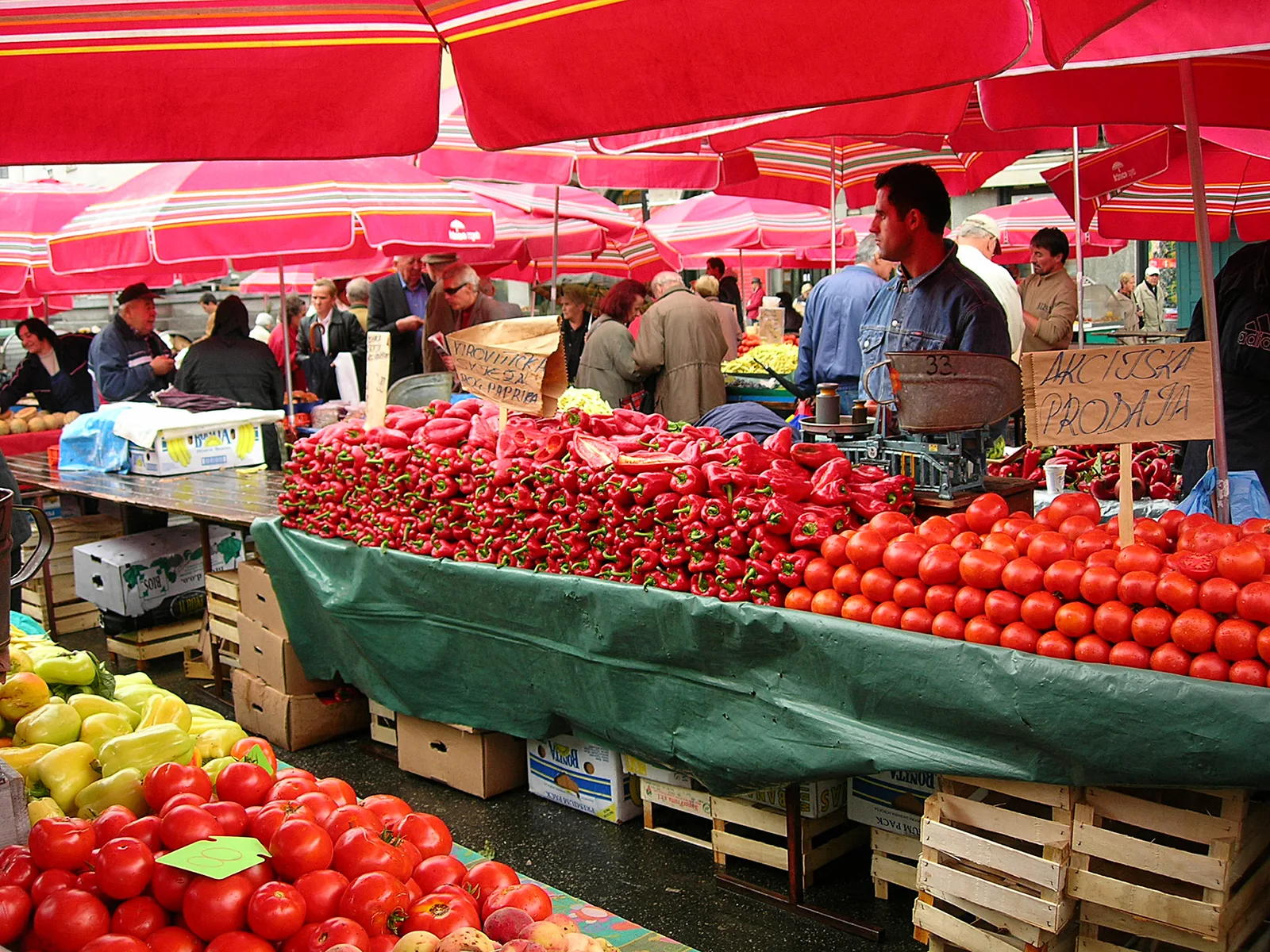
Dolac sets the tone for the whole quarter, and it rewards a morning visit when the stalls can show the market’s actual purpose. Produce, transactions and the movement between the lower square and Kaptol provide the interest; visitors do not need to stage it. Treat the market as a place of commerce, make one modest purchase when useful and keep paths open. Coming up from Ban Jelačić Square, the red umbrellas and steps announce the shift from civic centre into older, denser Kaptol before the change has been explained by a sign.
The Cathedral quarter while restoration continues
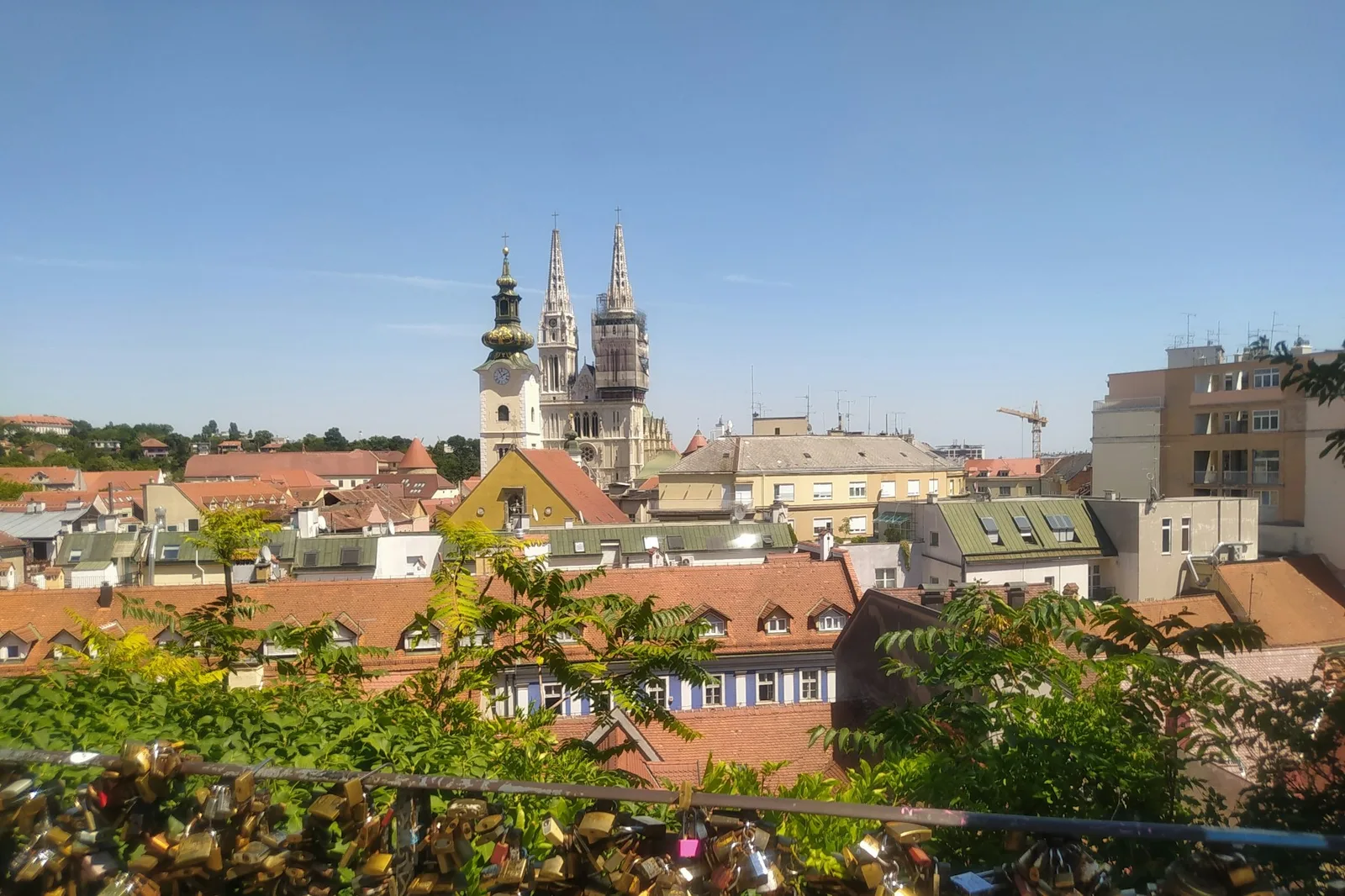
Zagreb Cathedral has been under long-running restoration work, and what's visible or accessible around it can shift over time — scaffolding, fenced sections, or partial closures aren't unusual. This isn't a reason to skip the quarter; it's a reason to hold your plan loosely. Walk the surrounding square and streets regardless, since the cathedral's presence shapes the whole area even when the building itself is only partly viewable. Check the dedicated guide before you go for the most current sense of what to expect, rather than assuming full access.
A quarter built around faith and civic life
Kaptol grew as the seat of the diocese, and that religious core still shapes its character — it's quieter and more deliberate than the market energy suggests, especially away from Dolac itself. The area also carries a civic weight: it's where church and city administration historically overlapped, and where Zagreb's identity as a bishopric town is most legible today. During Advent and other major events the quarter takes on a festive, crowded mood that's worth planning around rather than being surprised by.
Where Kaptol ends and Upper Town begins
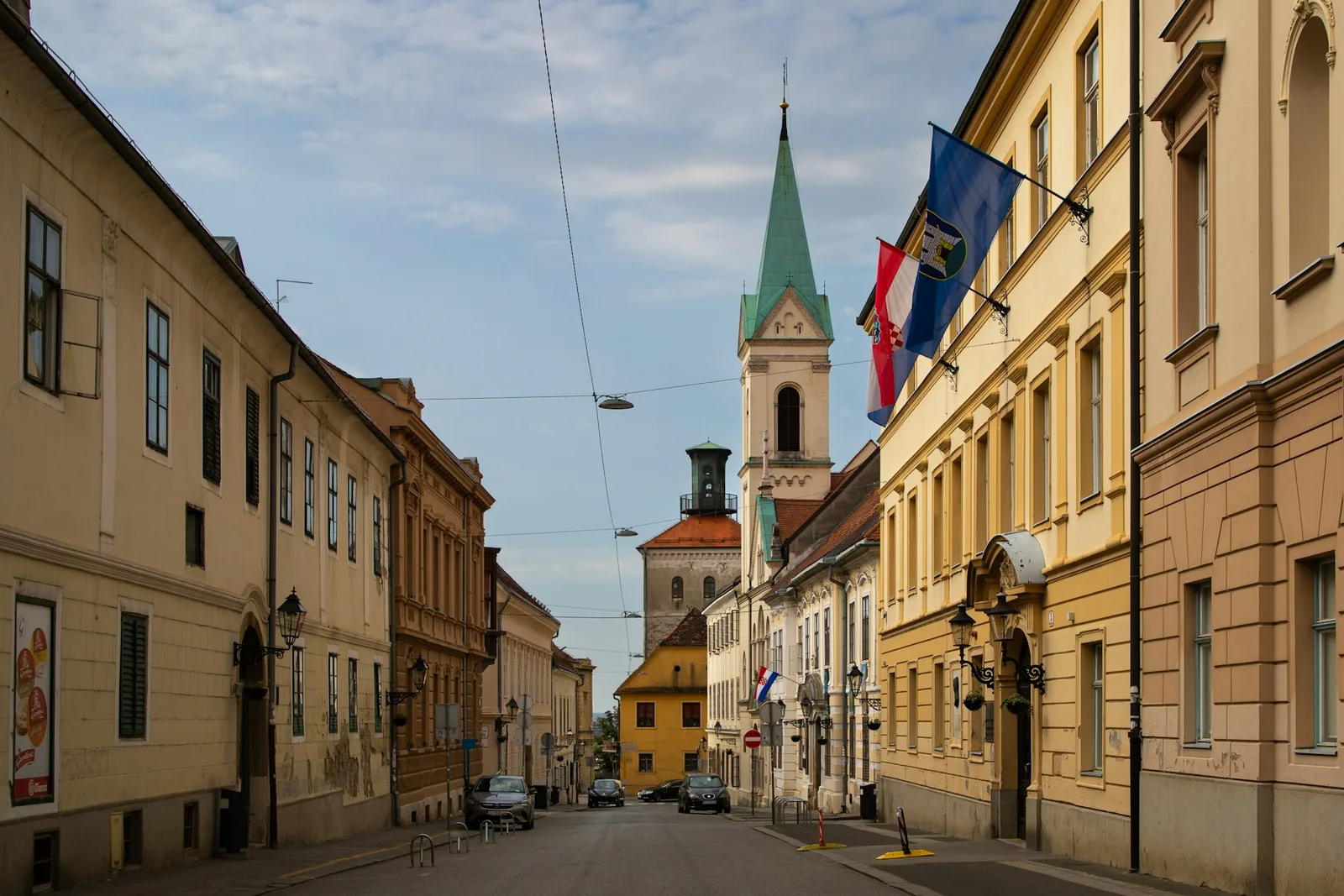
The boundary between Kaptol and Upper Town isn't a hard line so much as a change in gradient and mood. As the streets narrow and climb past the Stone Gate, the market energy of Dolac gives way to the quieter civic lanes around St. Mark's Square. Treat the transition as the natural second act of a Kaptol morning rather than a separate outing — the two areas were rival medieval settlements once, and walking between them is the easiest way to feel that layered history rather than just read about it.
Cobbles, slopes and uneven ground
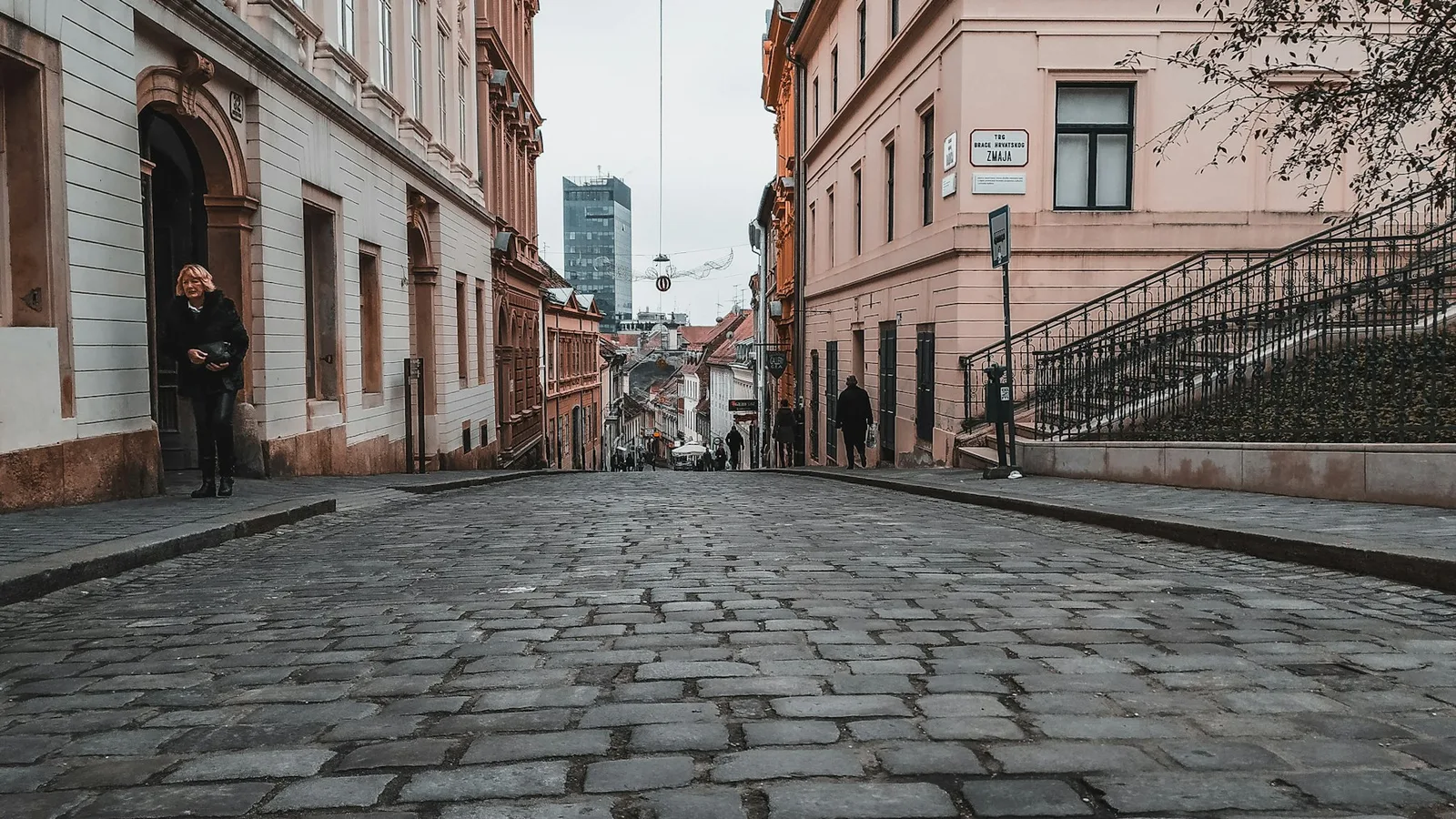
Kaptol's charm comes partly from its age, and age means uneven cobbles, worn steps, and a gentle but real incline as you move toward Upper Town. None of it is dramatic, but it adds up over a morning of market browsing and cathedral-quarter wandering. Wear shoes you can walk comfortably in for an hour or more, and expect the pace to slow naturally rather than trying to rush the loop.
- Flat, grippy footwear matters more here than in the flatter Lower Town.
- Rain makes the cobbles noticeably slicker — slow down rather than push through.
- The climb toward Upper Town is gradual, not steep, but it's continuous.
Moving through Kaptol respectfully
Kaptol is a working religious and commercial quarter, not a museum piece, and it's worth moving through it with that in mind. That means quiet, respectful behaviour near the cathedral and any active worship spaces, and treating market vendors as people doing their jobs rather than subjects for candid photography. A slower, more observant pace tends to serve visitors better here than a checklist approach — you notice more, and you're less likely to feel like an intrusion.
Details worth slowing down for
Beyond the headline stops, Kaptol has a texture that rewards a slower pace: the layered facades where different eras of building sit side by side, the small side streets off the main market square that most visitors never turn down, and the shift in soundscape as you move from Dolac's bustle into the quieter zone nearer the cathedral. None of it needs a guidebook entry of its own — it just needs you to walk a little slower than the crowd around you.
- Look up as often as you look ahead — the upper storeys carry most of the visual history.
- The side streets off Dolac are quieter and worth a short detour.
- The change in sound and pace near the cathedral is itself worth noticing.
Staying near Kaptol versus staying in Lower Town
Basing yourself near Kaptol puts you close to the market-and-cathedral rhythm from the moment you step outside, which suits travellers who want mornings that feel local rather than staged. Staying in Lower Town instead trades a little of that immediacy for flatter walking, easier orientation, and closer proximity to the square and the wider grid of shops and cafés. Neither is a wrong choice — it depends on whether you'd rather wake up inside the old quarter or walk into it fresh each day.
A tighter one-hour version of the loop
If you only have an hour, skip the wider wander and keep to a direct sequence: start at the square, pause briefly at the fountain, move straight into Dolac for ten to fifteen minutes of browsing, then walk up toward the cathedral quarter and stop there. It's a smaller version of the full loop, but it still delivers the market-to-cathedral shift that makes Kaptol worth visiting in the first place.
- Ban Jelačić Square — brief orientation stop.
- Manduševac Fountain — quick pause.
- Dolac Market — ten to fifteen focused minutes.
- Cathedral quarter — end here rather than pushing on to Upper Town.
If the weather turns or access changes
Wet weather doesn't ruin a Kaptol visit so much as reshape it — the market still functions, if quieter, and the cathedral quarter's covered and semi-covered corners give you somewhere to pause. If restoration work has closed off more of the cathedral surroundings than usual, shift the emphasis toward Dolac and a slow café stop instead of trying to force the full loop. Tkalčićeva Street's cafés are a short walk away and make a reliable fallback when the outdoor plan needs shortening.
Why the Cathedral shapes Kaptol even when access changes
The official Zagreb visitor account places the Cathedral at the centre of the city’s long religious history and describes the building through Gothic and later Neo-Gothic layers. That architectural history explains why the quarter feels larger than one façade. The square, ecclesiastical buildings and routes towards Dolac all take meaning from the institution around which Kaptol developed. Look at those relationships even when restoration, worship or safety restrictions reduce what can be entered.
Current restoration information belongs to the official Archdiocese and local visitor sources, not to an evergreen itinerary. Check them shortly before the visit and follow the boundaries on site. If the interior is unavailable, the Kaptol morning remains complete: market, Cathedral quarter, surrounding streets and the transition towards the Stone Gate. Do not wait beside a barrier for access that was never confirmed, and do not treat active worship elsewhere as a tourist substitute.
This also changes photography. A clear exterior view may be limited by works, while wide-angle images can hide the very process shaping the current place. Record the quarter honestly, keep workers and worshippers out of intrusive frames and let restoration be context rather than disappointment. Zagreb’s historic core is maintained, used and changed; the visit should acknowledge all three. The surrounding arcades, rooflines and the spatial relationship with Dolac can still tell the Cathedral story when a conventional façade photograph is unavailable. Walk around the available public perimeter before deciding that construction has removed the view; a side angle may explain the scale and the Cathedral’s position in Kaptol better than the standard frontal composition.
Questions people actually ask
Is Kaptol the same as Upper Town?
Not exactly. Kaptol is the cathedral-side historic quarter; Upper Town is the hilltop area with viewpoints and St. Mark’s Square. They’re close and easy to combine.
Do I need a dedicated Kaptol day?
No — Kaptol is best as a morning loop paired with Dolac and then Upper Town or cafés.