
Why everyone ends up here
Tkalčićeva (nicknamed “Tkalča”) is the easiest place in Zagreb to find street-life: café terraces, casual dinner spots, and the kind of energy that makes you stay out longer without planning to.
Treat it as an evening anchor: start with one drink or one coffee, then decide if you want dinner, a second bar, or just a long walk back through the center.
What it’s best for
- People-watching and long terrace sits (especially in warmer months).
- Casual date nights that don’t need reservations.
- An “easy win” first night in Zagreb when you want atmosphere with zero planning.
A perfect Tkalčićeva night (simple)
- Start at Ban Jelačić Square → walk to Tkalčićeva for the first drink/coffee.
- If you’re hungry: choose one casual dinner spot and keep it slow.
- Do a night walk after dinner (it’s the best way to end a Zagreb night).
Daytime version (also great)
- Late morning coffee after Dolac Market.
- A gentle lunch stop before an Upper Town loop.
Why Tkalčićeva Street belongs in the day
Tkalčićeva is Zagreb’s most obvious central social street: cafés, bars, restaurants and a steady flow of people occupy a route that links the main-square side with the historic slopes. It is useful less as a single attraction than as a choice of atmosphere for a pause or evening.
Walk it after Dolac or on the descent from Upper Town, then choose one place to sit instead of treating every terrace as another recommendation to evaluate. The street can also connect a central dinner with a night walk, keeping the evening compact and easy to end.
What to notice and how to decide
Look beyond the first busy tables. Side passages, façades and the change in crowd from afternoon coffee to later drinks reveal how the street functions. Compare it with nearby quieter lanes before deciding whether the energy suits the meal or conversation you actually want.
Crowds, terrace noise and venue turnover shape the experience. Check the current menu and opening information of any specific business rather than relying on an old list. Travellers who sleep nearby should pay particular attention to recent room-noise reviews and window orientation.
Prioritise Tkalčićeva for people-watching, an easy central drink or a lively first-evening introduction. Walk through but eat elsewhere when the group prefers quiet or better value away from the most visible strip. The street is part of Zagreb’s centre, not the only place where local social life happens.
Choose the street condition before choosing a venue
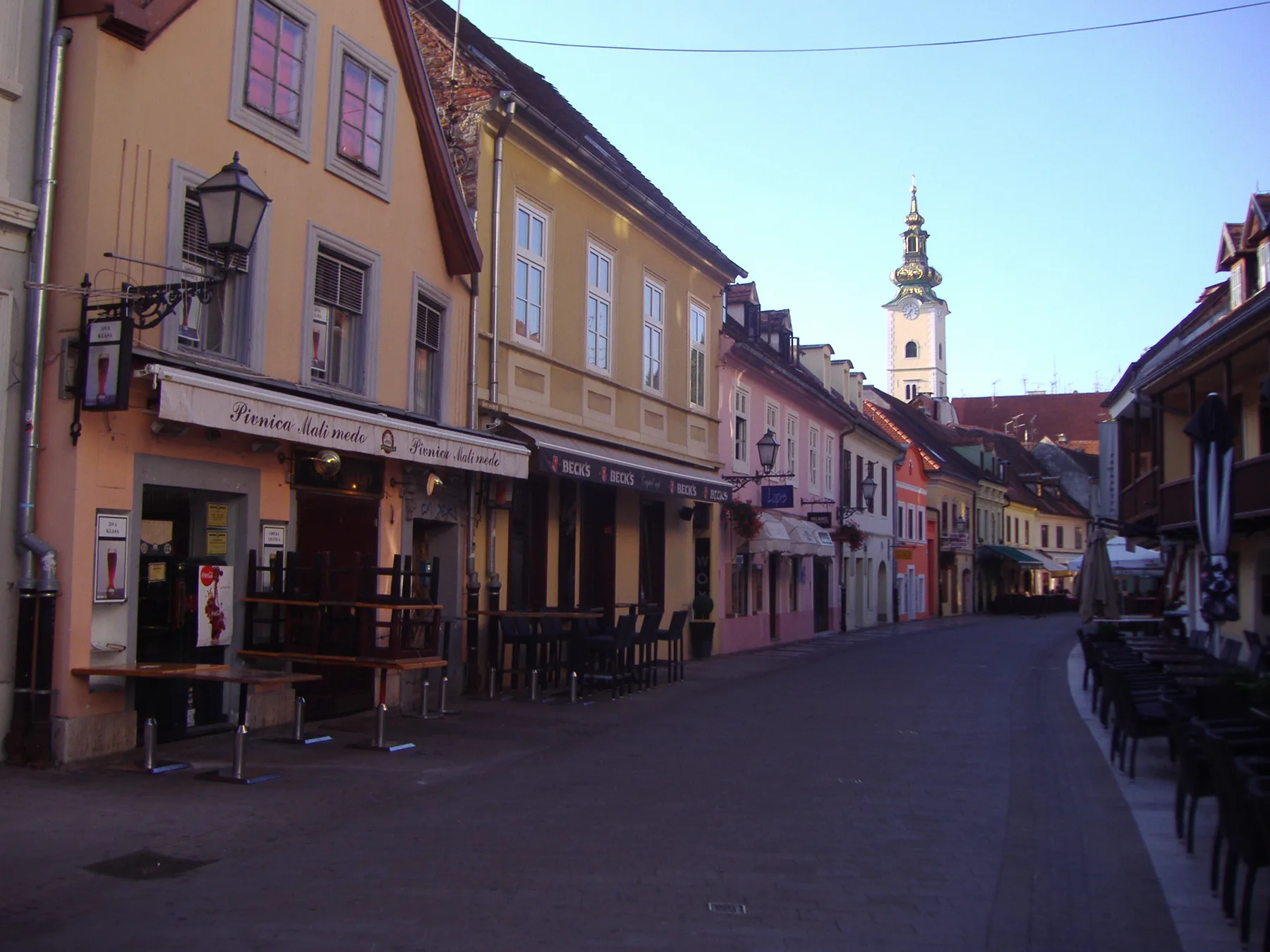
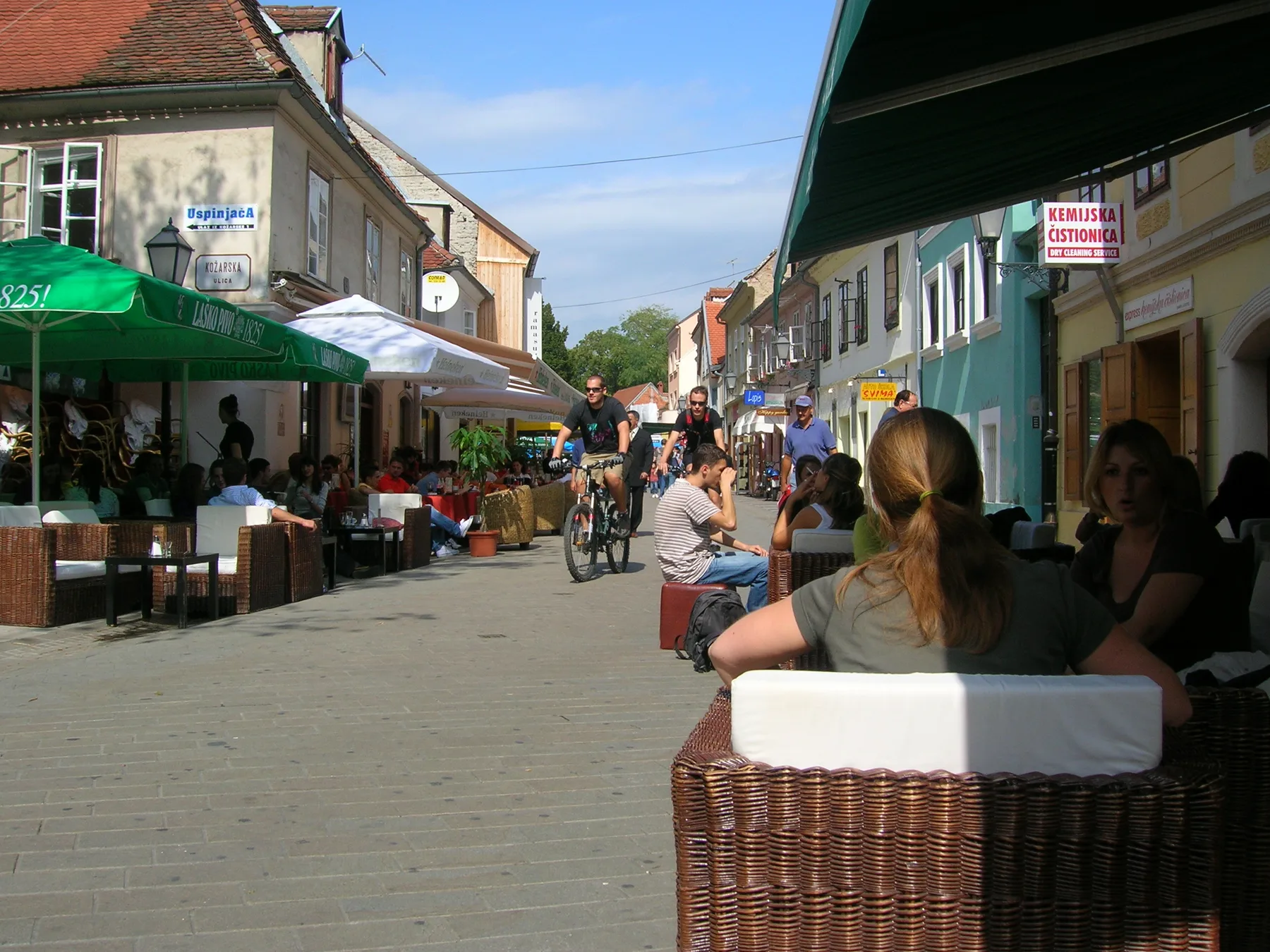
Tkalciceva can be a quiet historic route in the morning, a lunch-and-coffee corridor in the afternoon or a dense terrace street at night. Decide which condition serves the group. The early sourced image exposes buildings, slope and street line; the active image shows how furniture and customers transform circulation. Neither state is more authentic, but they answer different visitor needs.
Walk a short section before accepting the first menu. Check whether the street is building, thinning or becoming too loud, then choose one stop. A full-length crawl produces repeated terraces and little understanding. Current opening, reservation, smoking, music, payment and kitchen conditions belong to the individual business. Verify them directly rather than treating a street guide as a live directory.
Read the covered Medvescak stream beneath the social street
The tourist board explains that the Medvescak stream once ran in the valley between Gradec and Kaptol, powering mills before industrial pollution and urban works transformed the corridor. The street first carried the name Potok and was renamed for historian Ivan Krstitelj Tkalcic in 1913. Use the history to read topography and city infrastructure, not to claim that an open brook remains visible beside the cafés.
At junctions such as Krvavi Most and Skalinska, pause outside the main walking line and notice how side routes climb or cross the former valley. These anchors explain why Tkalciceva is more than a row of businesses. Avoid romanticising pollution, poverty or the street’s former red-light economy. A useful account recognises labour, sanitation and redevelopment alongside present leisure.
Choose one terrace with explicit conditions
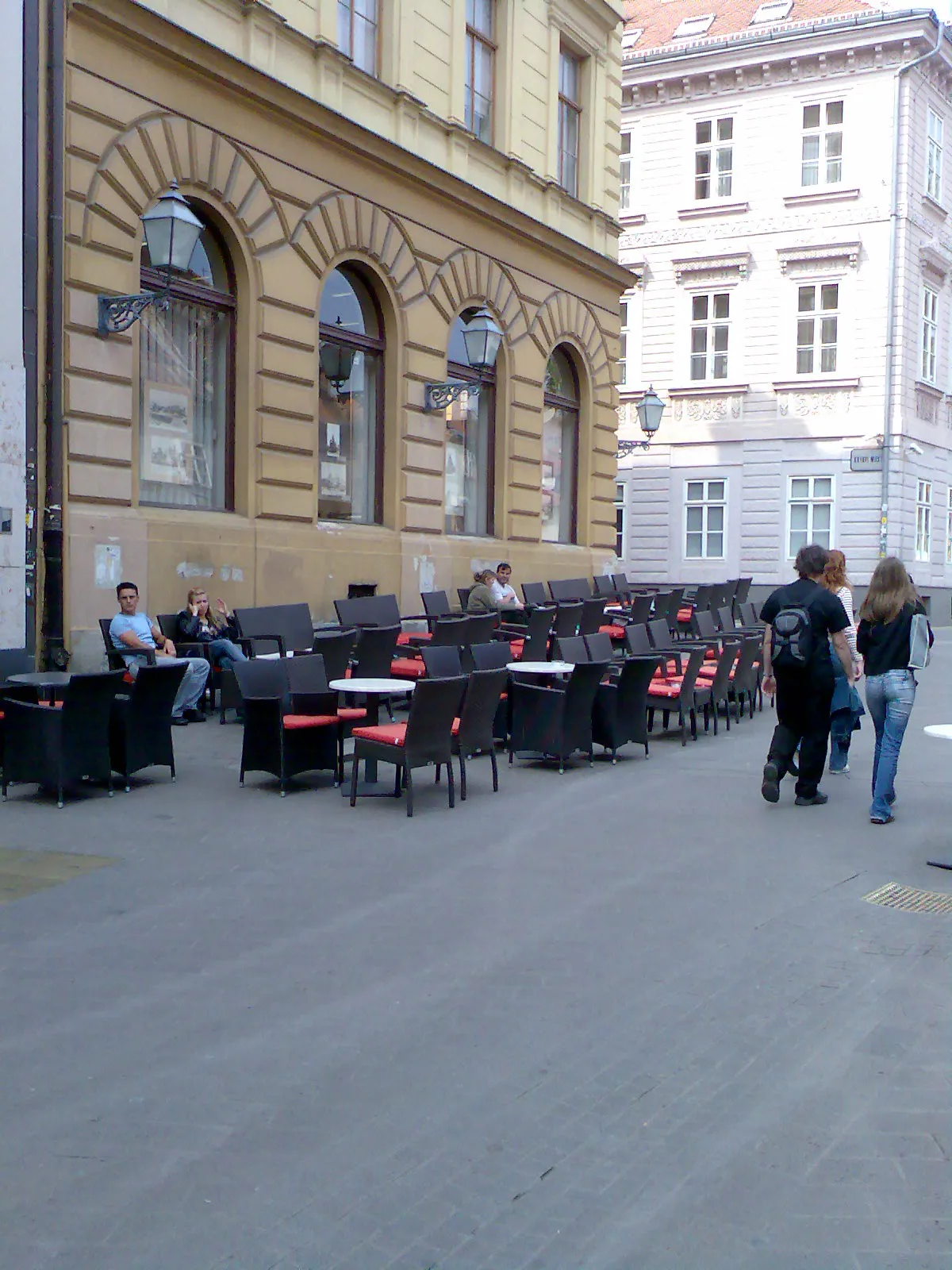
Read the current menu, prices, service charges and payment methods before sitting. Ask whether the table is for drinks, food or a reservation and whether a minimum order applies. Outdoor furniture may belong to adjacent businesses, so wait to be seated when the boundary is unclear. Do not occupy a large table with one drink during a queue or move chairs into the pedestrian route.
For allergies or dietary needs, speak to the specific venue about ingredients and cross-contact; the street’s variety is not a safety guarantee. Confirm whether smoking on neighbouring terraces affects the table. Families should check high chairs, toilets and evening noise. A romantic terrace recommendation should still name the practical condition that made it fit, not promise a generic atmosphere every night.
Pedestrian does not mean free of vehicles or work
Deliveries, waste collection, emergency access, maintenance and authorised vehicles can enter a pedestrian street. Walk predictably, keep children close and leave bollards, doorways and service routes clear. Do not stand in the street centre for a photograph because no car is visible. Tables and signs can also narrow the usable line, particularly for wheelchairs, strollers and groups passing in opposite directions.
At night, wet paving, alcohol and crowd movement increase collision risk. Agree on a meeting point at a named junction rather than ‘somewhere on Tkalca’. Keep valuables secure without treating ordinary customers as threats, and use a licensed taxi or live public-transport route when walking no longer suits. Never accept a ride from an unverified driver soliciting inside the crowd.
Manage sound, alcohol and residential impact
Tkalciceva remains part of a lived city. Keep voices down when leaving a venue, do not sing or play speakers beneath homes and follow staff or police instructions at closing time. An outdoor table does not make the whole street a private bar. Carry drinks only where permitted, do not leave glass on walls or steps and use a proper toilet rather than residential entrances.
Pace alcohol with food and water, know the route home and do not leave a drink unattended. A person who feels unwell should stay with a trusted companion and seek appropriate help. Visitors needing reduced sensory load can use an earlier hour, choose a quieter side section and identify an exit before sitting. A busy Saturday atmosphere is optional, not the standard every traveller must endure.
Check access across the exact section and venue
The lower approach may appear straightforward while individual thresholds, toilets, terrace gaps and uphill continuations introduce barriers. Contact the chosen venue about the entrance, seating and toilet rather than inferring access from street paving. Ask whether staff can keep a continuous route clear. A historic building’s small doorway should not become a vague accessibility promise.
Stable shoes help on slopes and wet surfaces. People who need frequent rests should identify a confirmed seat rather than assuming public benches or an unoccupied terrace table. Temporary events, umbrellas and heaters can change width and visibility. If the street becomes too dense, use the parallel route that matches the destination instead of forcing the full walk as a sightseeing requirement.
Photograph route changes, then continue deliberately
A useful photo sequence shows quiet street form, an active terrace condition and named junctions. Keep identifiable diners and workers out of close frames without consent, do not lean over a table and never interrupt service for a staged image. Date photographs of business signs or menus because operators and prices change. Commercial filming and large equipment can require permission.
Continue south to Ban Jelacic Square, east toward Kaptol and Dolac or uphill through the appropriate signed route. Hotel Jagerhorn supports a compact lower-centre return; Hotel Capital suits a broader central route; Boutique Hotel HOH is an Upper Town choice rather than a promise of step-free nightlife access. Verify room, noise, route and late return before booking.
Record the finish as carefully as the arrival. Note which junction you used, whether the street was quiet or crowded, how terrace furniture affected passage and whether the chosen business matched its live information. This makes a recommendation reproducible without pretending that one evening defines Tkalciceva. Future visitors can choose the same type of experience even after a venue, menu or event has changed.
If no venue feels suitable, keep walking. The street is public space before it is a purchase obligation, and a café elsewhere can still complete the route without sacrificing comfort, budget or dietary safety. That choice is often the best local judgement available.
