
What it is (and why it’s famous)
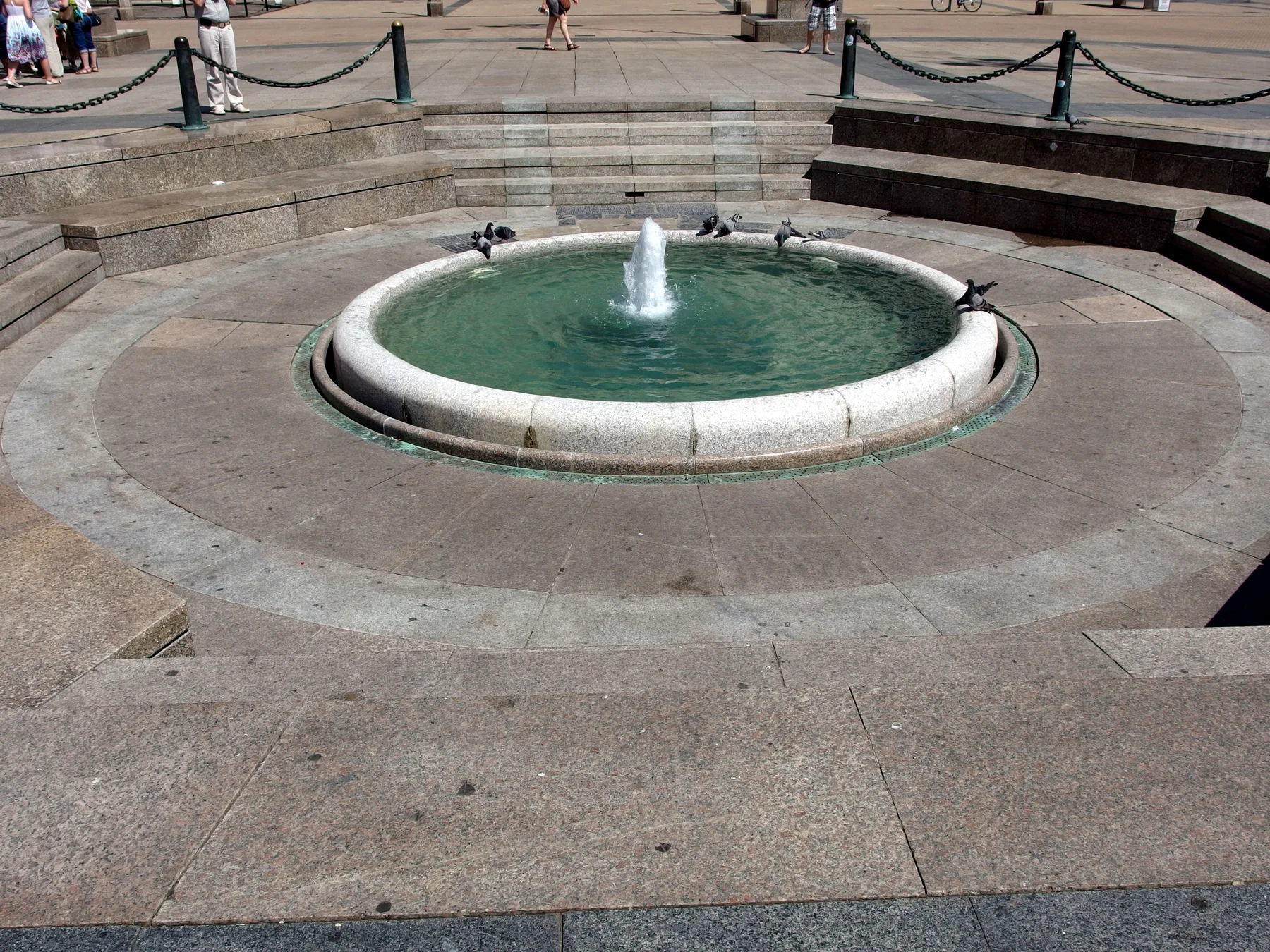
Manduševac is the small fountain on Ban Jelačić Square that shows up in local stories about Zagreb’s name and identity. In practice, it’s a perfect “tiny landmark”: easy to see, easy to remember, and a natural pause before you head toward the market or Upper Town.
How to use it (best nearby routes)
- Market morning: fountain → Dolac Market → coffee terrace.
- Upper Town loop: fountain → cathedral area → stairs up → viewpoints → walk back down.
- Green reset: fountain → Zrinjevac → Botanical Garden detour → return for dinner.
Why Manduševac Fountain belongs in the day
Manduševac is best understood as part of Ban Jelačić Square rather than a detached attraction. The fountain gives the city’s main meeting place a small focal point and a layer of local story, while the movement of trams, commuters and meeting friends supplies the real scene around it.
Use it as an orientation marker at the beginning of a central walk. From the fountain, Dolac and Kaptol pull north, Ilica leads west, and Lower Town opens south. Returning later in the day shows how the same square changes once market traffic gives way to evening gatherings.
What to notice and how to decide
Look at the relationship between the fountain and the square before concentrating on the water feature itself. Its scale, position and use as a meeting point explain more than an isolated close-up. The surrounding façades and pedestrian flow make the setting legible.
The fountain is an outdoor public-space stop, so weather and activity on the square shape the experience. It is easy to see in passing and normally needs no separate journey. During major events or works, sight lines and access around the square may differ.
Every first-time central route can include Manduševac because the square is already part of the city’s geography. It should take minutes, not a sightseeing block. Pair it with Dolac, the Cathedral quarter or a Lower Town walk and let the surrounding city provide the interest. Use the fountain as the agreed regrouping landmark only after checking which side is least crowded and easiest for every person to reach safely.
Visit the fountain as part of Ban Jelacic Square
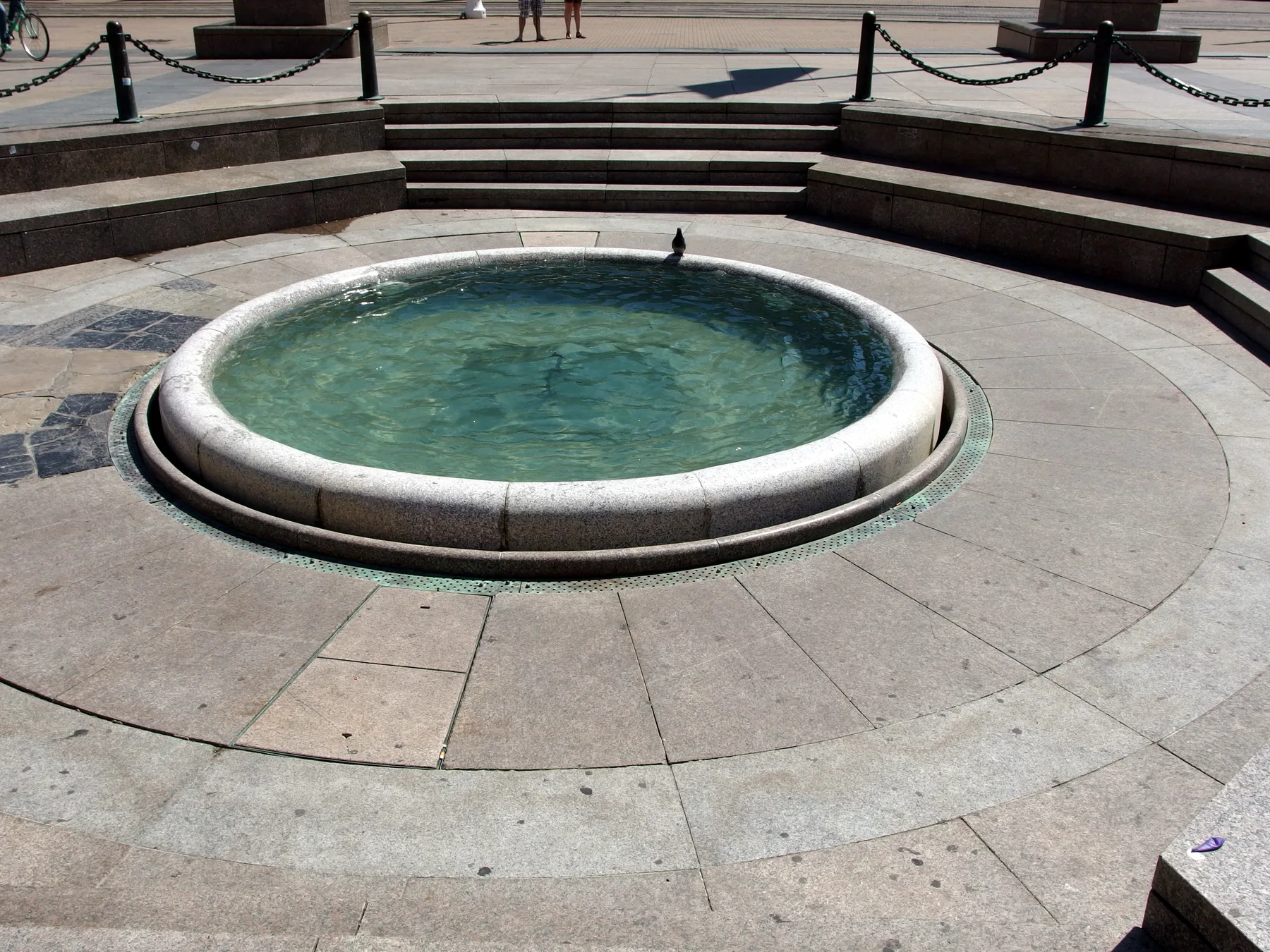
Mandusevac is a low circular fountain inside Zagreb’s main square, not a separate destination requiring a special journey. Use it to understand where an old water source, modern public space and city legend overlap. Approach from the pedestrian side, identify the basin and surrounding chain, then step away before the group blocks circulation. Five careful minutes are more useful than manufacturing a long stop.
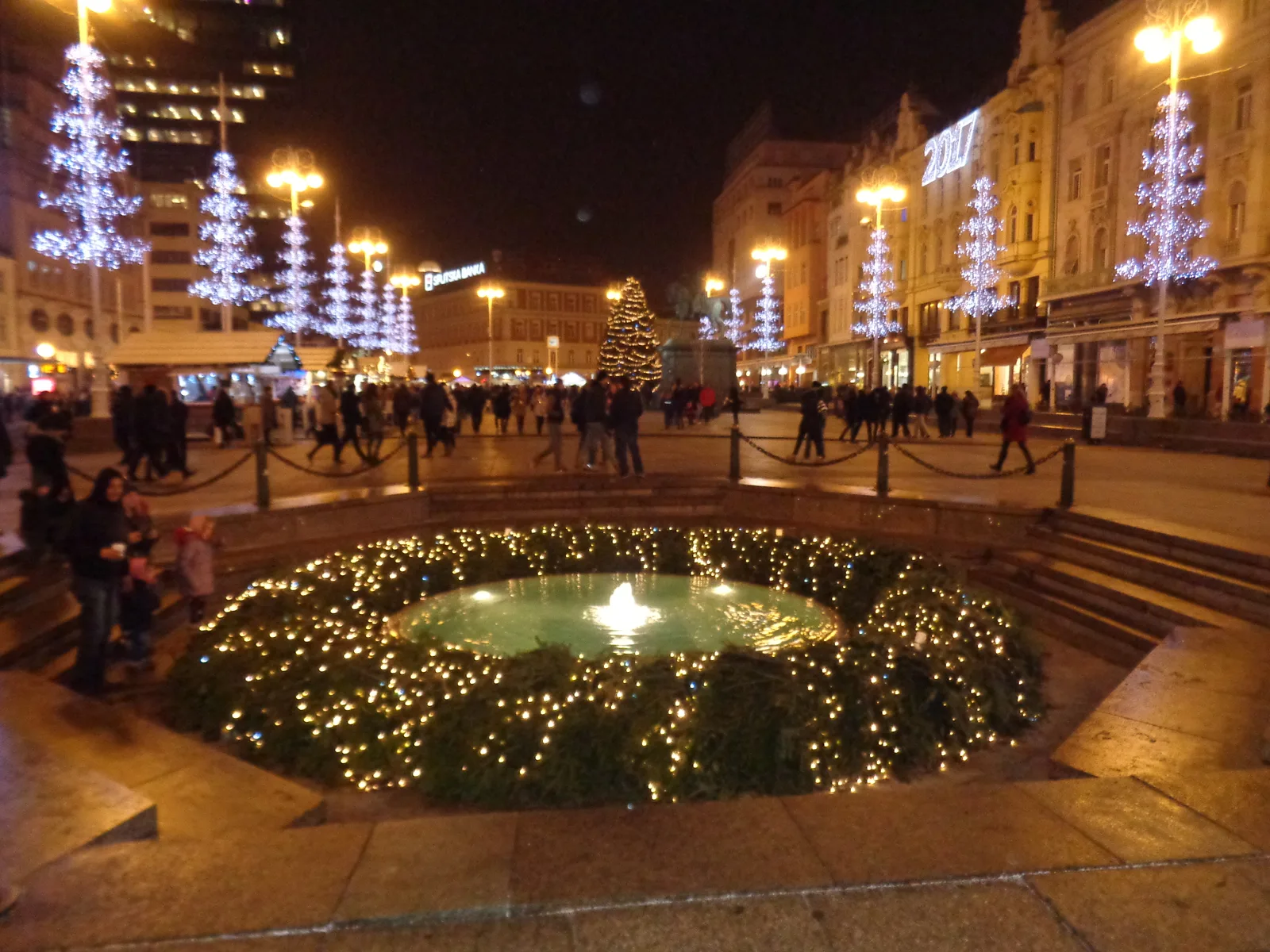
The fountain’s scale can be easy to miss when trams, a stage or seasonal decoration dominate the square. Save a close map pin and look from a wider angle first. If maintenance or an event makes the immediate edge unavailable, do not cross barriers. The location remains legible through its relationship with the square, statue and uphill route, and a later pass is simple for most central itineraries.
Distinguish the historic spring from the visible basin
InfoZagreb describes a natural spring that supplied drinking water into the nineteenth century. The contemporary fountain is how that water history is marked in the present square; it should not be treated as an unchanged medieval well. Ask what has persisted—the site, name and memory—and what has been redesigned through paving, engineering and public-space management. Visual appearance alone cannot date each stone or metal component.
The jet may be operating, reduced or off because of weather, maintenance or an installation. Never infer water quality from clarity. Do not drink, wash food, paddle or let an animal enter unless an official sign explicitly establishes an intended use. Zagreb has ordinary potable-water systems and public drinking points; a decorative basin is not a substitute for verified drinking water.
Tell the Manda story as a legend
A familiar story connects a thirsty leader, a girl named Manda and the request to scoop water—zagrabiti—to the names Mandusevac and Zagreb. It is memorable folklore, and the tourist board presents it as a legend. Use that label. Do not tell listeners that the encounter has been historically proven or that the city’s etymology is settled by the anecdote.
Legends show how residents attach identity to a place even when they are not archival records. Compare the story with the material evidence of a spring site and the documented development of the square. This creates a better travel note than choosing between credulous repetition and dismissing the story entirely. Children can retell the legend while learning to distinguish tradition, language play and evidence.
Treat coins, chains and the basin as managed public space
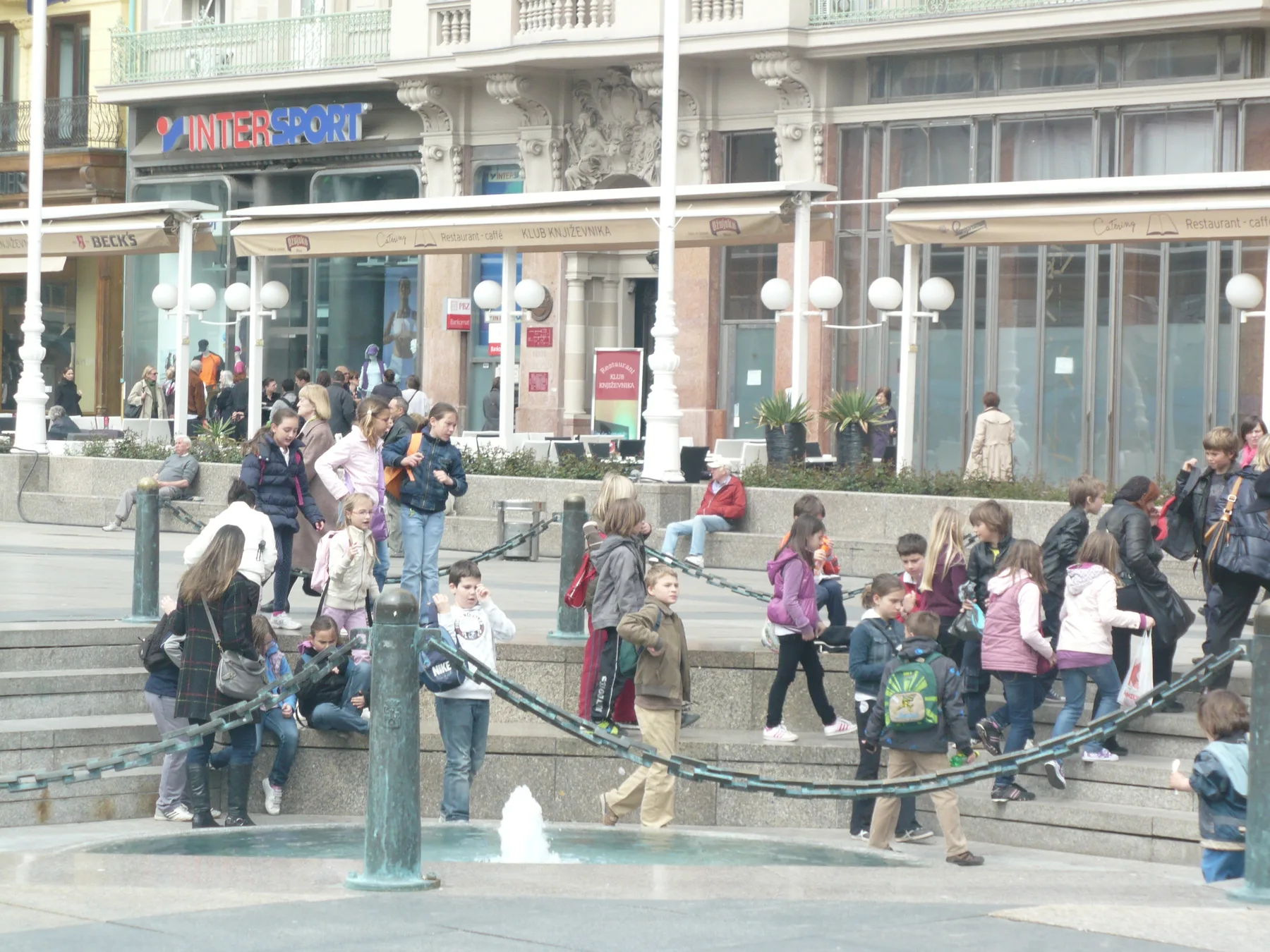
Some visitor material associates the fountain with tossing a coin for a wish, but current signage and city management come first. Do not throw anything when it is prohibited, covered for an event or being cleaned. Never retrieve coins or reach across the chain. Objects in a water system create maintenance and hygiene work; a travel guide should not convert a custom into permission.
The chain defines an edge, not seating, play equipment or a camera support. Keep children beside an adult and mobility aids on the stable route around the basin. The close sourced photographs show chain details and changing water state because these small boundaries affect behaviour. They are not encouragement to touch metal, step onto the surround or lean over the water.
Photograph without stepping into tram or crowd flow
Frame the fountain with enough square context to explain its modest scale. Take the photograph from the pedestrian area, check behind before stepping sideways and keep bags out of the walking line. A low angle can place a photographer close to wheels, feet and wet paving; crouch only where others can pass. Never back toward tram rails to widen the frame.
Seasonal decorations can radically change the view. Date Advent or event photographs and do not present them as the permanent fountain. Avoid identifiable close images of children, people resting on the rim or anyone in distress. Commercial staging, lighting, tripods and drones can require permission. One wide context and one permitted detail are enough; repeated takes should not monopolise a tiny landmark.
Use weather and events to decide whether to pause
Wet stone around the basin can be slippery, while heat, ice or a dense event can make the exposed square uncomfortable. Follow live weather warnings and event barriers. Tree shade is limited in the immediate area. A traveller who needs a seated rest should use an appropriate nearby place rather than the chain or fountain edge; confirm accessible toilets and indoor refuge before relying on the square.
During concerts, protests or celebrations, the fountain may lie inside a managed footprint. Approach only through open routes and follow stewards or police. The correct response to a temporary obstruction is to continue the itinerary. Mandusevac’s story can be understood from the main-square guide and official source without forcing a close visit through a crowd.
Continue to one nearby chapter
After the fountain, choose Dolac for a live market morning, the cathedral area for a current restoration-and-worship check, Zrinjevac for Lower Town green space or Tkalciceva for a planned café chapter. Do not visit all four simply because they are close. Opening conditions, appetite, weather and energy should decide. The fountain is an orientation point that helps the route branch cleanly.
Hotel Capital and Hotel Jagerhorn are researched central stays that make another pass easy, but neither needs to be selected for fountain proximity alone. Verify room, tram sound, event calendar and approach with luggage. A property should fit sleep and the whole city route; Mandusevac can remain a small encounter on the way rather than a booking claim.
Visitors writing about the fountain should record the date, whether water was running and whether decoration or barriers changed the view. That small field note prevents an ordinary maintenance state from becoming a permanent claim. It also makes the legend, physical basin and live square condition three clearly separate kinds of information. When a future reader sees a different setup, the guide still explains why.
A short observation exercise can replace empty wishing-well copy: identify the basin material, water state, protective edge, nearest tram movement and path toward Dolac. Ask which parts serve memory, safety and circulation. The answer may change with an event, but the method remains useful and keeps a very small landmark connected to the city around it. Finish from a stable position outside the busiest crossing line.