
What the festival feels like
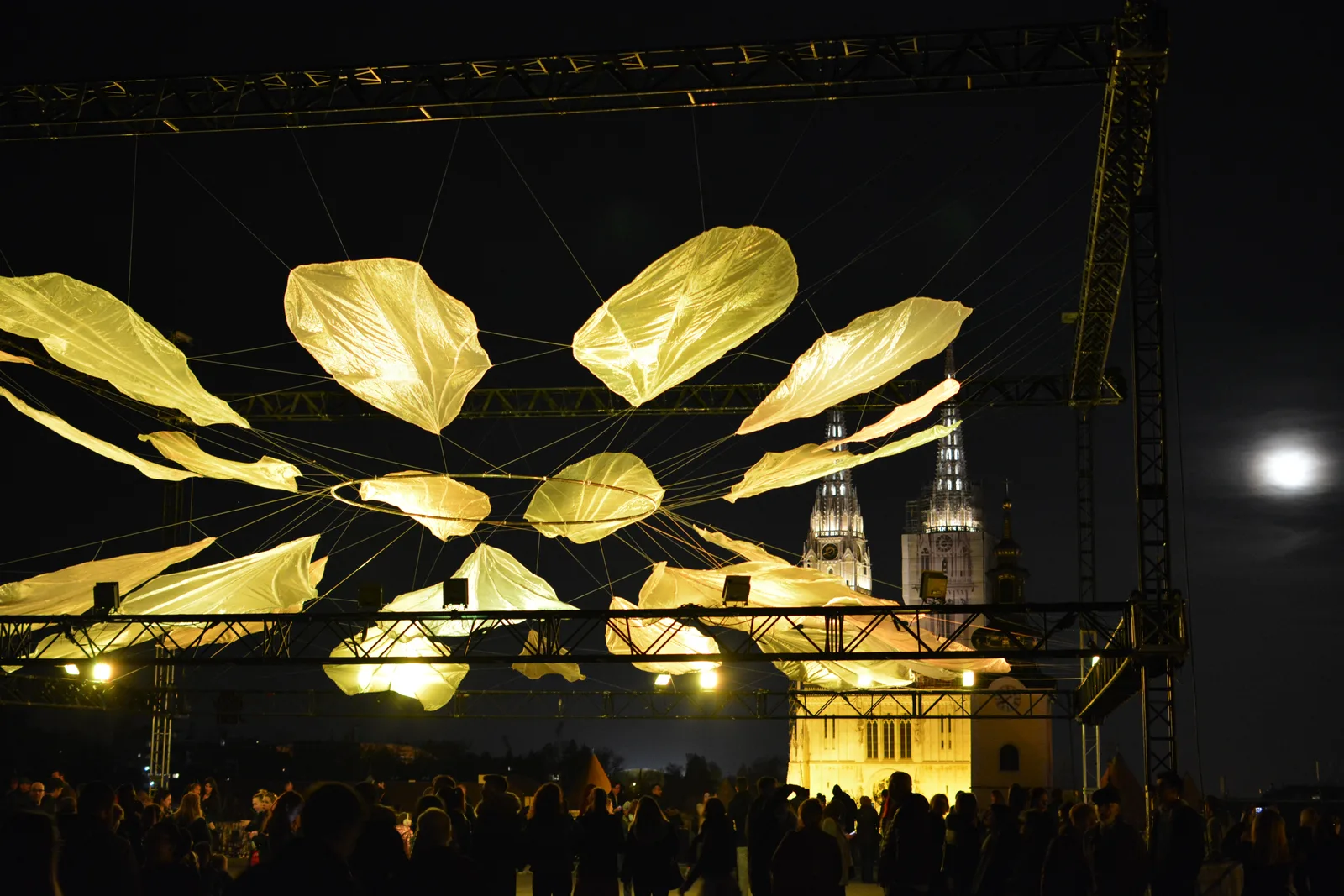
For a few nights, Zagreb becomes a walking city of light: projections on facades, installations in streets and parks, and a festive energy that makes the historic center feel brand new.
The key is to treat it like a wandering evening, not a checklist. The city is the venue — the best moments are often the ones you stumble into between big installations.
Best way to experience it
- Eat early → start your walk at dusk → take breaks when you find a cozy spot → finish with a night stroll through the center.
Route strategy (so it stays enjoyable)
- Do it as a loop: start central, wander, then finish near where you want dessert or a last drink.
- Weekdays are calmer; weekends are more “festival energy.”
- If you’re cold or tired, take a long café break — you’ll enjoy the second half more.
Tips (so you enjoy it)
- Go on a weekday if you can (lighter crowds).
- Wear comfortable shoes — it’s a walking-heavy event.
- Treat it as a loop, not a checklist. The city is the venue.
What to bring (tiny upgrades)
- Comfortable shoes and one warm layer you can add/remove easily.
- A small power bank if you take lots of photos/videos.
- A simple “end plan” (dessert, dinner, or one bar) so the night closes well.
Official info
What the Festival of Lights should add to the trip
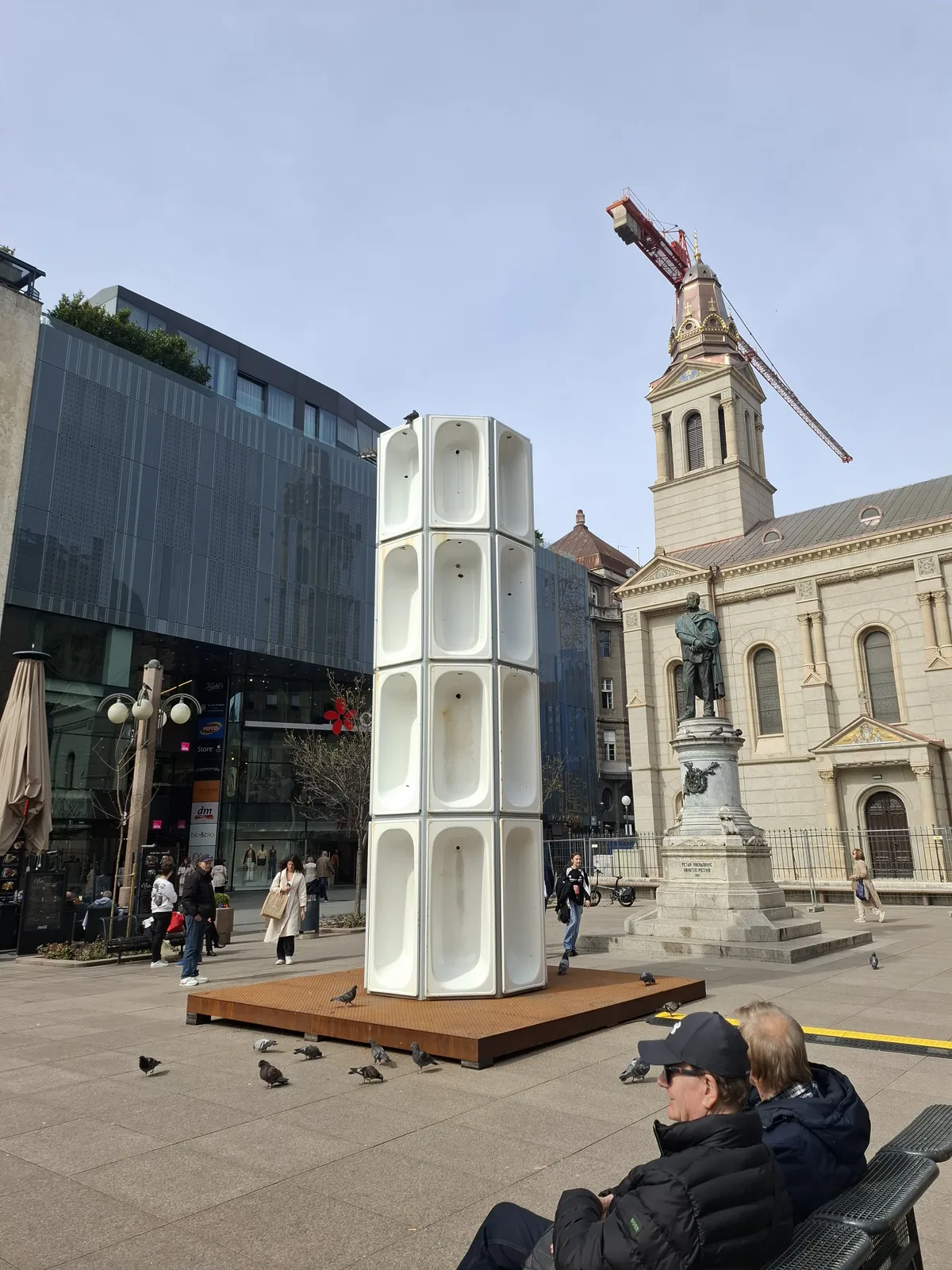
The Festival of Lights turns selected central locations into a temporary night route. Its strength is the relationship between projection, architecture and movement, so the current installation map—not a past highlight reel—should shape the plan.
A route and pace that make the Festival of Lights work
Choose one compact cluster, arrive before the busiest middle period if possible and walk installations in a single direction. Finish with a reserved or flexible indoor stop rather than retracing the whole route hungry.
The choices, trade-offs and common mistake
Prioritise installations whose site or artistic premise interests you, plus one crowd-pleasing spectacle. Seeing fewer works from a good position is more satisfying than spending the night in queues and crossings.
Dates, works, traffic controls and access change every edition. Respect barriers and residential areas, keep tripods out of pedestrian flow and supervise children closely in dark crowded spaces.
Weather, current information and the fallback plan
Rain can enhance reflections but make standing and equipment difficult. Keep a weather-proof café or cultural venue near the chosen cluster and be willing to shorten the route before attention drops.
Use the edition map as the artwork list and transport plan
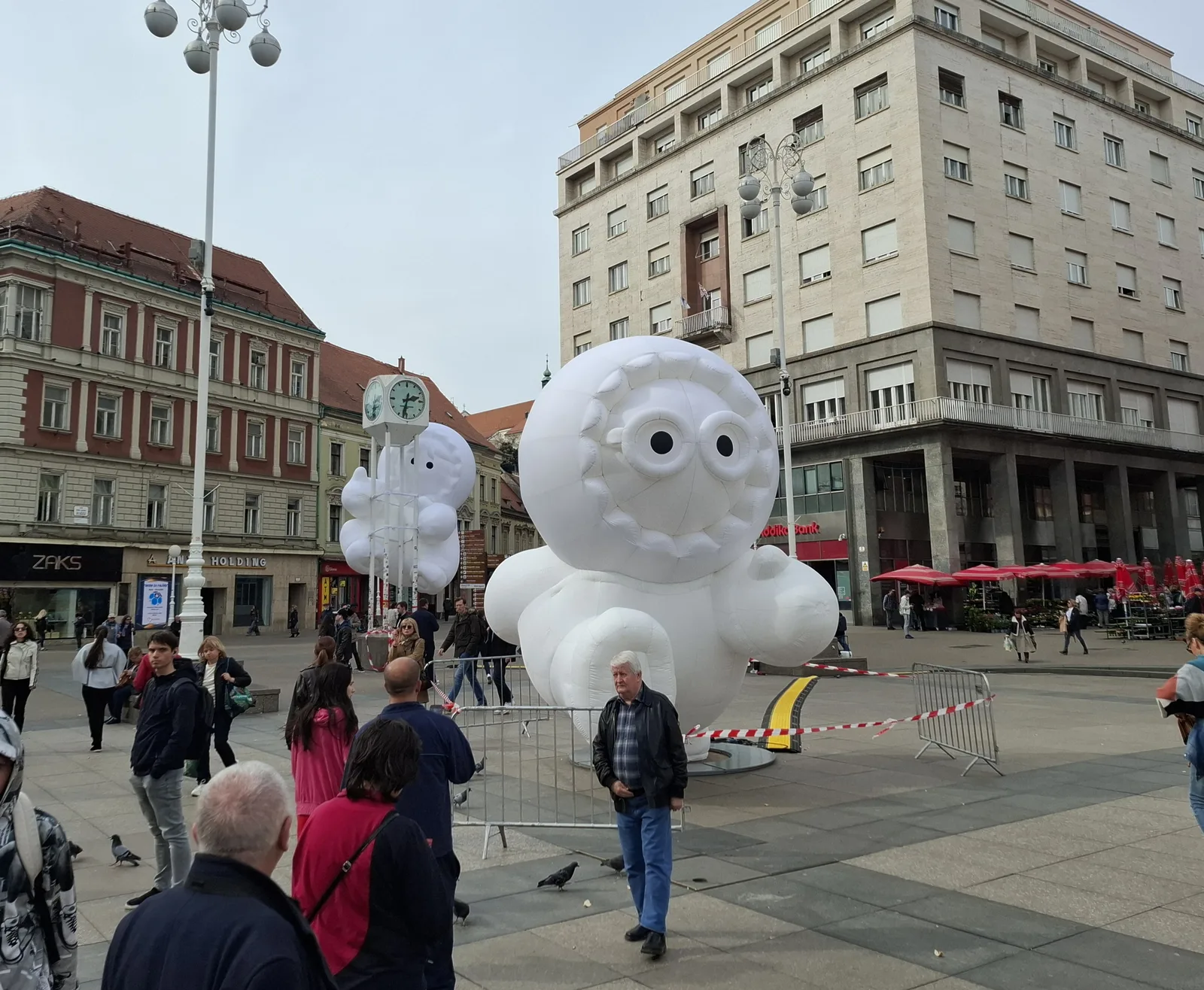
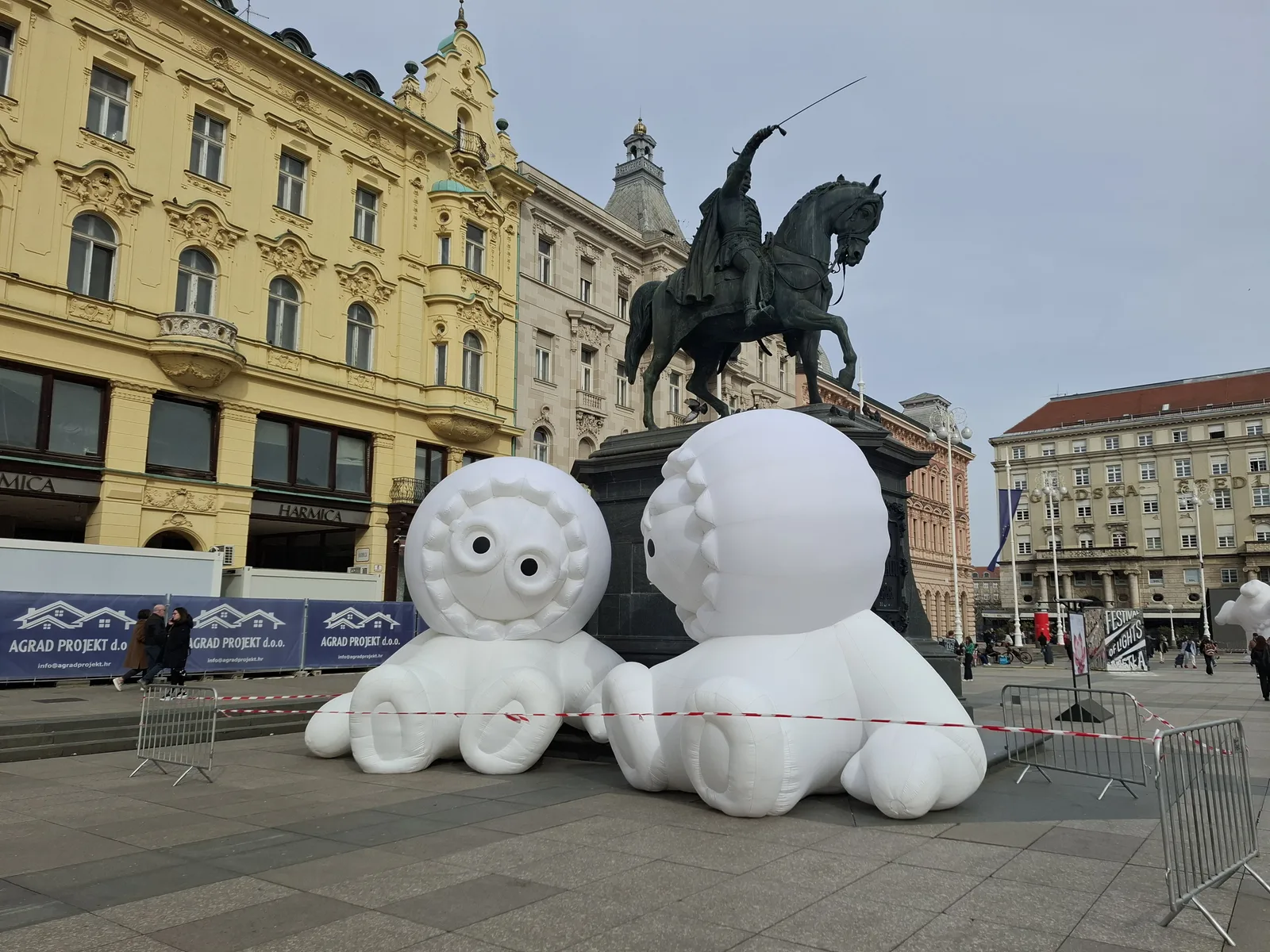
Festival of Lights Zagreb changes its installations and locations each edition. Begin with the official festival site and live map, not a route copied from a previous year. Save the title, artist and site of the works that matter, then note which are in Lower Town and which require the climb or transfer to Upper Town. The 2025 Anooki figures and Aj Vana Be are useful evidence of how temporary art meets permanent landmarks; they are not promises about a future programme.
Check the official opening window for the exact night and identify any performance or projection with a timed cycle. Build around one priority that would be disappointing to miss, then place two or three nearby works around it. Download the map and take a screenshot of any accessibility or closure notice before leaving Wi-Fi. Festival streets can alter ordinary circulation, so consult City and ZET notices when temporary traffic or tram regulation affects the route.
Choose a Lower Town, Upper Town or two-part route
A Lower Town route usually offers broader streets, public-transport exits and a flatter sequence. It suits a first evening, families with younger children and anyone who wants to leave quickly when rain or crowds arrive. An Upper Town route can place projection and light against more intimate historic fabric, but gradients, cobbles and stair choices need more attention after dark. Do not infer that one zone is better; choose the terrain and density the group can enjoy.
For a two-part night, finish one zone before changing elevation. Crossing repeatedly wastes the limited opening window and turns art into a navigation exercise. Set a firm turnaround that protects the final tram, taxi pickup or walk back to accommodation. Keep one café or restaurant outside the most compressed festival lane as the planned pause, while confirming its current hours. If the first half is enough, end there—the second zone can become another night when the edition runs across several days.
Read each work before reaching for the camera
The festival combines light, projection, objects, sound, performance and architecture. Read the title, artist and short interpretation on the official listing or site label. Ask how the work uses that exact facade, square or park rather than reducing it to a colourful background. A daytime visit can reveal mounting, scale and the ordinary life around an object; the night visit shows the intended lighting condition. Seeing both is worthwhile only when the site remains public and the work can be observed without disrupting installation staff.
Do not touch equipment, cross a taped boundary or shine a phone light at a projection surface. Some works depend on darkness, sound or an interactive queue; wait for the preceding group to finish and follow the steward. When a cycle repeats, watch once without filming and use the next cycle for a short recording. This produces a better memory and keeps raised screens from blocking every person behind. Credit the named artist when sharing a work rather than tagging only the city.
Photograph without taking over the viewing space
Night images need stability, but a full tripod can obstruct a narrow route and may be restricted. Use a steady stance, a strap, a short exposure or a small support only where the steward and circulation allow it. Step to the edge before stopping, keep bags against the body and avoid walking backward into traffic for a wider frame. Never stand on tram tracks, roadway islands, planting beds or monument bases. A composition is not worth forcing another visitor into a live lane.
Lower screen brightness, disable flash where requested and respect performers and visitors who do not want a close portrait. Children should not be positioned beyond a barrier or left alone beside equipment for scale. Professional, commercial, drone or extensive tripod work can require separate permission even when general public entry is free. Check the organiser and city rules in advance. Carry a charged power bank close to the body, because navigation and repeated video drain the phone needed for the return.
Weather, crowds and access decide the final route
Spring evenings can be cold, wet or windy after a mild afternoon. Bring layers and a rainproof shell, wear grip for stone surfaces and protect the phone from water. An umbrella is awkward in a dense projection crowd, so use it only where space allows. Check the organiser’s current notice during severe weather: a projection may continue in light rain while a suspended object, performance or electrical installation follows different safety conditions. Do not make that judgement from a distance.
Visitors needing step-free access should map the continuous path between specific works, not rely on the festival’s city-centre label. Temporary cable ramps, kerbs, gradients and crowd barriers can alter an otherwise familiar street. Families should give children a fixed meeting point and visible contact details. Hotel Jägerhorn or Amadria Park Hotel Capital can support a central walk-and-return pattern; Boutique Hotel HOH fits an Upper Town emphasis when the hill suits the group. Verify the room and current route rather than booking from an event pin alone.
Food, toilets and seating should be planned outside the artwork list. Identify a public facility or staffed venue before the walk, and do not assume an installation site includes visitor services. Eat before the opening window or reserve a later table with realistic walking time. Benches can be occupied and stone walls become cold quickly, so anyone who needs regular seated rest should use confirmed indoor pauses rather than hoping the next square supplies one. Carry any essential medication on the person, not in a cloakroom bag.