
What this museum is (and why people love it)
The Museum of Illusions is a great “light” museum choice: interactive rooms, optical illusions, and exhibits designed to be tried — not just read about. It’s fun without being childish, and it’s surprisingly good for conversation.
If you’re building a Zagreb itinerary, it works best as a mood-shifter: a playful hour between a longer walk and a slow meal.
Who it’s best for
- Couples: it’s easy, fun, and breaks the “museum silence” pattern.
- Families: a reliable rainy-day win when you need an indoor plan.
- Friends: very photo-friendly and genuinely entertaining.
- Solo travelers: a quick, upbeat stop between walking routes.
Plan your visit (simple + practical)
- Location: Ilica (easy to combine with Flower Square and the center).
- Time: plan ~60–90 minutes, depending on crowds and how photo-happy you are.
- Crowds: go earlier in the day if you want more space; evenings can be busier.
Pair it with these nearby Zagreb classics
Why the Museum of Illusions belongs in the day
The Museum of Illusions is an interactive, perception-led attraction designed for participation and photographs rather than a deep account of Zagreb. That makes it a useful family, group or rainy-day option when everyone wants a playful indoor break.
Place it between more city-specific experiences: a central walk before and a park, meal or historic route afterward. Treat it as the light anchor of the half day. Stacking several interactive museums together can make the city outside disappear from the itinerary.
What to notice and how to decide
Read the explanations as well as staging the visual effects. Understanding why an illusion works gives the visit more substance and can engage different ages. Let groups move at their own pace around popular installations without blocking others for repeated photographs.
Check current ticketing, capacity, age guidance and accessibility. Interactive spaces can feel crowded, and some effects may be uncomfortable for visitors sensitive to motion or visual distortion. A timed entry may make a wet-weather day more reliable when demand rises.
Prioritise it for children, friends and travellers who enjoy hands-on visual play. Skip it when cultural time is limited and the goal is to understand Zagreb specifically. It is a good fit for the right mood, not a replacement for the city’s art and history institutions.
Buy the Zagreb date and hour you intend to use
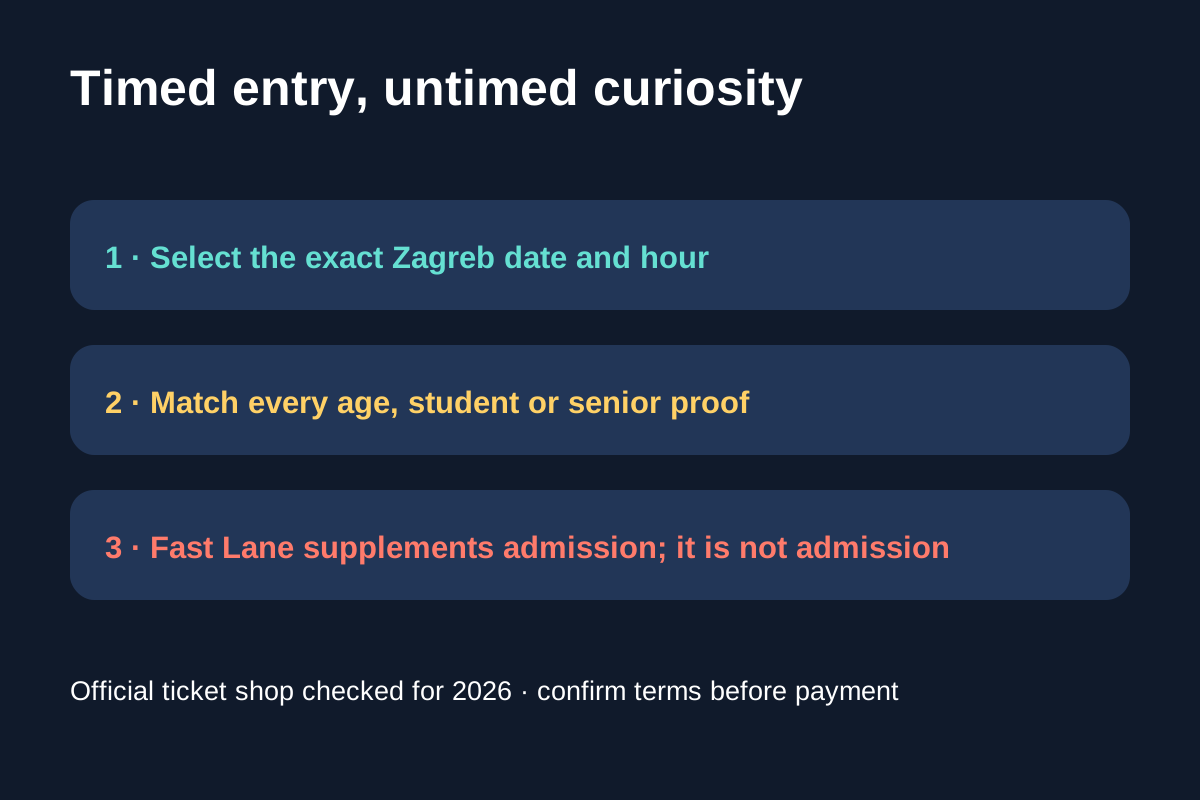
The official ticket shop currently sells dated hourly entry for the Ilica 72 Zagreb location. Select city, date, hour and ticket category carefully. A Fast Lane item is an add-on for the booking group and cannot be used without admission. Save the ticket offline and read refund, transfer and late-arrival terms before payment.
Current listed categories distinguish adults, children, students, seniors and family tickets, with proof conditions. Do not quote a price without a date because operator terms change. Children under the stated free age still need supervision and may require a counted reservation. Use only the official shop, not a QR screenshot from a reseller.
Check sensory and balance conditions before entry
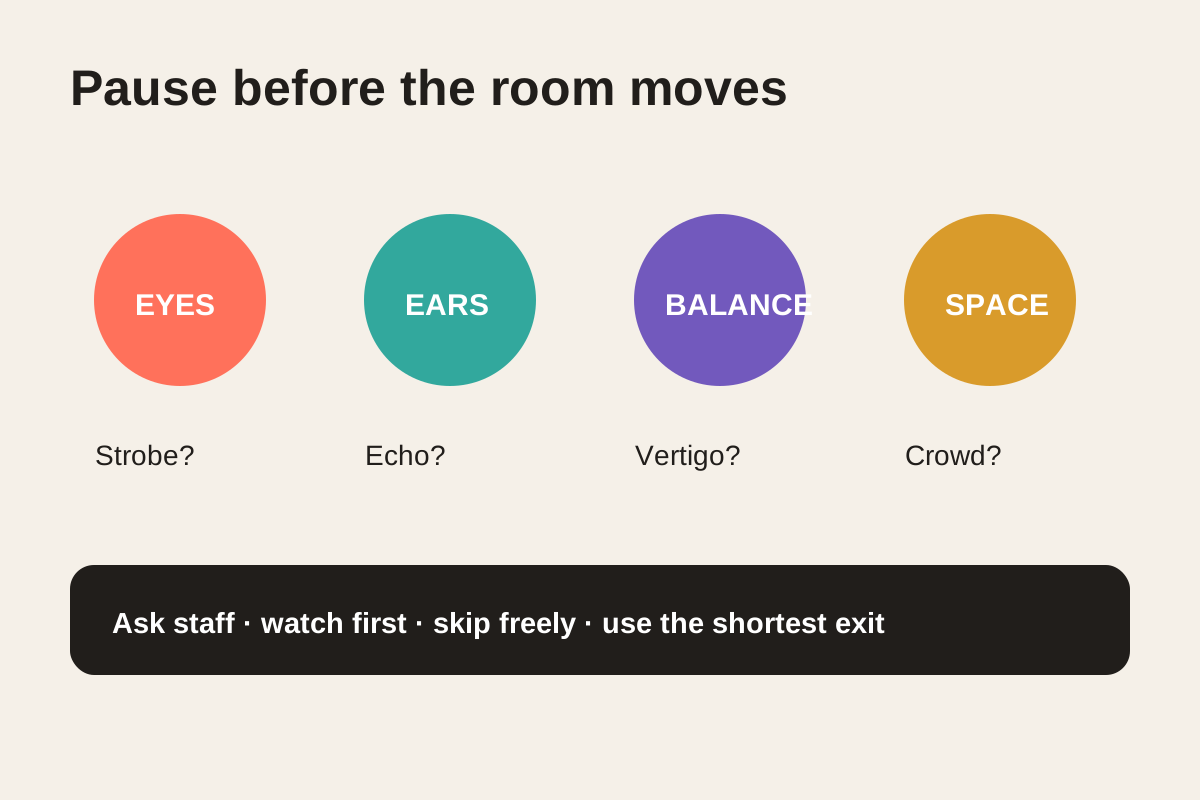
Illusion rooms can use visual motion, distorted scale, mirrors, narrow perspectives, darkness, echo and tilted settings. Visitors with vertigo, migraine, photosensitivity, balance disorders, anxiety or sensory sensitivity should ask the museum about the current route. Watch an effect before entering and skip it freely.
A companion should not pressure someone to complete a vortex or pose. Identify a quiet pause and shortest exit. Keep prescribed aids and medication accessible. If dizziness persists, sit safely and ask staff for help. The attraction demonstrates perception; it is not a medical test or exposure therapy.
Use a three-person photo method
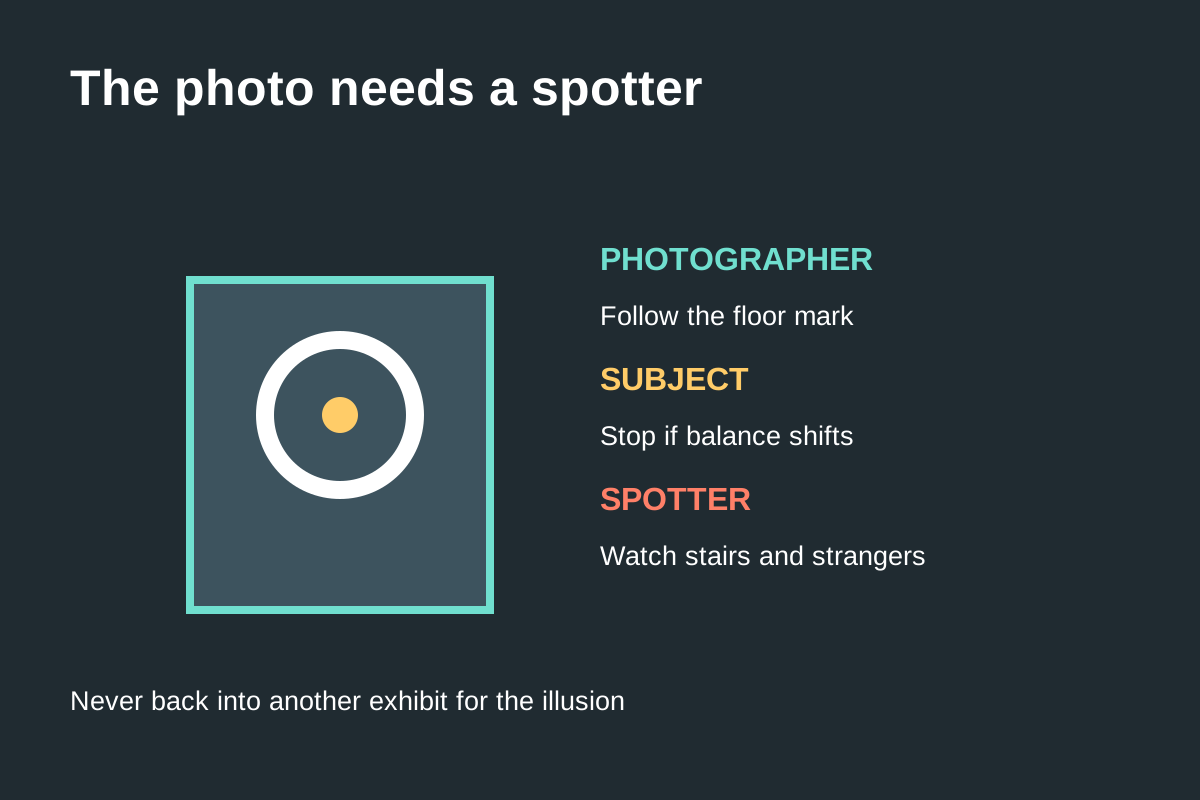
For staged effects, assign photographer, subject and spotter. The photographer uses the marked angle; the subject moves only after instructions; the spotter watches steps, walls, strangers and bags. This prevents the common mistake of walking backward into another exhibit while watching a screen.
Ask before including other visitors, especially children. Do not monopolise a photo point for repeated takes or touch mirrors and sets beyond instructions. Commercial shoots require permission. A convincing illusion is not worth a collision, damaged object or identifiable stranger published without consent.
Predict and test before reading the answer
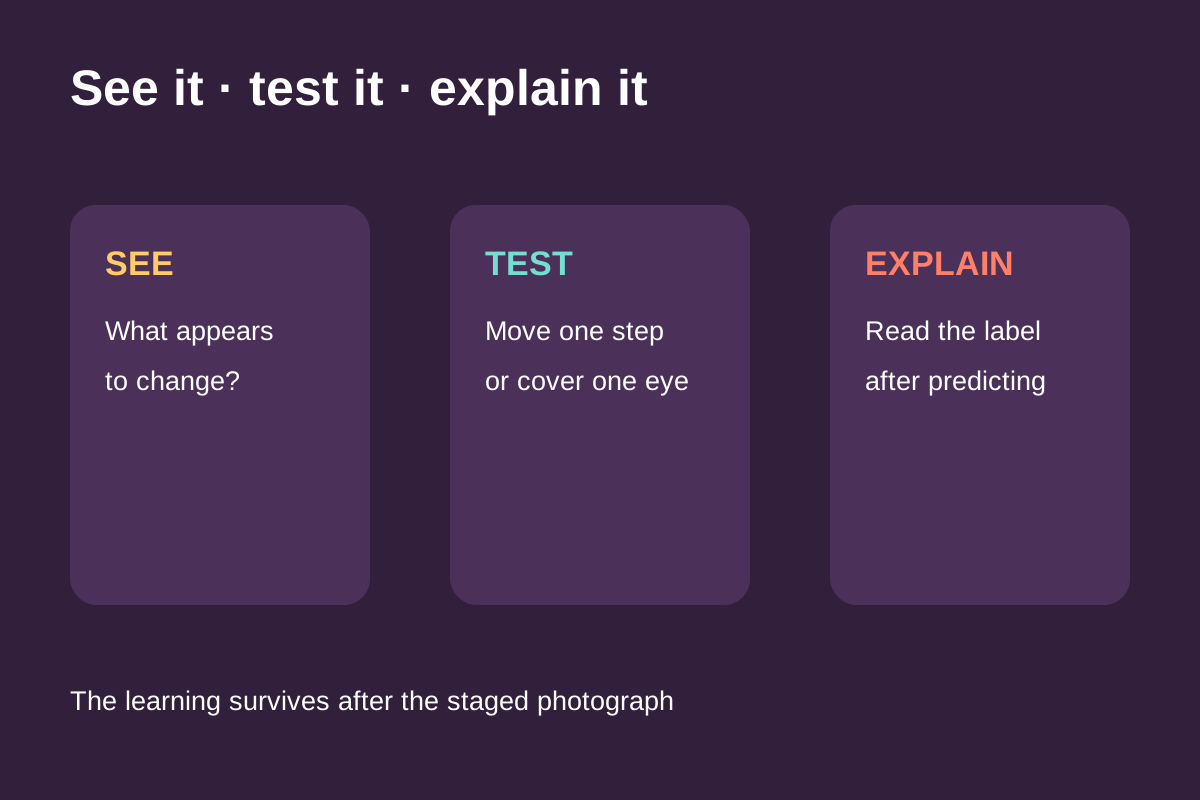
Ask what appears to change—size, colour, direction, depth or motion—and make a prediction. Shift viewpoint, cover one eye or compare a reference only where the exhibit invites it. Then read the explanation. This sequence turns a selfie stop into a useful experiment about context and perception.
Distinguish optical, cognitive and perspective effects rather than calling everything a hologram. Do not claim the museum proves that human vision is unreliable in every setting. Note the controlled conditions that create the effect and where it breaks. Families can compare predictions without shaming a child who sees it differently.
Confirm physical access and crowd route
Contact the Zagreb museum for the current step-free entrance, internal levels, lift, toilet, turning space, seating and companion arrangements. A central street address and timed ticket do not prove that every room is accessible. Ask whether a skipped installation can be bypassed without ending the visit.
Timed entry manages arrivals but does not guarantee empty rooms. Prams, large bags and mobility devices can affect narrow photo points; follow the operator’s current storage rules. Choose an earlier or quieter slot if crowding amplifies sensory load. Never use an emergency or staff door as a shortcut.
Supervise children around mirrors and puzzles
Set a meeting point and one rule: stop where the adult can see both child and route. Mirrors can obscure direction, while puzzles and photo points draw attention away from stairs. Do not let children climb frames, run through rooms or move loose pieces to another exhibit. Staff instructions outrank the desire to finish a puzzle.
Choose three favourite effects rather than completing everything. Explain that seeing an illusion differently is normal. If frustration or motion sickness begins, pause outside the effect. The visit succeeds when curiosity survives, not when every photo matches a promotional image.
Use an Ilica hotel base for the whole stay
Hotel Jagerhorn, Swanky Mint Hostel and Whole Wide World Hostel support central-west Ilica with different sleep and social profiles. Verify tram noise, exact room and walking route. Choose accommodation for the full itinerary, not solely for a timed one-hour attraction.
Pair Illusions with Britanski trg when the live market fits or one central café break. Avoid adding another interactive museum immediately if sensory fatigue is likely. The hotel advantage is a simple return, not special entry.

Debrief what the illusion changes and what it does not
After three exhibits, pause and compare mechanisms. Forced perspective changes apparent size through viewpoint; mirrors multiply or reverse space; contrast and surrounding lines alter perceived colour or length; motion aftereffects adapt visual processing. Use the museum’s current explanation for the specific installation. Do not generalise from a playful room to a claim that photographs, eyewitnesses or science are always false.
Ask which cues the brain normally uses and why the controlled setup creates conflict. Try to identify the minimum change that breaks the effect: move off the floor mark, reveal the mirror edge, cover one eye or compare an objective reference where permitted. Children can draw before-and-after diagrams instead of competing over who was fooled. If an explanation uses simplified language, treat it as an introduction and verify deeper claims through a reliable perception-science source. The strongest takeaway is calibrated observation: context shapes experience, while measurement and repeatable tests help distinguish appearance from geometry.
Leave with a recoverable meeting plan
Before entering, save the Ilica 72 address and choose a meeting point outside the timed route. A phone can be misplaced while taking photographs, and mirrored rooms make ‘near the exit’ unclear. Children should know the staff desk and never leave the building alone. After the visit, count people and belongings before joining tram traffic. Delete failed photographs that expose strangers or ticket QR codes, retain only consented images, and back up the reservation receipt until any payment issue is settled.
Questions people actually ask
How long do you need for the Museum of Illusions?
Most visitors are happy with about 60–90 minutes — longer if you like taking photos and trying every exhibit.
Is it worth it on a short trip?
Yes if you want one playful indoor stop. If you have very limited time, prioritize Upper Town + a park walk first, then add this as a rainy-day backup.