
Why it’s a great museum if you want “real Croatia”
The Ethnographic Museum is a perfect antidote to generic city tourism. Instead of kings and battles, you get everyday life: clothing, crafts, tools, rituals, and the way different Croatian regions look and feel.
It’s also in the Lower Town, near the Green Horseshoe parks — which makes it easy to build a balanced “culture + walk + coffee” day.
A quick backstory (the museum and the building)
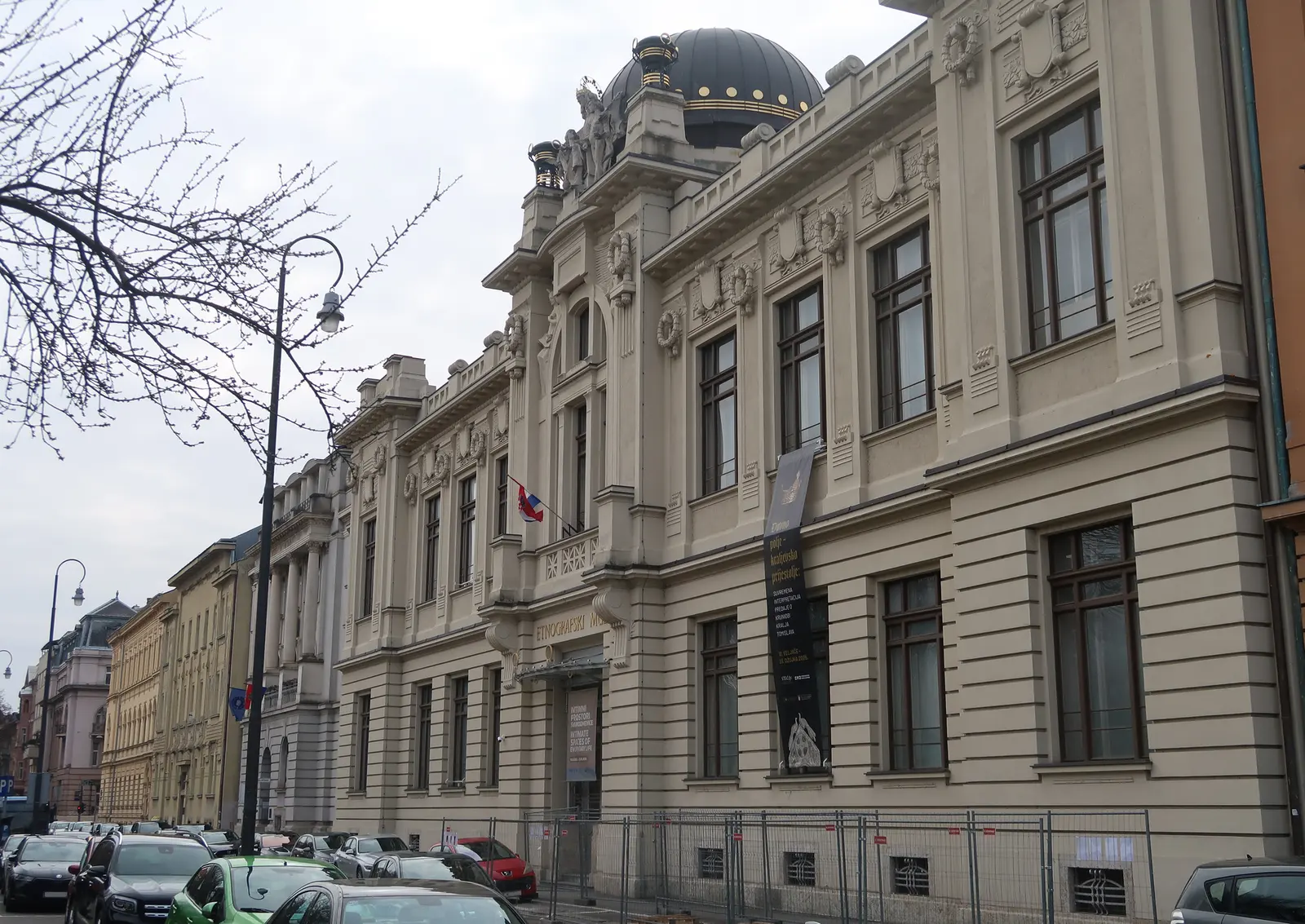
The museum was founded on October 22, 1919, and it’s housed in an Art Nouveau / Secession-era palace on Mažuranić Square. The official museum history highlights architect Alojz Vjekoslav Bastl (Hönigsberg & Deutsch studio) and interior frescoes by Oton Iveković.
What you’ll see (so you choose it confidently)
- Traditional clothing and textiles (including famous lace traditions).
- Folk art and handicrafts — objects that make the past feel like daily life, not just ‘history.’
- A sense of Croatia’s regional variety (Pannonian, Dinaric, Adriatic cultural zones are often used as an orientation lens).
- Some non-European objects and themes in addition to Croatian material (check current exhibitions).
A perfect Lower Town half-day (museum + parks)
- Ethnographic Museum → Mažuranić Square pause → HNK area walk-by → Zrinjevac bench break.
- Continue the Green Horseshoe loop or finish with a long café stop.
Tips for a better visit
- If you’re doing multiple museums, pair this with something very visual (like contemporary art) so the day doesn’t feel same-y.
- If you’re short on time, focus on the textile/costume highlights — you’ll get the most ‘Croatia’ per minute.
- Check the museum’s official site for current exhibitions, opening hours, and ticket info.
Why the Ethnographic Museum belongs in the day
The Ethnographic Museum uses clothing, craft, objects and social context to explore ways of life rather than presenting history only through rulers and monuments. It can add human texture to a Lower Town cultural day and broaden the trip beyond central Zagreb.
Pair the museum with the Croatian National Theatre and western Green Horseshoe, using parks before or after the collection. Choose it as the substantial museum of the half day. A nearby café provides a better second anchor than another label-dense institution.
What to notice and how to decide
Look for how objects relate to work, identity, ritual, region and change. Avoid treating traditional dress or craft as timeless decoration; use interpretation to understand who made, wore and collected it. Select themes that connect with places or questions elsewhere in the trip.
Confirm current exhibitions, renovation status, entrance and accessibility through official information. Displays may rotate or operate in partial spaces. International visitors should check language support if the contextual text is essential to how they want to experience the objects.
Prioritise ethnography for material culture, textiles and social history. Visitors seeking a city-specific overview may choose Zagreb City Museum first, while art-focused travellers have other options nearby. This museum rewards curiosity about lives and practices beyond the monumental centre.
Use the museum’s distinct weekday and weekend hours
The Ethnographic Museum currently opens Tuesday–Friday 10:00–18:00 and Saturday–Sunday 10:00–13:00, closing Mondays and public holidays. The short weekend window changes what fits. Check the live visit page and current exhibition dates before leaving; a temporary exhibition ending date is not extended by the building’s normal hours.
Read ticket and guided-tour conditions directly. English and Croatian tours require advance notice and are priced separately from admission. International Museum Day free entry or a category discount can require current proof and does not guarantee a tour. Save the Trg Mažuranića 14 entrance rather than navigating to a similarly named museum.
Treat reconstructed rooms as arguments, not frozen life
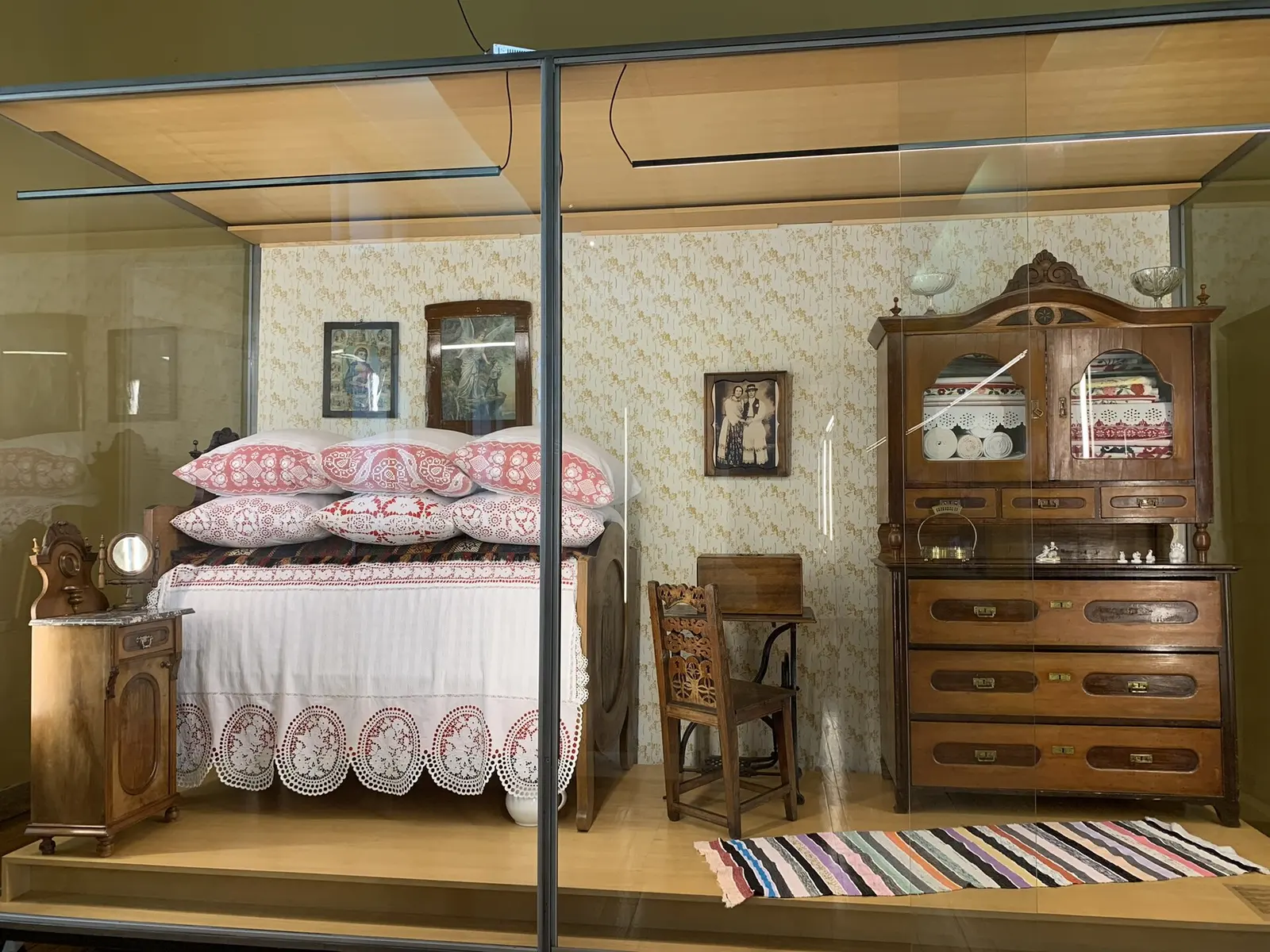
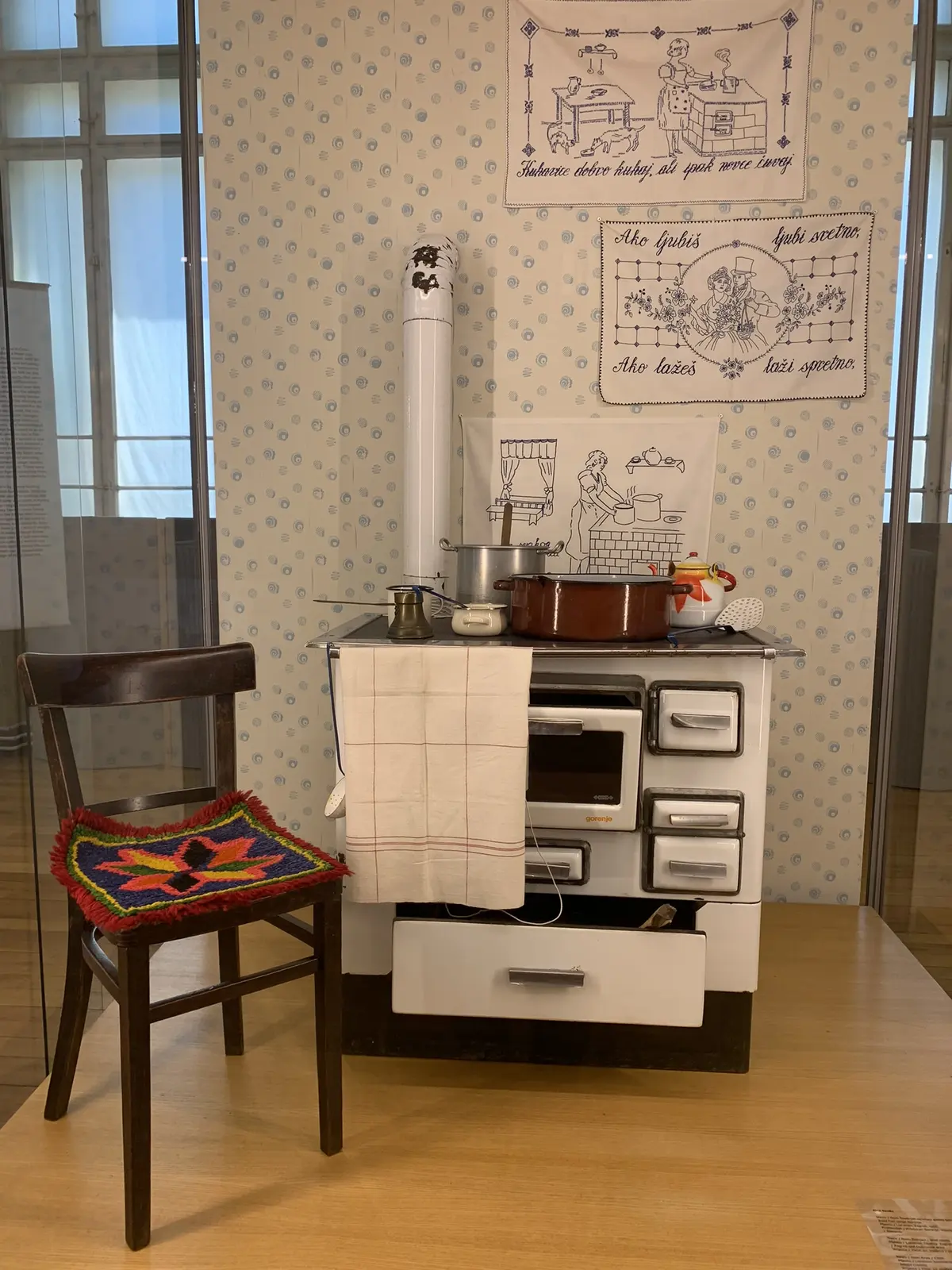
The 2024 bedroom and stove images show curated ensembles. Ask where each object originated, whether the pieces belonged together, what period is represented and which household labour is made visible or absent. A reconstructed room is an interpretive device, not an untouched Croatian home or a universal national tradition.
Compare material, repair, fuel, storage, gendered work and seasonal use before calling an object quaint. Read labels for region and community. Croatia contains varied histories, and the museum also holds non-European collections. Do not flatten difference into ‘how Croatians lived’ or use a single festive costume as ordinary daily clothing.
Read collecting and colonial context explicitly
The museum’s current long-running ‘Travelers’ exhibition addresses non-European collections and journeys of people and objects from colonial times to the present. Use its own interpretation and dates. Ask who collected, traded, donated, classified and displayed an object, whose voice appears in the label and what relationships are missing.
Avoid treating sacred, ceremonial or community-specific material as exotic décor. Photography permission does not settle cultural sensitivity or reproduction rights. When an exhibition identifies restrictions or descendant-community guidance, follow them. Record the institution’s language rather than inventing ethnicity, ritual use or authenticity from appearance.
Use current research exhibitions by their actual dates
The museum lists ‘earth//soil’ from November 2025 to March 2028 and other exhibitions with shorter runs. Confirm that the intended show is still open and whether a programme, performance or workshop needs separate booking. Do not describe a past tattoo or Land Art event as permanent because its page remains indexed.
For a workshop, verify language, age, capacity, material fee and whether admission is additional. Arrive at the stated meeting point. If the programme is sold out, visit the exhibition independently rather than joining a school or closed group. Date all recommendations so a later editor can remove expired programming cleanly.
Arrange the non-standard access ramp in advance
The museum asks visitors with disabilities or reduced mobility to give advance notice for access via a ramp with a non-standard slope. Contact the listed education team about entrance, staff assistance, wheelchair dimensions, lift, toilet, seating and evacuation. Do not translate ‘ramp available’ into independent step-free access without those details.
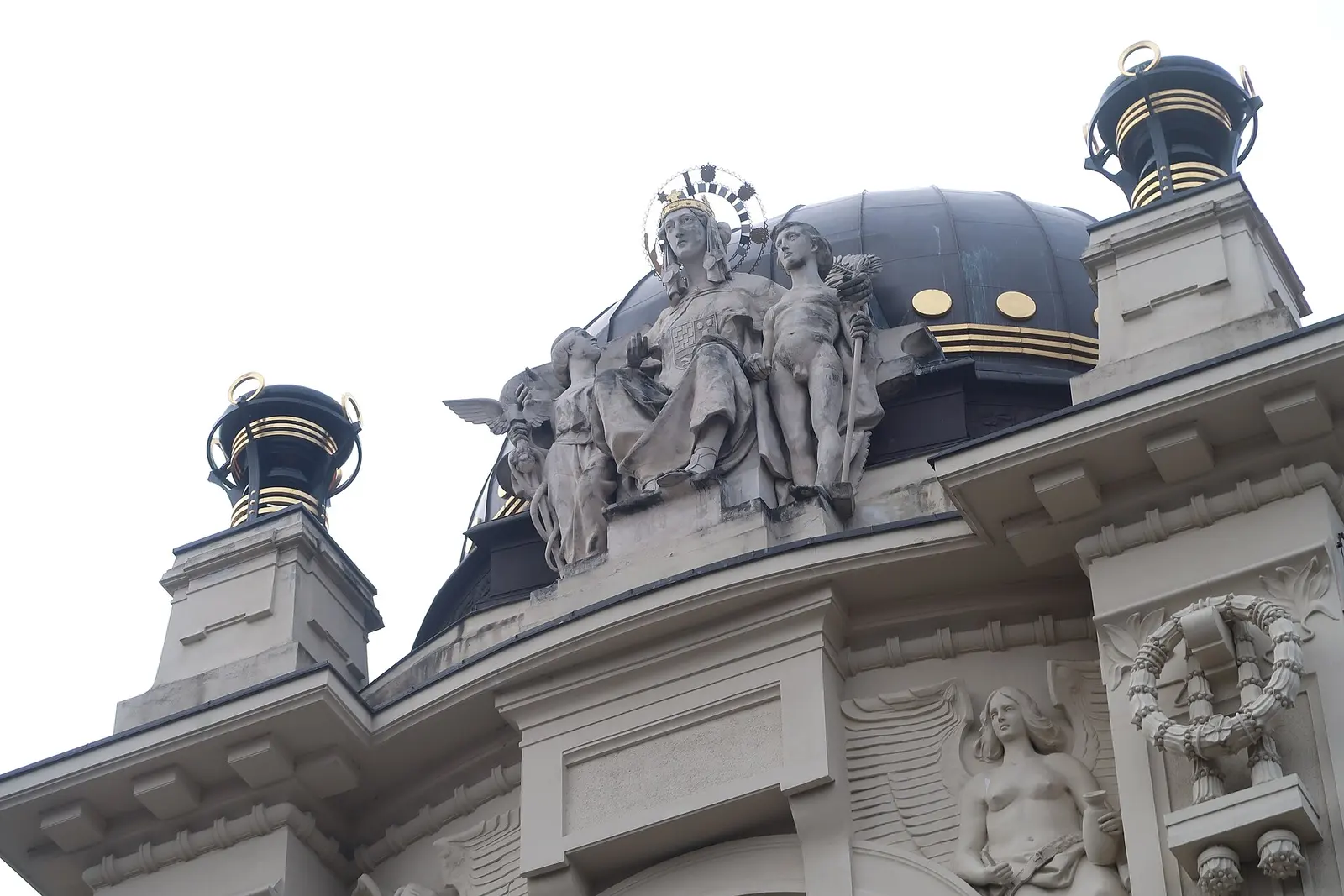
The 2025 facade and roof images show the Secession-era former Trades Hall, whose historic architecture shapes the approach. Identify the correct door and kerb route before arrival. A companion should not be expected to manage an unsafe gradient without staff planning. If a lift or gallery is unavailable, ask for the accessible exhibition scope and digital alternative.
Use the pet-friendly window precisely
The museum currently permits pet visits on weekends from 10:00 to 13:00 under its museum etiquette. That is a defined window, not an all-hours invitation. Read the rules before arrival and confirm species, lead or carrier, behaviour and any exhibition exclusion. Assistance animals should be discussed through the appropriate access channel rather than confused with the leisure-pet programme.
A guardian must prevent contact with objects, cases and other visitors. Leave if the animal is stressed, noisy or disruptive. Do not photograph another visitor’s pet without consent. Families with allergy or fear concerns can choose a weekday or ask the museum about likely conditions; pet-friendly should expand access without surprising others.
Choose a Lower Town base and one museum question
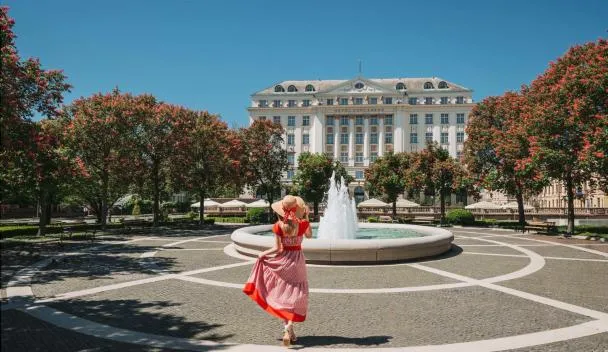
Esplanade Zagreb Hotel supports the western Lower Town and Horseshoe; Hotel Le Premier supports an eastern arts route; art’otel Zagreb supports a contemporary central stay. Choose by room, sleep and the whole itinerary. Pair the Ethnographic Museum with the Croatian National Theatre square or one park segment, not another dense collection by default.
Verify the actual accessible route and weekend hours before claiming convenience. The hotel does not arrange the museum ramp or tour unless it explicitly confirms such a service. The geographic benefit is a short, coherent Lower Town day with time to reflect on objects rather than consuming them as décor.
Photograph objects without stripping their context
Ask about current photography rules and obey object-specific restrictions. Switch off flash, keep devices away from cases and do not block a compact room. Record maker or community, object name, place, date, material, collector and accession number when the label provides them. A visually striking costume or room should not circulate as anonymous ‘folk culture’. For publication, verify both photographic and cultural rights and preserve the museum’s qualified language.
Questions people actually ask
Is the Ethnographic Museum worth it if I only have time for one museum?
Yes, if you care about culture beyond landmarks. If you prefer something quirky or emotional, pick the Museum of Broken Relationships instead.
Is it good for a rainy day?
Yes — it’s a classic indoor museum visit and easy to pair with cafés and short walks between parks.