
Why MUO is on so many Zagreb lists
The Museum of Arts and Crafts (MUO) is one of Zagreb’s most important design-and-objects museums — a great match for anyone who likes applied arts, craft, and the history of everyday things.
However, MUO’s official site notes the museum has been closed (from January 1, 2022) due to reconstruction, with closure lasting until further notice.
What to do instead (same neighborhood, still great)
The good news: MUO sits in an area with a lot of other strong “culture + walk” options.
How to keep the day design-forward
- Do one museum stop → then walk the Horseshoe for architecture details and city texture.
- End with a long coffee and a slow dinner — Zagreb’s best “design days” aren’t rushed.
Why the Museum of Arts and Crafts belongs in the day
The Museum of Arts and Crafts gives design, decorative art and material culture a place within Zagreb’s Lower Town museum cluster. It can deepen an architecture-led day by showing how objects, interiors and craftsmanship carry history at a more intimate scale than monuments.
Connect the museum with the Croatian National Theatre and western Green Horseshoe. Choose it as the main collection for visitors interested in design, then use the surrounding parks as recovery. Do not assume proximity means several neighbouring museums belong in the same afternoon.
What to notice and how to decide
Follow materials or periods that genuinely interest you and compare how function, ornament and production change. Furniture, textiles, ceramics and graphic work can be read through daily life as well as art history. Available interpretation should determine the focus of the current visit.
Institutional access and displays may be affected by restoration or temporary arrangements, so confirm the official status before travel. Check where current exhibitions are presented and whether a particular collection is visible. Heritage-building access may require additional planning for some visitors.
Prioritise the museum for design, interiors and decorative arts when its current programme is accessible. If the building or collections are limited, choose another Lower Town institution rather than visiting for the name alone. The subject is rich enough to deserve a deliberate, informed choice.
Separate the closed building from the active institution
MUO’s historic building on Republic of Croatia Square has been closed to the public for full renovation. The museum can still organise guest exhibitions, loans, talks and digital programmes elsewhere, but those do not make the square building open. Check MUO’s dated programme for the exact host institution, city, room, dates and ticket rather than travelling to Trg Republike Hrvatske 10 by habit.
A 2025 work programme anticipated completion around mid-2026, but a construction target is not a visitor reopening. Wait for an explicit MUO announcement covering public entry and installed collections. Search listings may show legacy hours from before the 2020 earthquake; the museum’s current closure and event-specific host information override them.
Read the facade without entering a work site
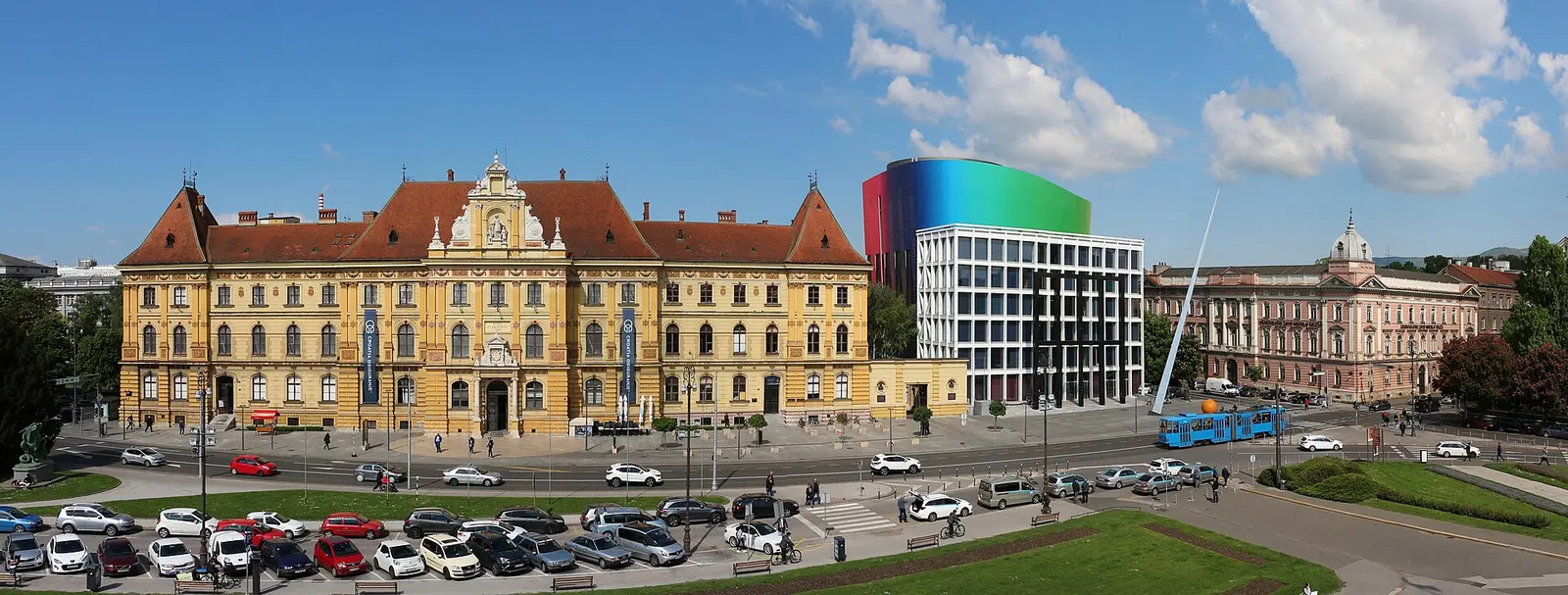
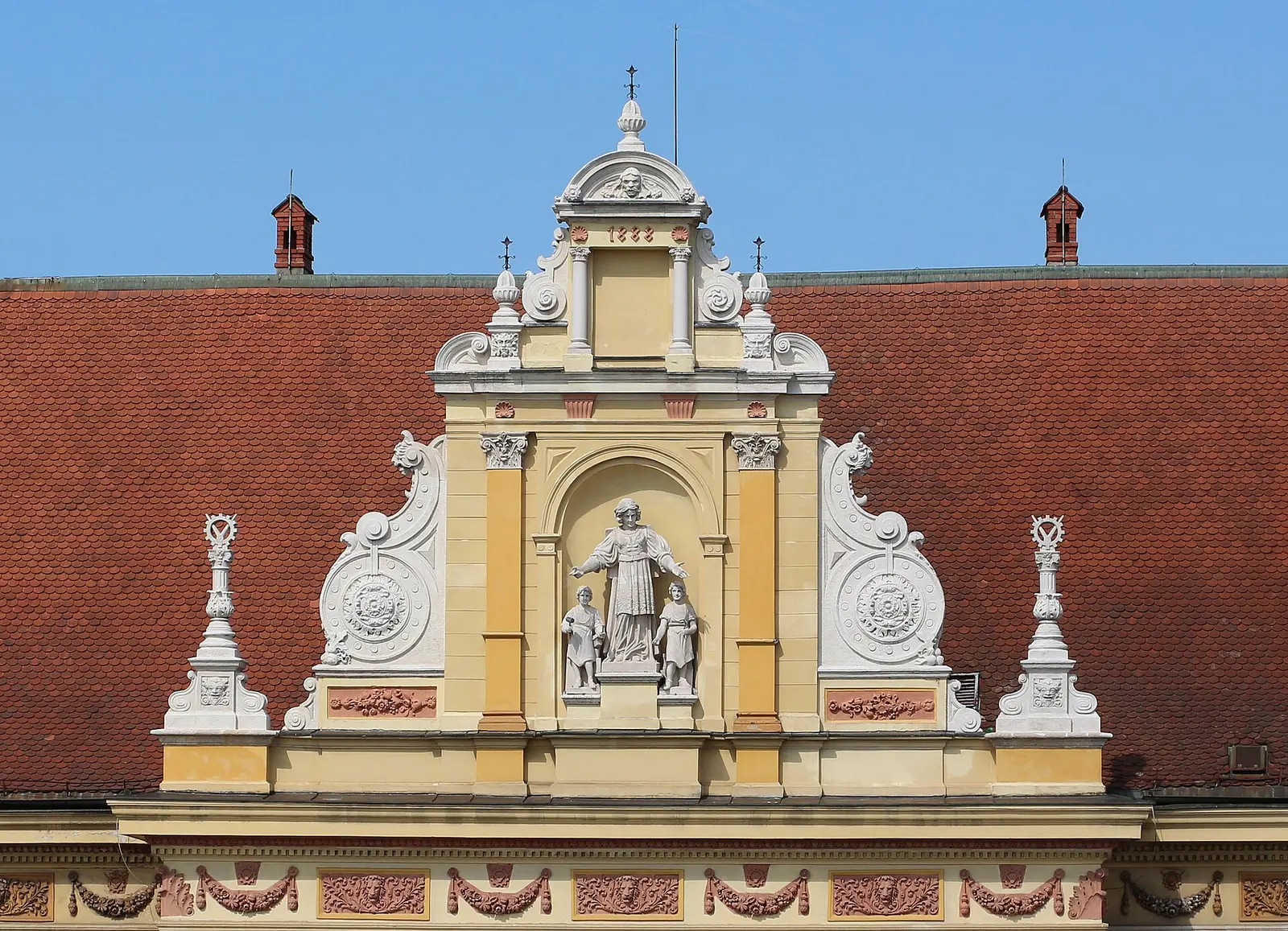
The 2019 panorama and facade detail predate the full renovation. Use them to read the museum’s historic relationship to the Croatian National Theatre, Music Academy and square, not to infer today’s barriers or finish. Stay on the open pavement, keep gates and deliveries clear and follow contractor or city signs. Never move fencing for a symmetrical photograph.
The sculpted pediment signals the building’s educational and decorative-arts identity, while the wider square view explains the civic ensemble. Observe both from a safe public point, then continue. Scaffolding, wrap or a closed frontage is a dated conservation condition, not a failed visit. Do not identify structural damage or restoration quality from appearance alone.
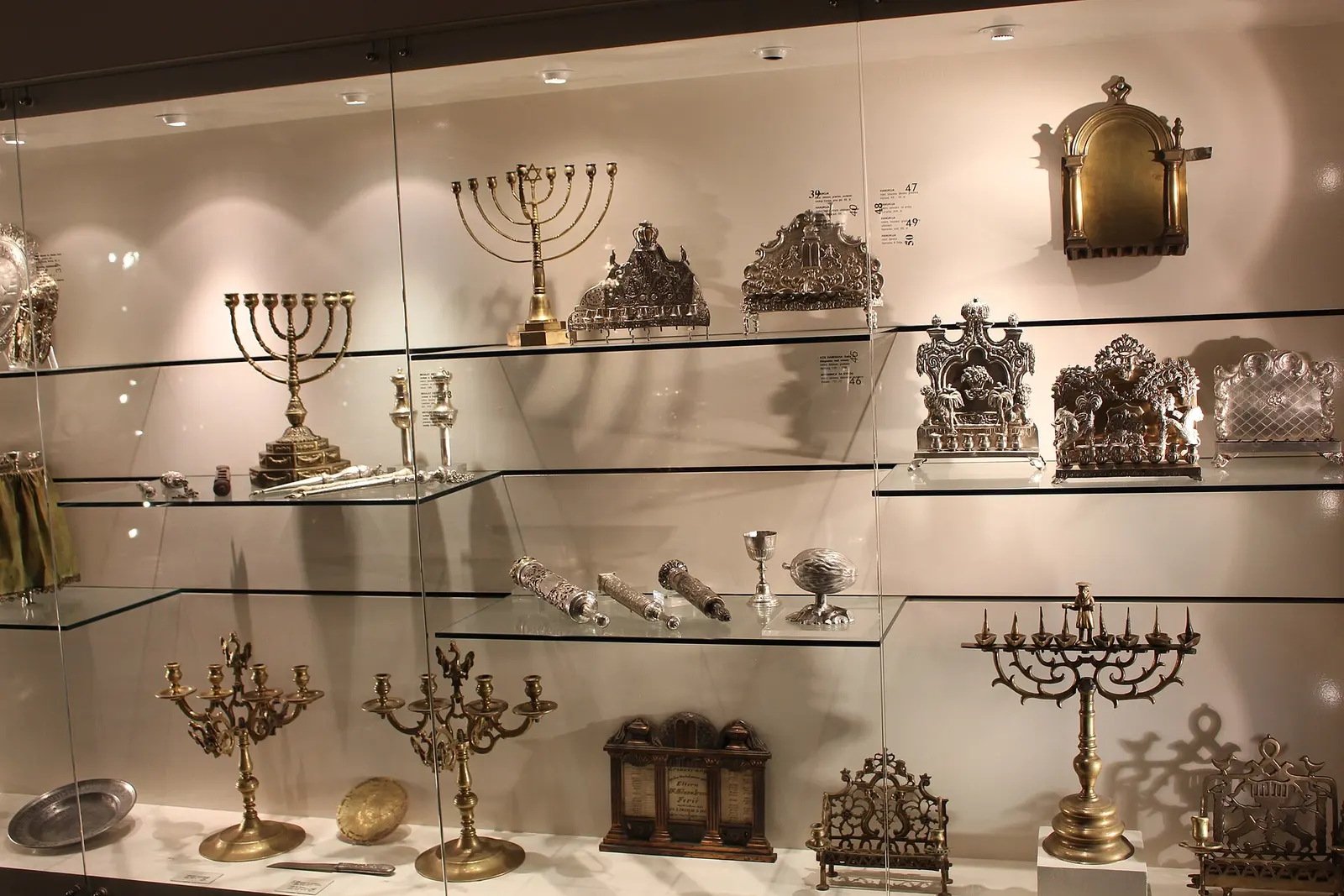
Treat the 2017 metalwork case as an archive
The gallery image records a former display of ritual and domestic metalwork. It cannot promise that the objects, case order or labels will return after renovation. Applied art is best read through material, making, use, patronage and later collection—not as decoration detached from daily or religious context. Use current MUO catalogues for object-level attribution.
When a guest exhibition presents MUO holdings, verify which objects have travelled and what conservation limits apply. A collection of more than one hundred thousand items cannot appear at once. Choose one material—ceramics, furniture, textiles, photography, metal or graphic design—and let the current exhibition answer a focused question. Do not expect a miniature permanent museum inside every loan show.
Verify the host, ticket and photography rules
A MUO-branded event at Klovićevi Dvori, another Croatian museum or a foreign gallery follows the host’s entrance, accessibility, cloakroom and photography system. Read both institutions’ notices. Confirm whether the event is included in general admission, has timed entry, uses another language or closes before the host’s other rooms.
Photography permission belongs to the current exhibition and lenders. Switch off flash, respect no-photo objects and keep bags away from cases. Commercial work requires permission. Record artist or maker, title, date, material, accession number and host date from the label; never transplant a 2017 caption into a 2026 loan display without checking.
Plan for the reopened museum only after details exist
A reconstructed building may introduce a new visitor entrance, lift, climate route, capacity and permanent display. When MUO announces reopening, confirm the exact open floors, last admission and any phased rooms. Travellers using mobility aids should contact the museum about step-free arrival from the square, toilets, seating and evacuation rather than assuming renovation resolves every historic constraint.
Allow time for one or two material themes instead of trying to consume the full collection. Families can trace how an object was made and used; designers can compare joinery, typography or production; historians can ask who commissioned and collected it. A focused route makes the museum legible and leaves room for temporary galleries without fatigue.
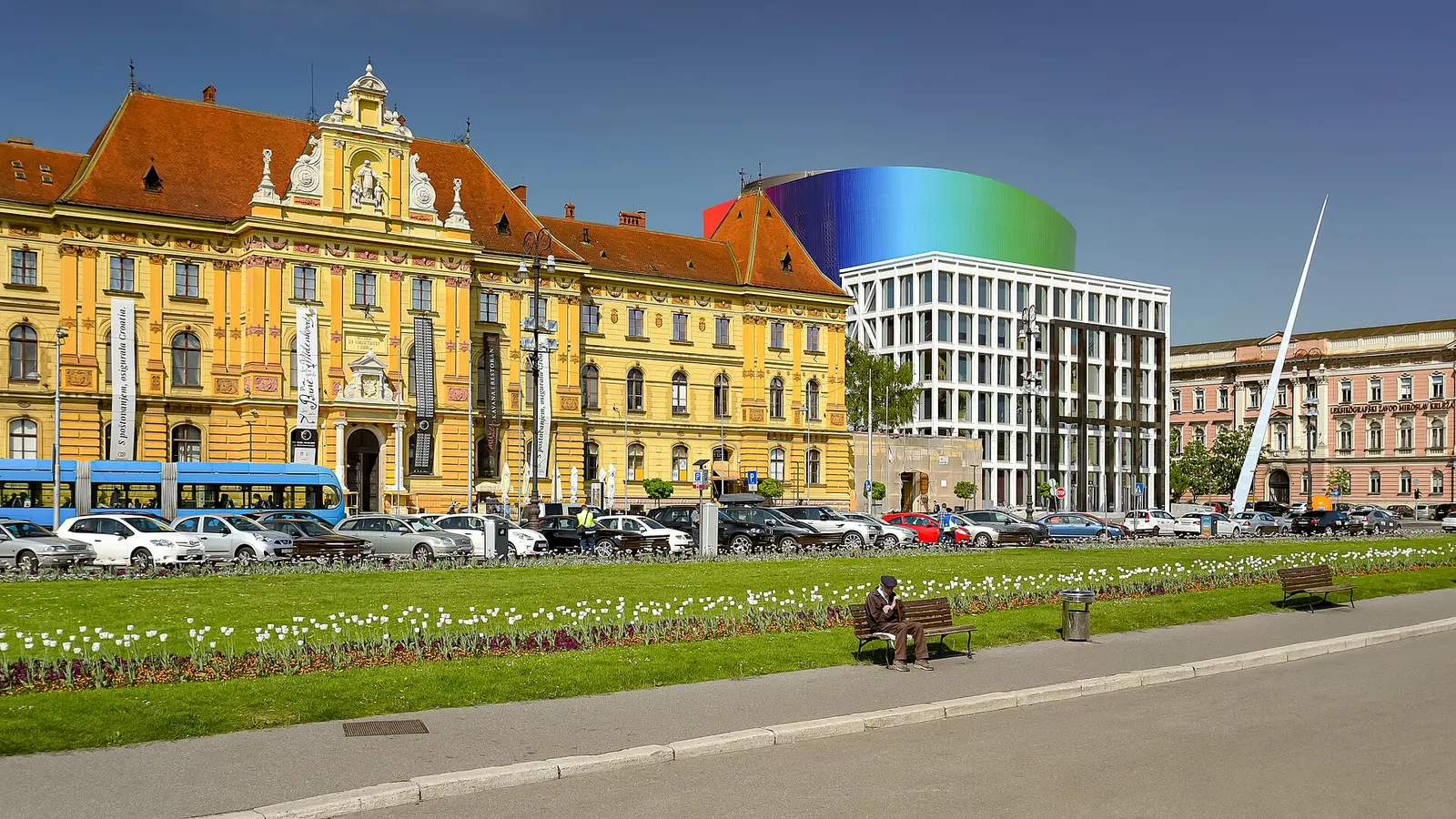
Use the square as a complete fallback route
When the building remains closed, combine its permitted exterior with the Croatian National Theatre, Well of Life and Music Academy exterior, then continue along one Horseshoe segment. Do not circle the construction looking for an unofficial entrance. The 2017 context photograph shows why the museum still matters to the square even when its collection is inaccessible.
Check performance crowds, road crossings and event barriers. Keep tripods out of theatre and academy access, ask before photographing people and date all construction. A twenty-minute architectural reading is enough. Redirect the saved museum time to an open collection rather than padding the exterior stop into a false two-hour attraction.
Researchers should use MUO’s official collection, library or documentation contact instead of arriving at the closed building. State the object, maker, inventory reference and publication purpose, and expect conservation or relocation limits. A digitised record can support preparation but may omit scale, reverse, material condition or revised attribution. Cite the database access date and request reproduction permission separately from research access. Travellers should not promise staff mediation, visible storage or behind-the-scenes entry merely because the institution remains active during renovation. Its public programme and its collection-management work are different services. After reopening, re-audit every legacy direction, ticket term and accessibility claim against the new public route before publication and visitor use worldwide again.
Stay for an arts geography that actually operates
Esplanade Zagreb Hotel supports the western Lower Town and Horseshoe; Hotel Le Premier supports eastern galleries; Hotel Jagerhorn balances central and Upper Town museums. Select the hotel for multiple open interests, room and sleep—not for a closed MUO entrance. Confirm any host exhibition before claiming one property shortens the route.
After reopening, compare the new entrance and transit afresh. Until then, the best recommendation is transparent: see the building from public space, follow MUO’s programme to its real host, or choose another museum. That approach respects both a collection in transition and a traveller’s limited time.
Questions people actually ask
Is MUO currently open?
MUO’s official site has noted a closure for reconstruction (from Jan 1, 2022). Check the official notice for the latest status and any temporary exhibition locations.
What’s the best nearby alternative if MUO is closed?
Pair the Horseshoe walk with a nearby museum (like Mimara or the Archaeological Museum) and consider an HNK evening for a classic cultural day.