
Why it’s a great “classic museum” choice
If you like a traditional museum day — artifacts, ancient stories, and a strong sense of time — the Archaeological Museum is a dependable, central pick.
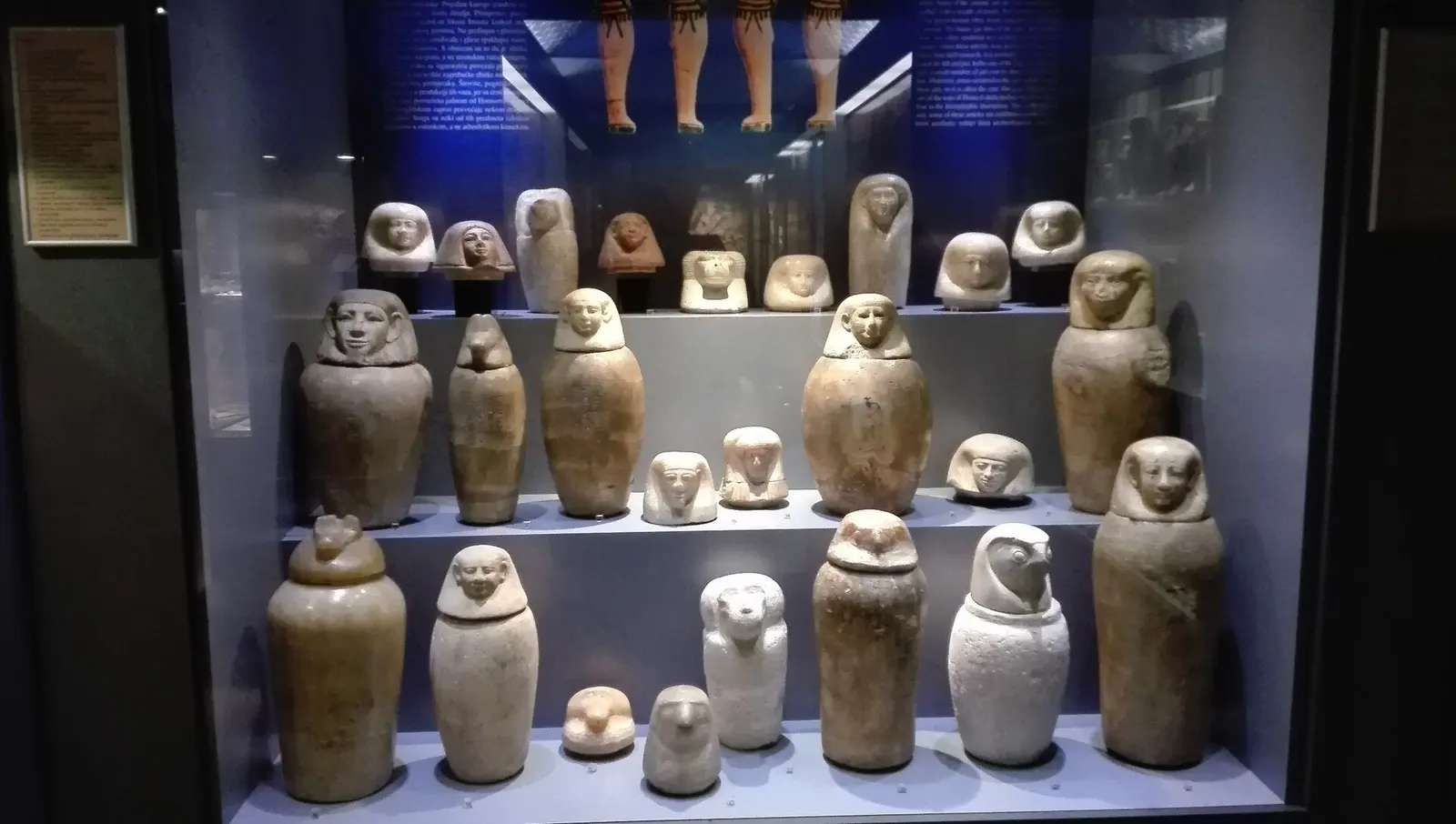
InfoZagreb highlights a few standout angles: the museum was founded in the 19th century and includes an Egyptian collection with the famous “Zagreb mummy” (the linen wrappings contain an Etruscan text).
What to prioritize (so you don’t overload)
- Egyptian collection (including the Zagreb mummy story).
- Classical antiquity collections (Greek/Roman) if you like the Mediterranean world.
- Prehistory/local context if you want a “this region over time” feeling.
Turn it into a park-and-culture afternoon
- Museum → Zrinjevac bench break → Horseshoe walk → coffee → dinner.
Practical tips (stress-free museum day)
- Check current opening hours and ticket info on the official site before you go.
- If it’s raining: pair the museum with cafés and short walks between parks.
- If you’re tired: stop after one major museum and finish with parks — Zagreb is better slow.
Why the Archaeological Museum belongs in the day
The Archaeological Museum offers long historical perspective within a central Lower Town setting. Its collections can place Zagreb and Croatia inside wider ancient worlds, making it a strong choice for visitors who want material history rather than a narrowly modern city narrative.
Combine the museum with Zrinjevac and the eastern Green Horseshoe, allowing the park to frame an otherwise dense cultural block. Choose a market morning or architecture walk before it, then keep the next interior stop optional so attention remains available for the collection.
What to notice and how to decide
Select a period, region or group of objects as the visit’s thread. Archaeological collections become tiring when every case receives equal obligation. Use labels and current exhibition structure to connect small objects with trade, belief, burial, domestic life or power rather than viewing them only as isolated treasures.
Confirm the museum’s current exhibition location, access and opening status, especially where heritage institutions have faced building work. Collections may be displayed through temporary arrangements. Check accessibility and cloakroom requirements before assuming the historic address describes the complete visitor experience.
Prioritise archaeology for ancient history, object-focused learning and a substantial rainy-day anchor. Travellers with little interest in the subject should choose the Zagreb City Museum or another locally focused collection. The museum rewards curiosity and selection, not endurance.
Use the live museum hours and last admission
The museum currently lists Tuesday–Friday 10:00–18:00, Saturday 10:00–20:00 and Sunday 10:00–13:00, closed Mondays and holidays, with entry ending twenty minutes before closing. Verify the visit page and any dated holiday notice before travel. Saturday’s later closing and Sunday’s short session create very different visits.
The main museum at Zrinski Square, Gallery AMZ on Pavla Hatza Street and Archaeological Park Andautonia are separate venues with separate calendars. Confirm the address attached to the exhibition or activity. A ticket, free Sunday or guided programme at one site does not automatically cover the others.
Choose one collection question before entering
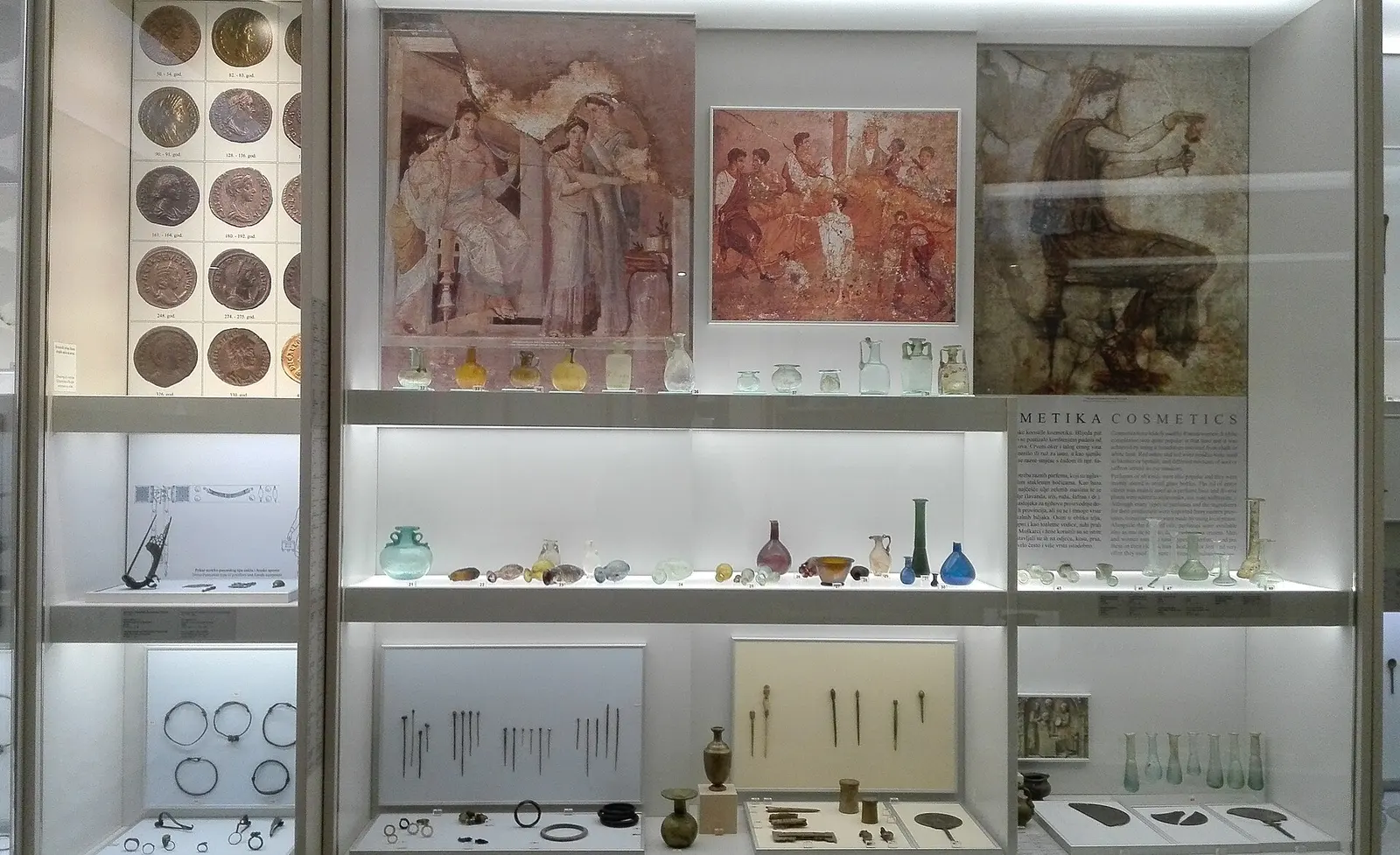
The collection spans prehistory, Egypt, Greece, Rome, the Middle Ages and numismatics. Do not attempt every label. Choose a question—burial practice, trade materials, writing, domestic technology or coin circulation—and follow it across two sections. Add one unexpected object, then stop before case fatigue turns distinctive evidence into a blur.
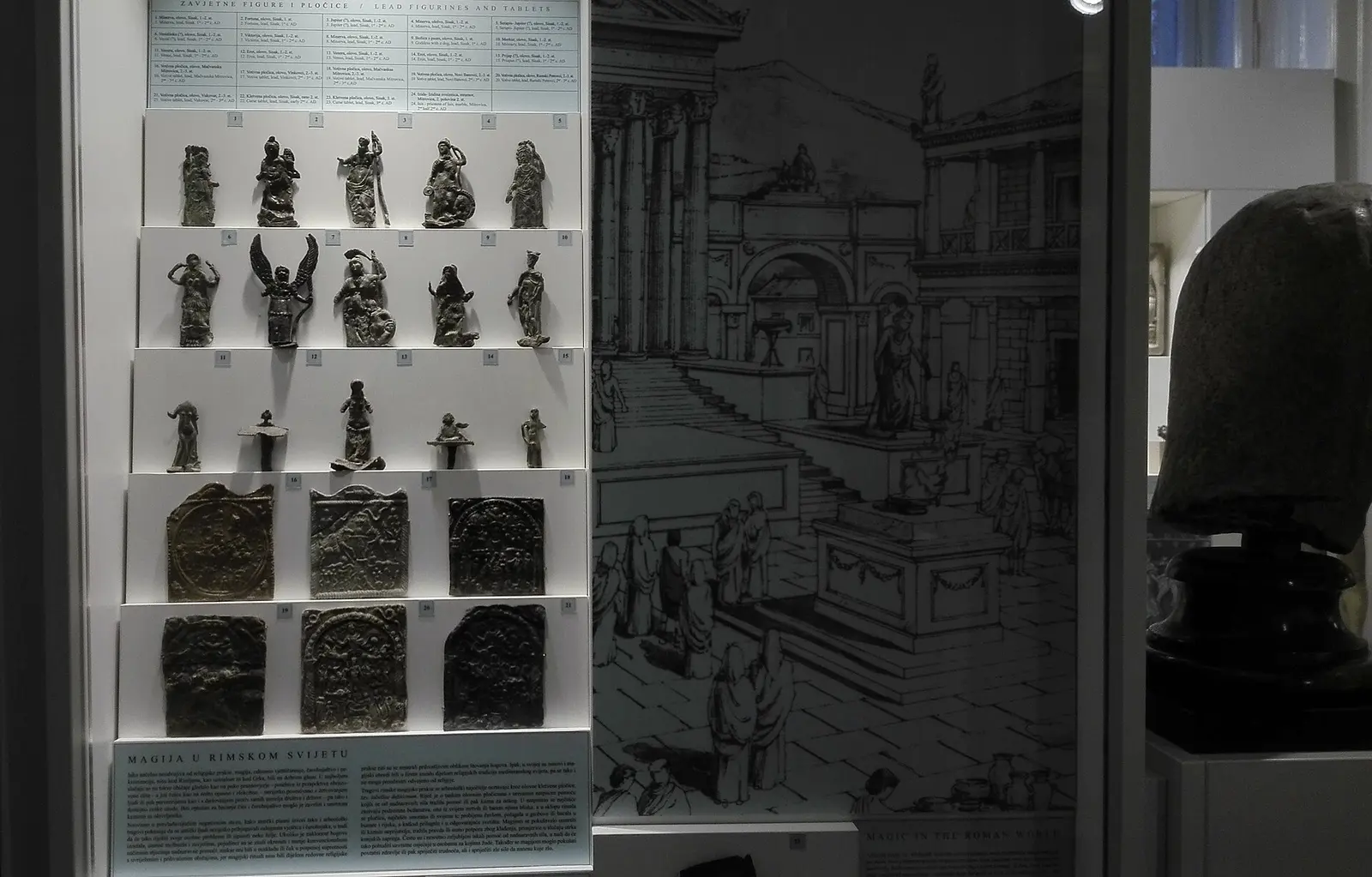
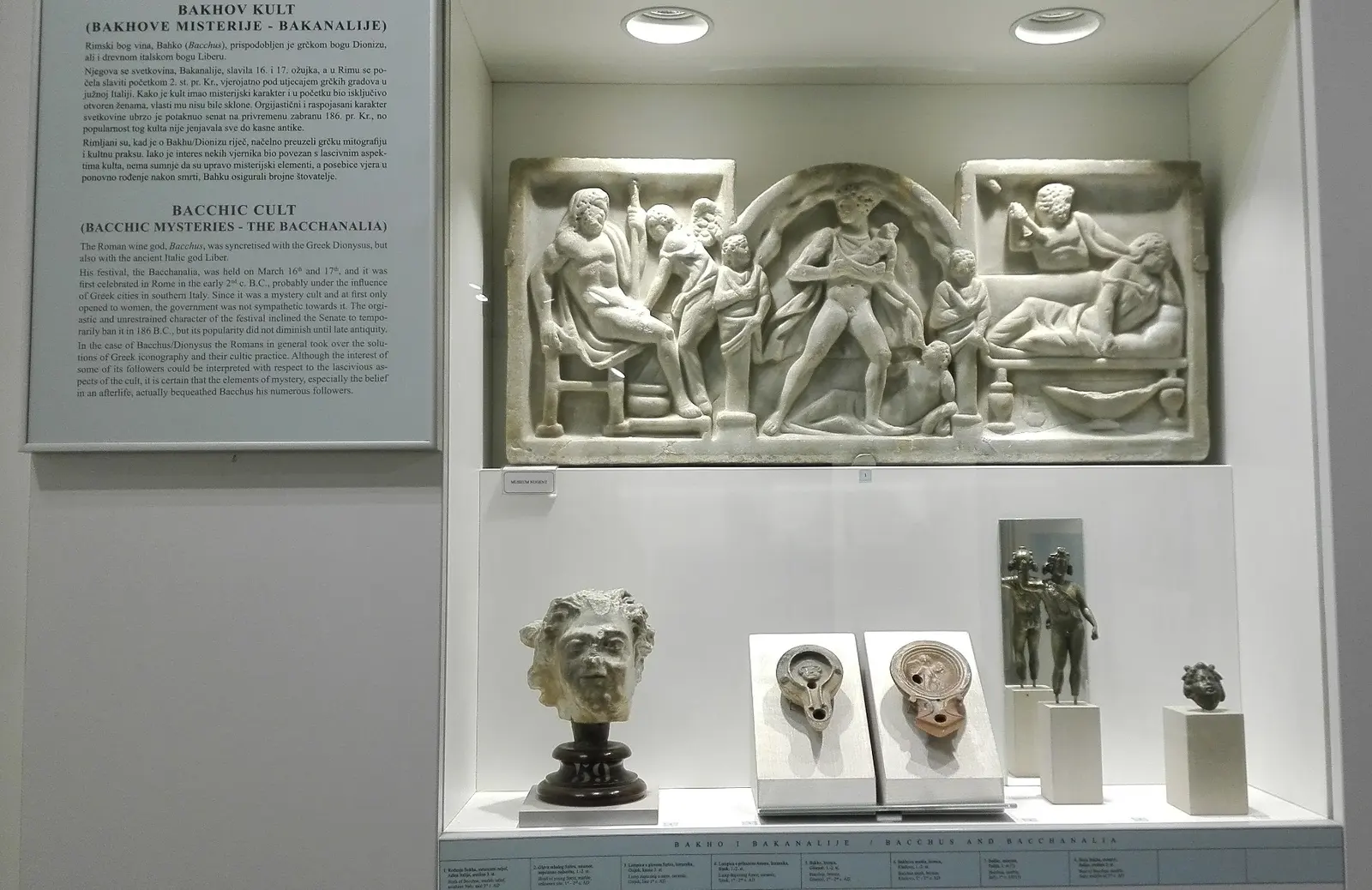
The four images record 2016–2017 displays, not today’s case order. Use the current map and labels. Objects can move for conservation, loans or a new installation. If the Zagreb Mummy or another famous item matters, ask the museum whether it is currently visible rather than treating an old review as a guarantee.
Read material, context and uncertainty together
Start with material and manufacture, then find date, findspot, cultural context and acquisition history on the label. Similar-looking figurines can belong to different periods and uses. Do not call every human image a deity, every weapon ceremonial or every imported object proof of migration. Preserve the museum’s qualified wording.
Archaeology reconstructs context from evidence, and older excavations or collections may leave gaps. Notice phrases such as probably, attributed, unknown provenance or reconstruction. They are not weaknesses to edit away. Record inventory numbers for later research and consult the museum catalogue before repeating a dramatic interpretation in public.
Handle photography and human remains carefully
Follow the current room-by-room photography rules. Switch off flash and focus lights, keep equipment away from glass and never block a narrow case. Reflections are a reason to change angle, not touch a display. Tripods, publication and commercial work can require prior permission, while lender restrictions can differ inside one exhibition.
Human remains and funerary objects require restraint. Do not pose, joke or turn an identifiable body into a selfie background. Read how the museum explains origin, research and display, and keep children’s readiness in mind. If the treatment feels uncomfortable, move on and use the museum’s contact channel for a considered question.
Confirm access and guided-programme language
Contact the museum about the current step-free entrance, lifts, seating, accessible toilet and any closed floor. Historic-building appearance does not establish a continuous route. Ask whether a companion ticket or tactile, large-print or sensory support exists for the exact exhibition. Build a shorter alternative when one collection level is unavailable.
The museum advertises a Saturday expert tour in Croatian under current conditions and asks groups to arrange visits in advance. Confirm language, capacity, ticket and meeting point. Do not join a group silently expecting translation. Independent visitors can use labels or an official guide and ask one focused question when staff are available.
Use free entry without inventing unlimited access
The current Croatian visit page advertises free entry on the first Sunday of the month. Recheck the date, capacity, hours and included exhibitions. Free does not mean empty, extended or exempt from ticket control. Arrive early for the short Sunday window and keep a paid alternative date if a calm visit matters more than price.
Families should verify the current family-ticket definition and age proof rather than extrapolating from another museum. School and group prices can require booking. Keep bags within cloakroom rules and bring only permitted water. A lower ticket price is not useful if the chosen collection is closed that day.
Researchers should separate display admission from study access. Contact the relevant department with a precise object, inventory number, purpose and preferred date; an ordinary ticket does not open storage. Expect advance notice, staff-capacity, handling and photography limits. Families can use a simpler evidence card: material, estimated date, findspot, possible use and one uncertainty. Compare it with the official label before moving on. This makes a dense case active without copying every caption. If translation is needed, record the inventory number and verify terminology later rather than blocking the case with a phone. End by selecting one object whose context changed your first impression, then check the museum database for excavation history, bibliography and a clearer image. Cite the record date and separate a museum interpretation from your own response. This final step turns a casual visit into responsible evidence without requiring restricted research access.
Connect Zrinjevac to a central hotel route
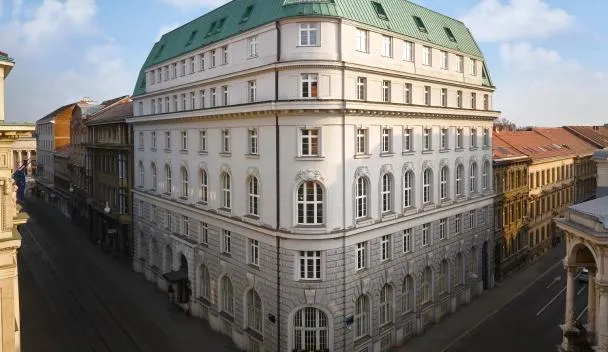
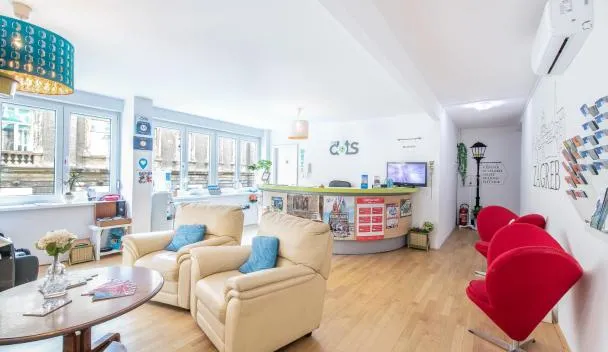
Hotel Capital, The Dots Hostel and art’otel Zagreb all support a central or Lower Town museum route with different room and budget profiles. Choose accommodation for the whole stay, then pair the Archaeological Museum with Zrinjevac or one nearby gallery. Do not cross the city for a second major museum after attention has already dropped.
Verify room, tram noise, accessibility and the live museum entrance. A central hotel cannot guarantee an object or tour. Its value is route economy: the visitor can arrive near opening, take a proper break and continue through one coherent park sequence without repeating the same streets.
Leave a verifiable research trail
Select one object whose context changed your first impression, then check the museum database for excavation history, bibliography and a clearer image. Cite the access date and keep the institution’s uncertainty intact. Do not strip qualifiers when summarising chronology, provenance or attribution. If the record changes, correct the note rather than defending an outdated reading. This modest follow-up turns a casual visit into responsible evidence without requiring restricted access.
Questions people actually ask
What is the “Zagreb mummy”?
It’s a famous object in the museum’s Egyptian collection: a mummy whose linen wrappings contain a long Etruscan text (often called the “Liber Linteus”).
How long should I plan for the Archaeological Museum?
A comfortable visit is usually 1.5–2.5 hours depending on your pace and the current exhibitions.