
Why this museum is a special stop
Atelier Meštrović is one of those museums that feels like a pause rather than a task. It’s compact, atmospheric, and set in Upper Town — which means it fits naturally into the most classic Zagreb walking routes.
If you like sculpture, quiet courtyards, and culture that doesn’t overwhelm you, this is a great pick.
How to visit (so it fits your day)
- Pair it with an Upper Town wander (don’t do it as a standalone mission).
- Plan ~60–90 minutes depending on your pace and interest in sculpture.
- Check the official museum site for current opening details — Zagreb museum schedules can shift seasonally.
The perfect Upper Town culture loop
- Stone Gate → St. Mark’s area → Atelier Meštrović → a viewpoint walk → coffee back down the hill.
Who it’s perfect for
- Culture travelers who prefer smaller museums with atmosphere.
- Couples looking for a calm, romantic hour (especially in the afternoon).
- Anyone who wants a “quiet Zagreb” moment between the main sights.
Why the Meštrović Atelier belongs in the day
The Meštrović Atelier connects one of Croatia’s most important sculptors with the Upper Town spaces where he lived and worked. The appeal is intimate rather than encyclopedic: art, domestic scale and historic neighbourhood context meet in a visit that rewards prior interest in sculpture.
Include the atelier within an Upper Town cultural loop, allowing the Stone Gate, St. Mark’s area and nearby lanes to frame it. Choose it as the indoor anchor instead of adding it after several museums; the focused setting deserves attention that has not already been exhausted.
What to notice and how to decide
Look at how sculpture changes across rooms, courtyards and architectural thresholds, and how the working environment affects the reading of the art. Use available interpretation to connect individual works with Meštrović’s broader practice rather than searching only for a famous piece.
Historic-house museums may have changing access, capacity or restoration arrangements. Confirm the current entrance, exhibition status and accessibility through the official institution. The old-town terrain around the atelier also includes slopes and surfaces that should be part of the visit plan.
Prioritise the atelier for sculpture, architecture and a quieter Upper Town experience. Travellers with only one museum slot may prefer a broader Zagreb collection unless Meštrović is a specific interest. The right visitor will find the intimate scale a strength rather than a limitation.
Use the reopened Atelier’s current visitor notice
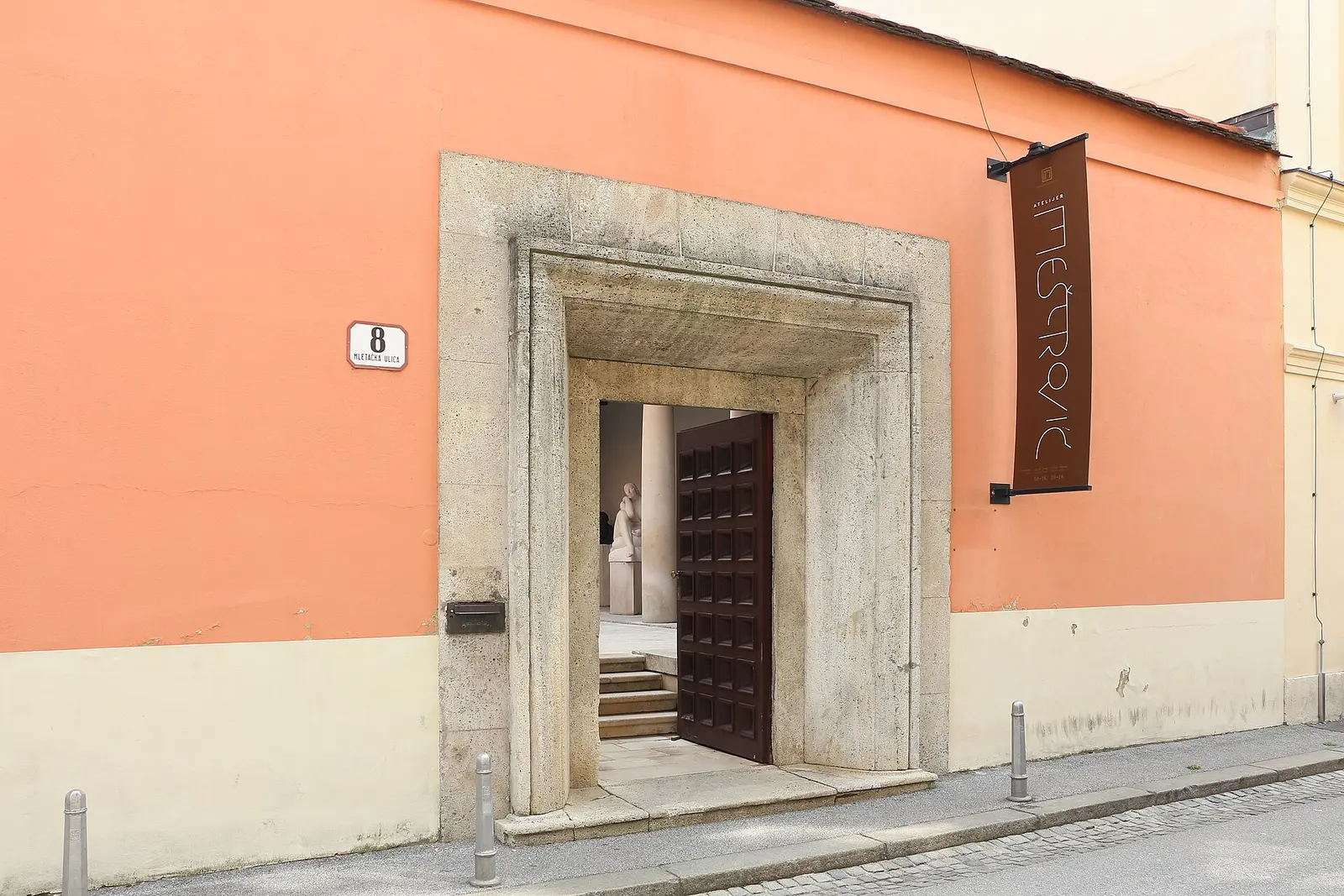
Atelier Meštrović reopened in December 2025 after full post-earthquake renovation, with a newly conceived permanent display. This is a real reopening, not a projected completion. Check the Atelier’s own page for today’s hours, admission, holiday closures and any timed programme before climbing to Mletačka Street; inaugural free-entry terms do not automatically continue.
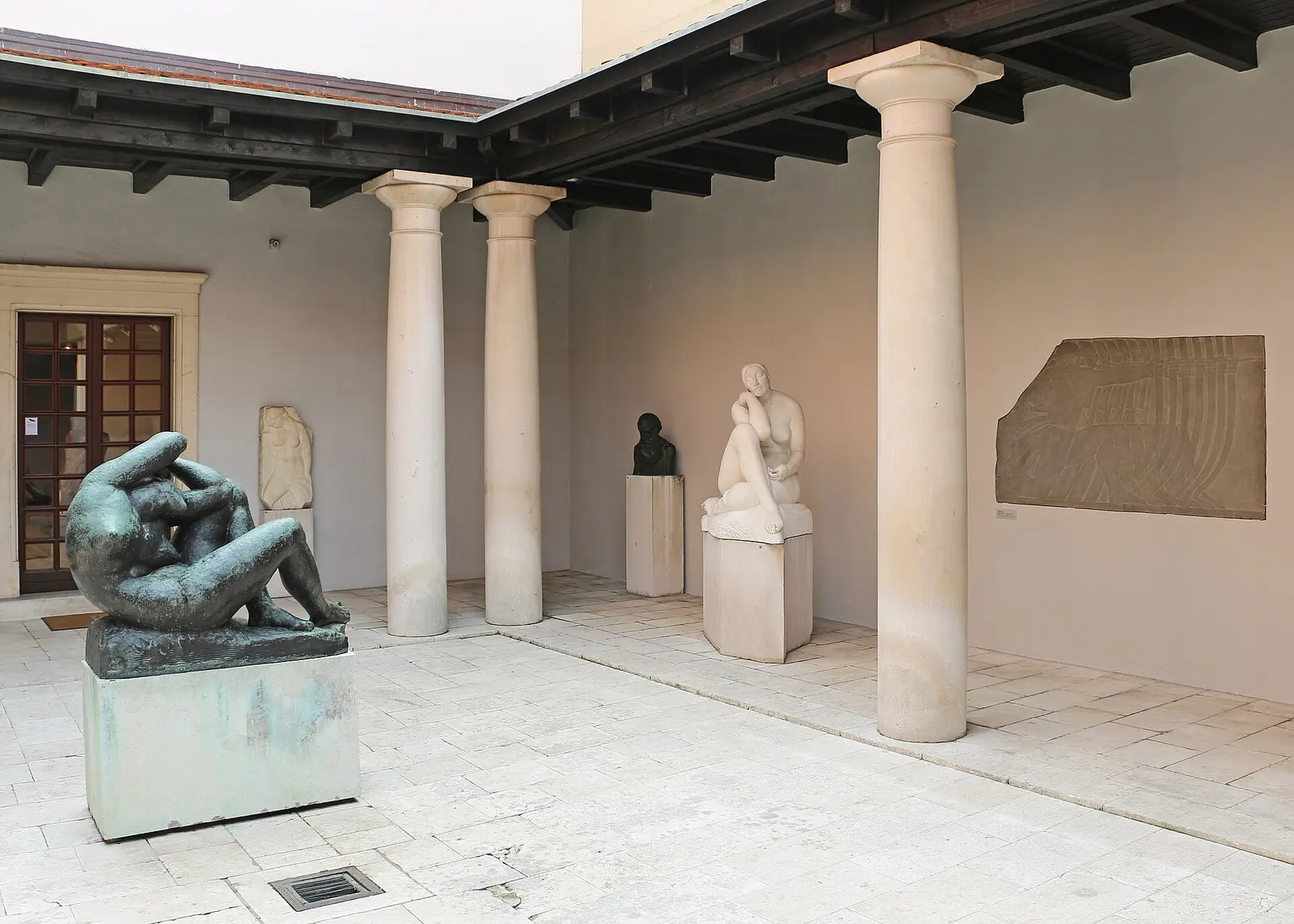
The 2019 images in this guide all predate reconstruction. They establish entrance, courtyard and individual works under the former arrangement, but cannot navigate the new display. Use current staff direction and labels. If a specific sculpture matters, contact the museum rather than assuming it returned to the same corner.
Read home, studio and museum as three layers
Meštrović lived and worked in the complex until 1942, so domestic rooms, studio functions, courtyard light and later museum adaptation overlap. Ask which fabric belongs to the artist’s use and which to subsequent conservation or visitor circulation. A furnished room is not automatically preserved exactly as he left it.
The new permanent display includes familiar works and pieces brought from the Split holdings. Read the reason for each placement: biography, material, theme, commission or studio process. Do not describe every work in the Zagreb Atelier as made in that exact room or during the Zagreb period without checking its label.
Look at sculpture from more than one safe viewpoint
Begin with silhouette and weight, then move around only where the route permits. Compare front, side, back, surface and relation to natural light. Marble, bronze, plaster and wood behave differently. Do not touch polished stone or a patinated bronze to test texture, and never step onto a base for scale.
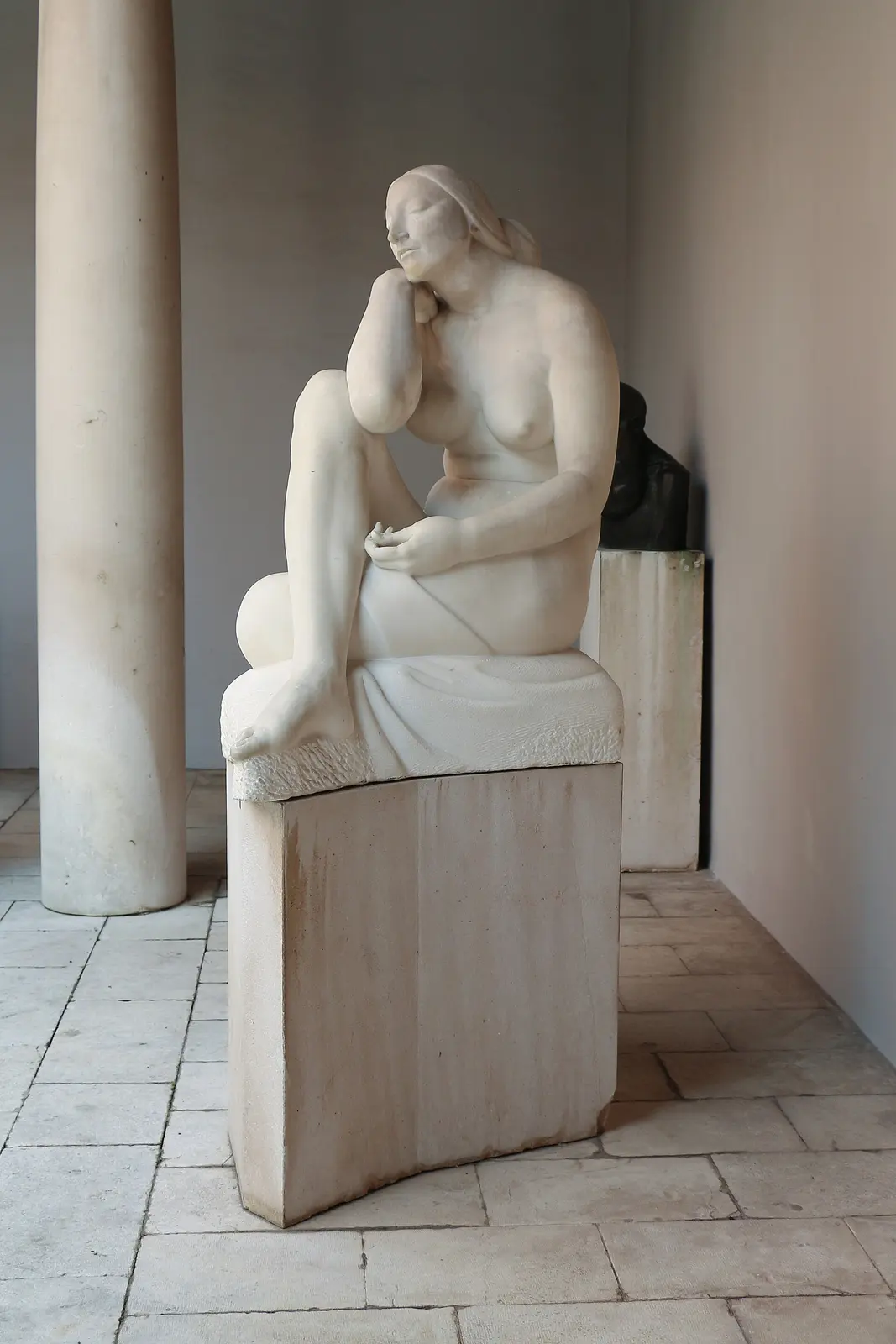
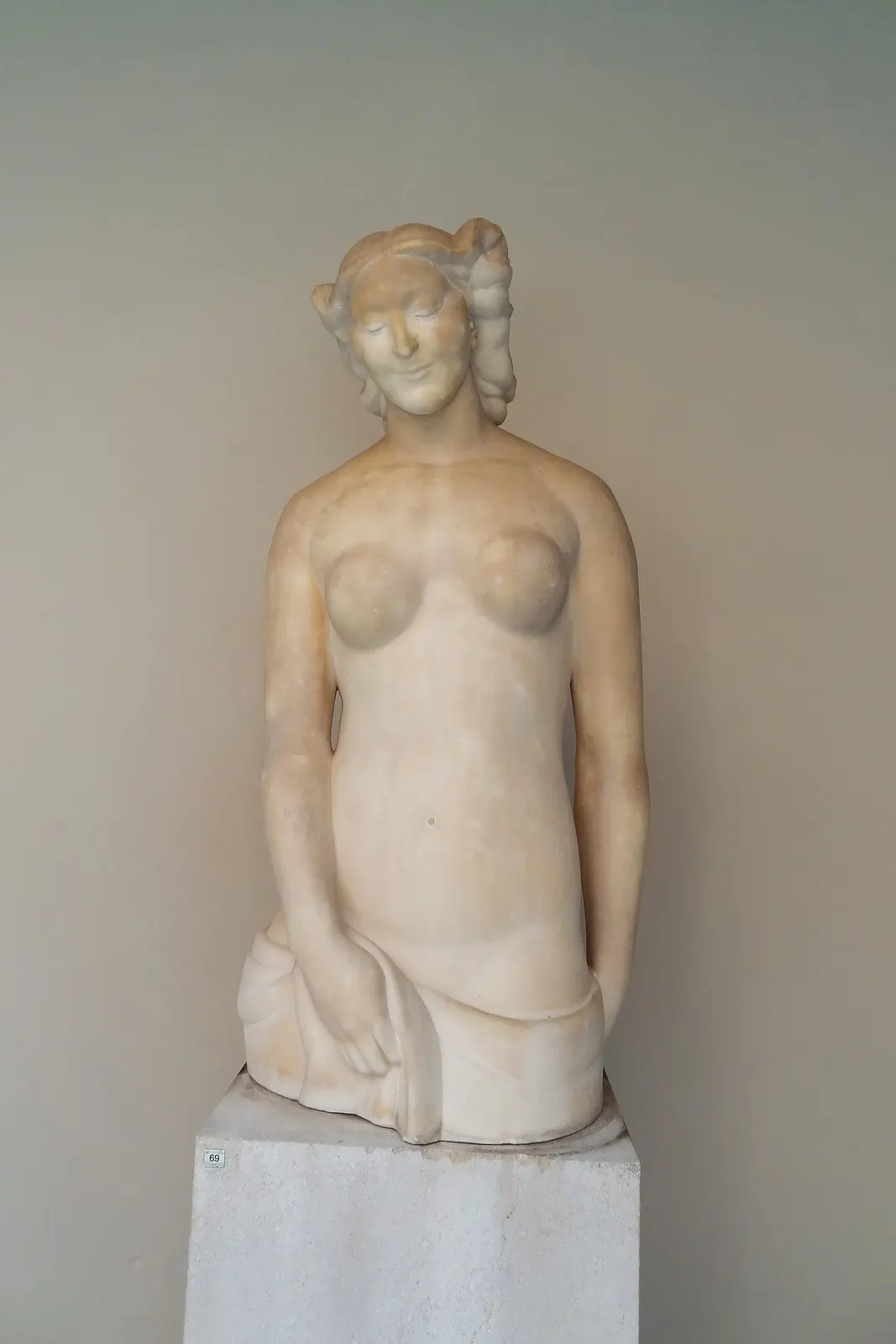
The seated and standing figures photographed in 2019 show why viewpoint matters, but their current titles and positions must come from the reopened display. Record artist, title, date, medium, dimensions and inventory number. Separate a personal emotional reading from the museum’s documented commission or subject.
Use the courtyard as an active museum space
The courtyard combines architecture, sculpture, weather and visitor circulation. Follow current boundaries and avoid leaning bags on walls or bases. Rain, heat or ice can close or shorten outdoor access. A photograph of an open 2019 courtyard does not guarantee that every threshold or sculpture is exposed today.
Keep tripods and companions out of narrow routes. Ask before photographing other visitors and follow object-specific rules. Commercial photography, fashion shoots and organised portrait sessions need permission. If a conservation cover blocks a work, record the dated condition or choose another object rather than moving anything.
Confirm the renovated access route directly
Renovation can improve access without erasing every constraint of connected historic houses, courtyard levels and narrow streets. Ask the museum about the step-free entrance, lifts or platforms, thresholds, accessible toilet, seating and companion arrangements for the current route. Verify which galleries and outdoor spaces are included.
Mletačka Street and the Upper Town approach add cobbles and gradient before the museum entrance. Confirm taxi drop-off and walking surface. If one room remains inaccessible, ask what interpretation or digital material is available rather than assuming staff can carry a wheelchair or mobility device.
Place the artist in history without hero worship
Meštrović’s career crossed empires, Yugoslav projects, religious commissions, political pressure, migration and work abroad. Use the museum’s chronology to connect objects with those conditions. Do not turn every monument into a simple national symbol or treat biography as proof of the viewer’s preferred politics.
Ask who commissioned, modelled, fabricated, installed and later conserved a work. A studio is often collaborative even when one artist’s name anchors it. Compare the new display’s wording with older guide narratives and preserve complexity around gender, monumentality and public memory.
Choose an Upper Town base and one sculpture route
Boutique Hotel HOH supports repeated Upper Town plans; Hotel Jagerhorn supports the lower transition; Hotel Capital suits a broader central itinerary. Verify slopes, luggage and the reopened entrance. The Atelier can anchor a focused morning without adding every Gradec museum.
Pair it with one public Meštrović work or a calm Upper Town walk, then descend once. Select the hotel for sleep and the full stay. Its route benefit is time to observe sculpture slowly, not a guarantee of private access or a named work.
Distinguish model, cast, version and final monument
A sculpture in the Atelier may be a study, plaster model, artist’s proof, cast, reduction or another authorised version rather than the unique object seen in a public square. Read the material, dimensions, foundry, casting date and inventory label. Do not caption every bronze as ‘the original’ or assume that two similar figures are duplicates without purpose.
Follow one work from drawing or model through enlargement, fabrication, commission and site where the display provides evidence. Ask what assistants, stone carvers and foundries contributed and how a later cast relates to Meštrović’s lifetime decisions. For a public monument elsewhere, verify whether the Atelier holds a model and whether the outdoor work remains in its intended location. Photography can compress scale and hide tool marks, joins or patina; use a sketch and measured label note to preserve those differences. If the museum shop sells a reproduction, it is merchandise under a licence, not an authenticated sculpture by the artist. Request provenance and independent expertise for any serious purchase.
Leave enough time for labels and the changed building
Allow at least an hour rather than treating the Atelier as a photo courtyard. The 2025 redesign deliberately reframes biography and works from Zagreb and Split holdings, so pause at the orientation material before selecting rooms. Record what the renovation changed only from official interpretation, not from memory of a 2019 photograph. If a temporary programme occupies the courtyard or studio, ask whether it changes the permanent route and whether re-entry is permitted after a break.
Questions people actually ask
How long does Atelier Meštrović take?
About 60–90 minutes is a good plan for most visitors, especially if you’re pairing it with an Upper Town walk.
Is it worth it if I’m not a sculpture expert?
Yes — it’s approachable and atmospheric. If you like quiet museum spaces and strong craftsmanship, you’ll enjoy it.