
Why it’s worth a stop (even if you’re not “an art person”)
The Croatian Museum of Naïve Art is a small museum with a specific point of view — and that’s why it works so well for visitors. You can get something genuinely Croatian in one focused visit.
InfoZagreb notes Croatia’s naive art tradition is internationally recognized (often linked to the Hlebine School) and that the museum holds key works by well-known naïve artists.
Naïve art, explained (fast and friendly)
Naïve art is often associated with self-taught or non-academically trained artists — work that feels direct, vivid, and story-rich.
- Expect bold color and strong narrative scenes.
- It’s easy to enjoy without “knowing art history.”
- It pairs perfectly with an Upper Town walking day because the museum is compact and central.
How to fit it into an Upper Town day
- Naïve Art Museum → St. Mark’s Square → Stone Gate → viewpoint walk → coffee.
Tips (make it a great visit)
- Plan 60–90 minutes for a relaxed visit.
- Pair it with one more small museum or a long walk — not a full museum marathon.
- Check the official site for current exhibitions and opening hours.
Why the Croatian Museum of Naive Art belongs in the day
The Croatian Museum of Naive Art provides a focused encounter with a distinctive artistic tradition and a more specifically Croatian story than many broad European collections. Its manageable scale makes close looking possible without consuming an entire Upper Town day.
Include the museum within the St. Mark’s Square and Upper Town loop, using it as the sole or primary interior stop. A café or promenade walk afterward gives space to process the work. Avoid combining it automatically with every small museum nearby.
What to notice and how to decide
Look closely at colour, perspective, rural or everyday subjects and the individual approaches grouped under the naive-art label. Do not treat the term as a synonym for simple. Read the available context so technique, biography and historical setting complicate the first visual impression.
Confirm the current display location, opening and ticket arrangements through the official museum, particularly when institutions are affected by renovation or collection moves. If a named artist matters, check whether relevant works are on view rather than assuming a permanent display never changes.
Prioritise this museum for Croatian art context, vivid painting and a focused visit that fits Upper Town. Travellers seeking interactive exhibits or a broad chronology may prefer another institution. Its smaller scale is ideal when curiosity is specific and the rest of the day remains outdoors.
Use the current last-entry time
HMNU currently lists Monday–Friday 09:00–17:00 and Saturday 10:00–14:00, with last admission thirty minutes before closing. Verify its homepage for a dated closure notice before climbing to Ćirilometodska 3. The short Saturday window needs an early start; legacy guide claims about Sunday opening should not override the museum.
Check the live ticket categories and group terms. A compact museum can still reach capacity, and a temporary installation may change the route. Save the exact entrance and ask about holiday hours. Do not confuse the institution with souvenir galleries or shops elsewhere that use ‘naive art’ in their name.
Do not use naive as a synonym for simple
The museum traces self-taught practice, Croatian naive art, outsider art and art brut across different artists and contexts. Begin with the label’s biography, training, medium and date. ‘Naive’ is an art-historical category under debate, not permission to call the maker childish, primitive or technically unaware.
The institution itself changed from Peasant Art Gallery to Gallery of Primitive Art before adopting its present name in 1994 as terminology shifted. Read that history critically. Ask who applied each label, what social class or rural identity meant at the time and how museum recognition changed an artist’s career.
Compare technique before subject
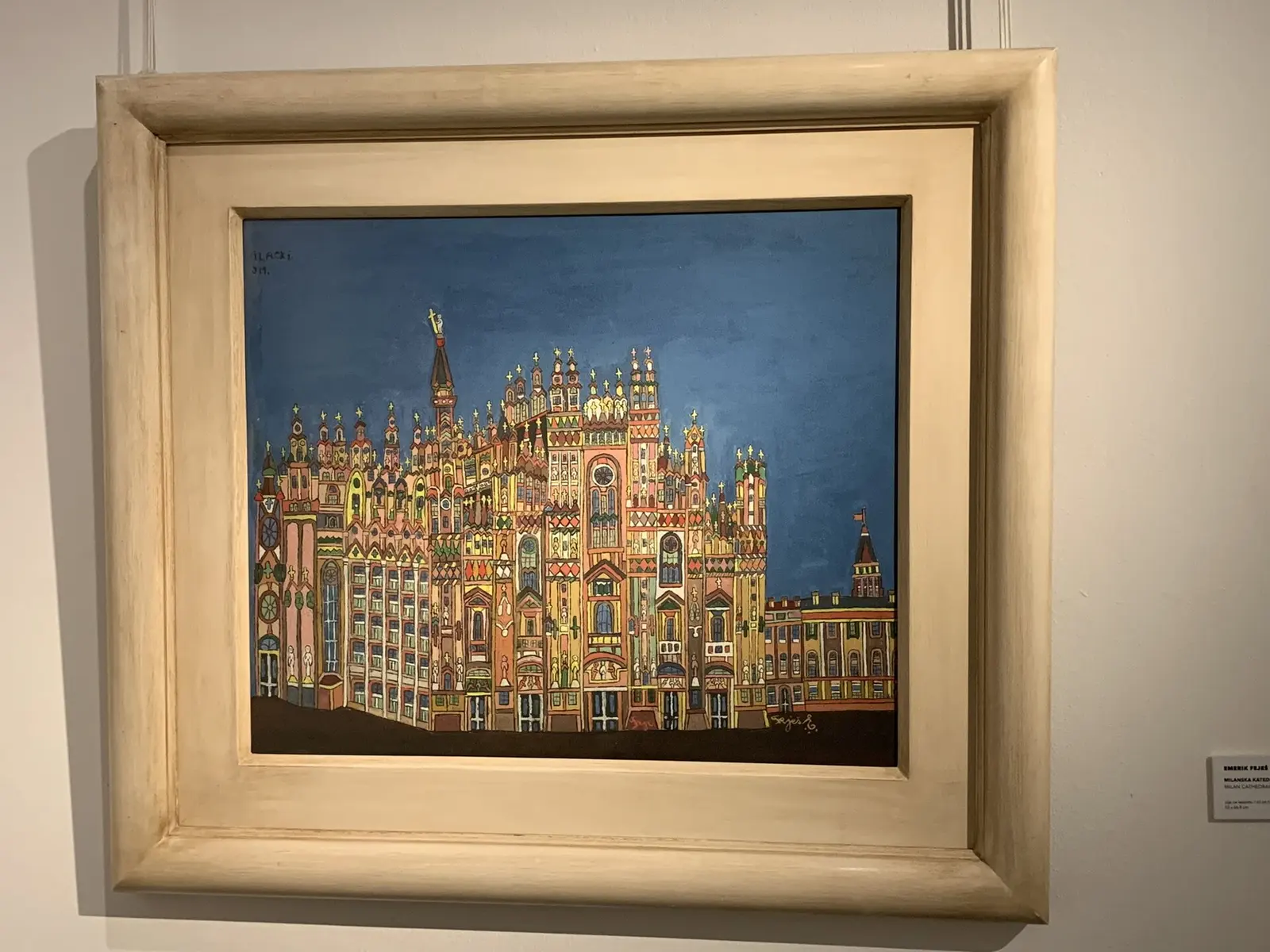
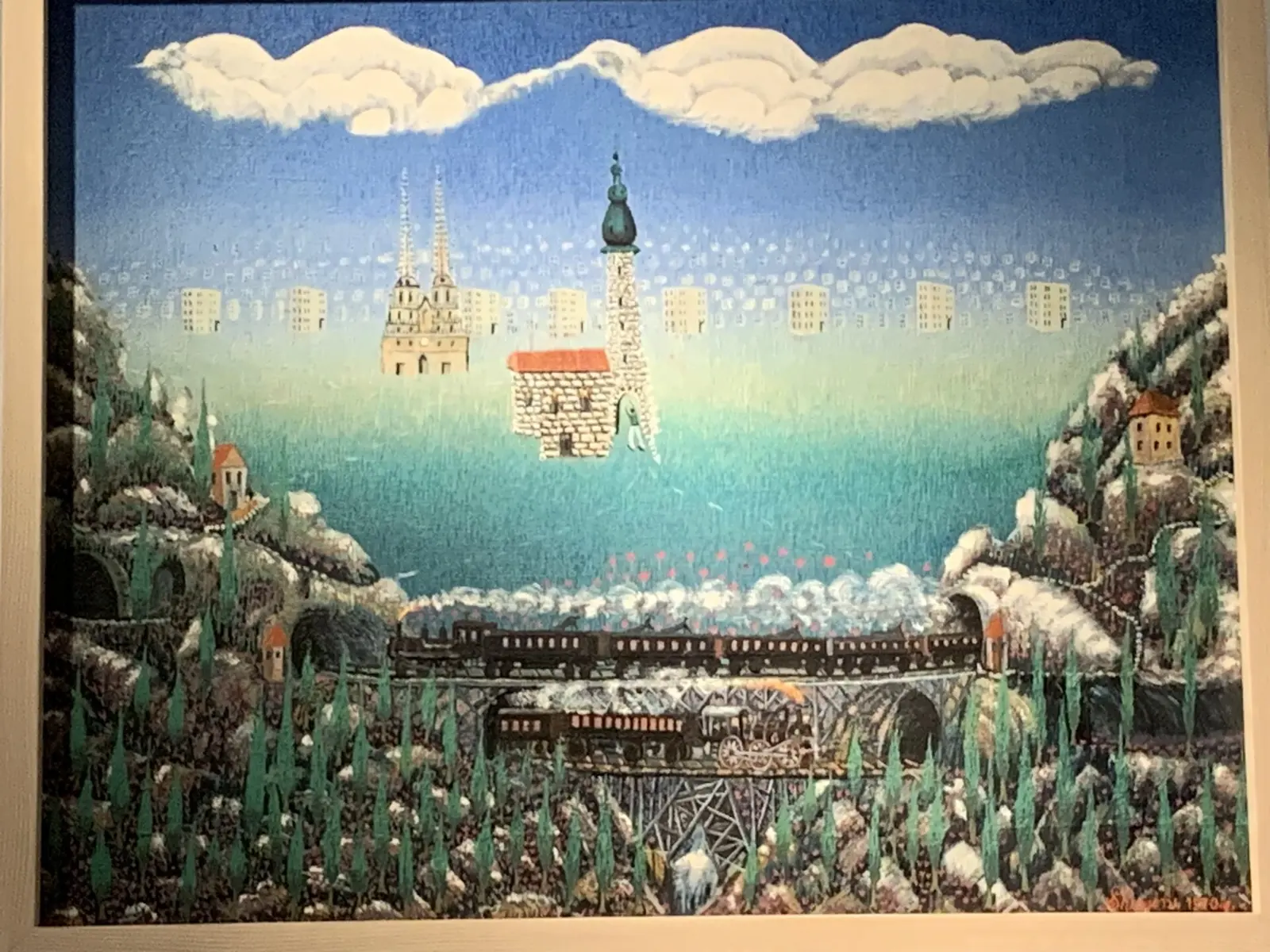
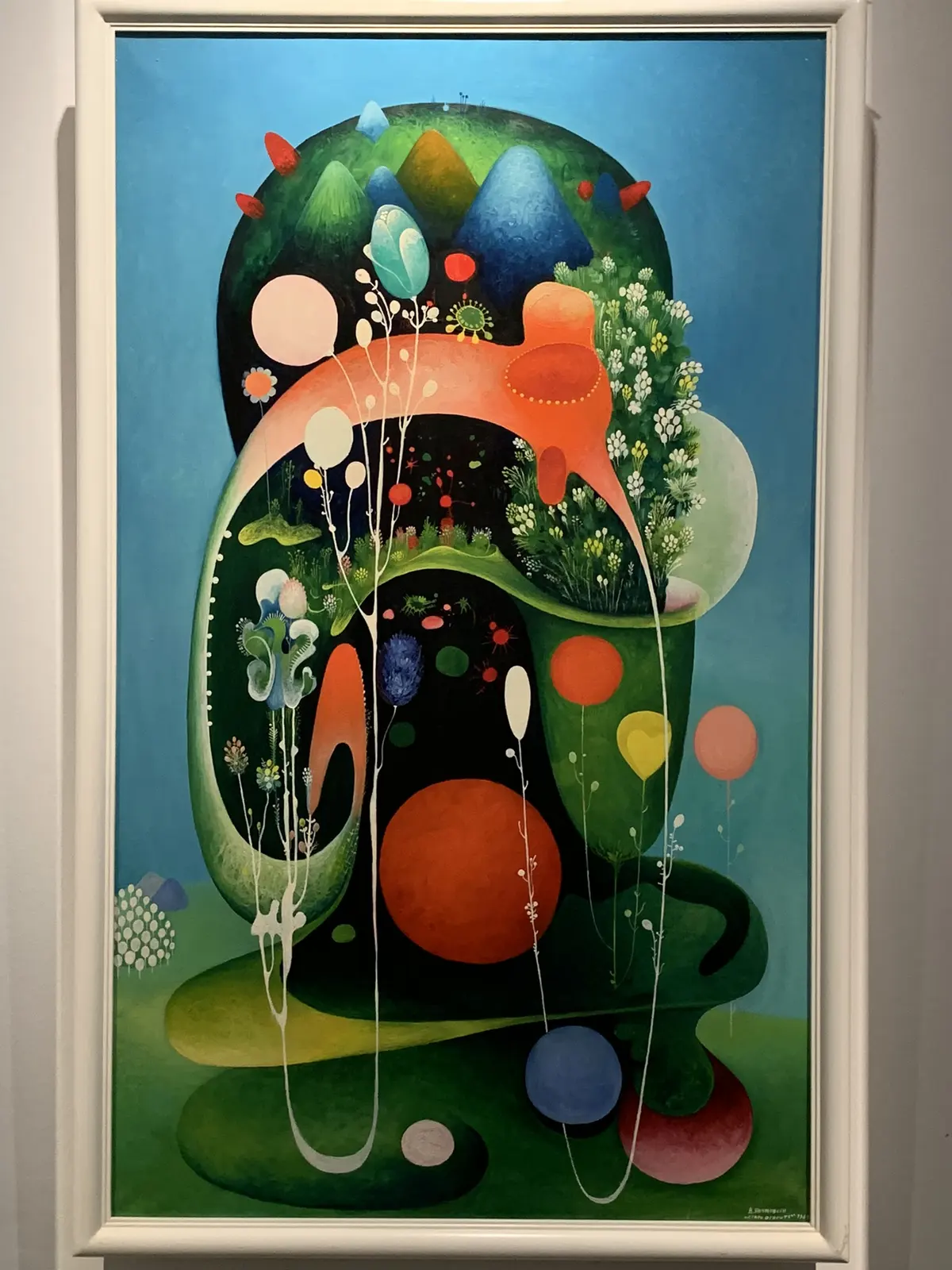
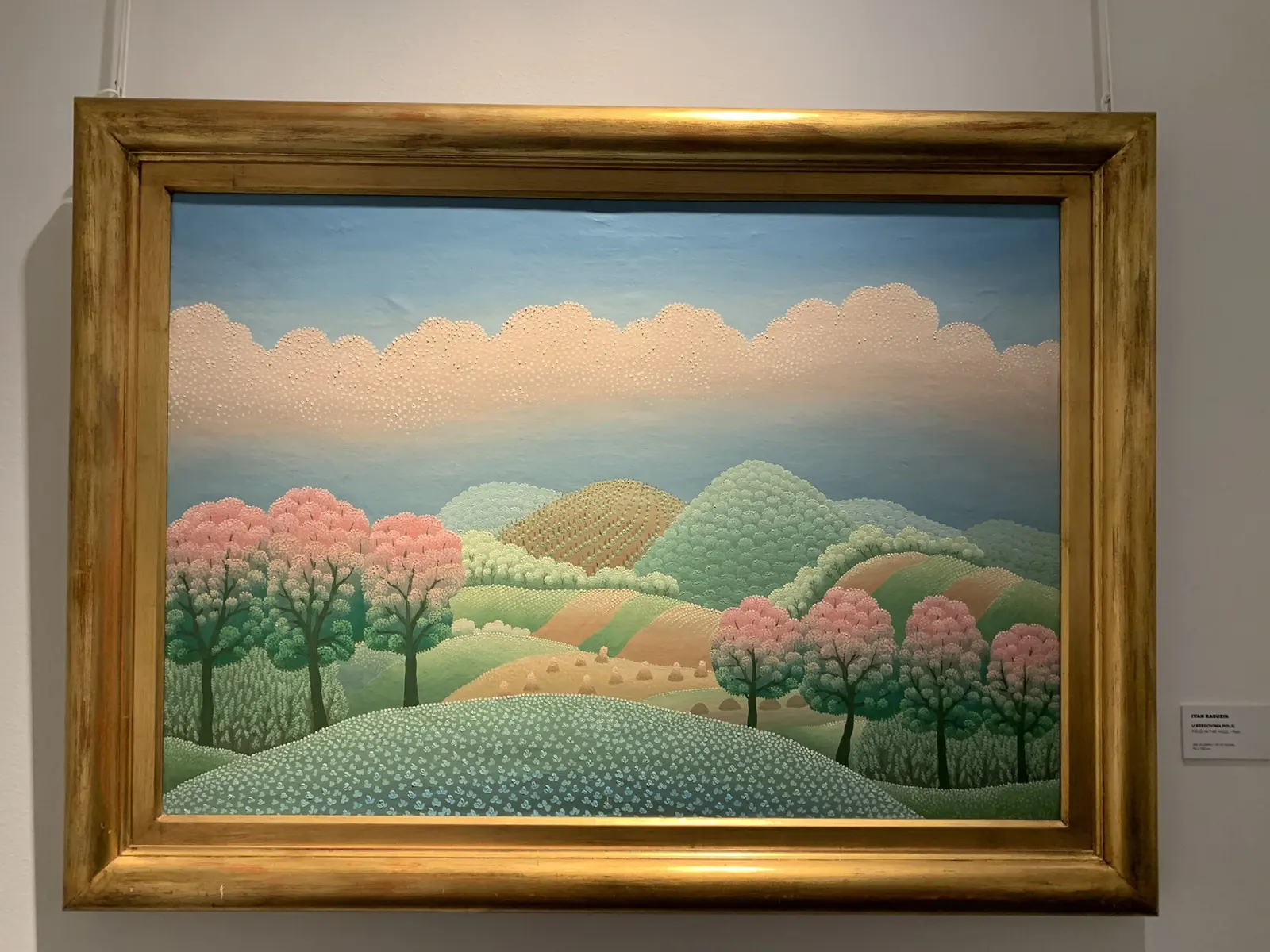
Use two works to compare surface, layering, outline, perspective, repetition and colour before naming a story. Reverse-glass painting, detailed city views, winter scenes and rounded landscapes can demand very different processes. The four 2024 photographs show breadth, not four permanent anchors; current rotation and labels decide what is actually visible.
Stand back for composition, then approach only to the permitted distance for brush or glass detail. Never touch a frame or lean over a barrier. Record artist, title, year, medium and label wording. A landscape that feels dreamlike to one visitor may carry specific local, political or biographical references that the label explains.
Look beyond the Hlebine shorthand
The Hlebine school is central to Croatian naive art, but the museum also holds independent Croatian and international authors and contemporary self-taught practices. Choose one Hlebine comparison and one work outside it. Do not leave with a definition based only on rural snow, glass painting or one famous surname.
Notice whose work is absent from a compact display and how gender, geography, market access and collecting shaped the canon. Ask whether a current temporary show broadens that story. The museum’s total holdings exceed what its rooms can display, so absence today is not proof that the collection lacks an artist.
Follow current photography and access rules
Ask about photography at entry and obey object-specific restrictions. Switch off flash, keep phones away from glass and do not block a small room. A licensed photograph of a work in this guide does not grant a visitor reproduction rights. Publication and commercial use can require permission from both artist-rights holder and photographer.
Contact HMNU about steps, doorway width, toilet, seating and companion arrangements before relying on an Upper Town map. Historic premises can constrain circulation. A wheelchair user or sensory-sensitive visitor needs the exact route and crowd condition, not a general claim that the museum is small. Staff can advise on the current display.
Choose a humane pace for a compact museum
Thirty to sixty focused minutes can be enough. Select six works, spend several minutes with each and write one comparison. Families can hunt for repeated forms or weather without mocking figures or inventing artist motives. Take a break outside before another museum; compact rooms can create visual and social fatigue quickly.
Buy only museum-authorised reproductions when provenance and artist support matter. A souvenir’s bright style does not make it an original naive artwork. For a serious purchase elsewhere, request artist, title, medium, date, seller identity and lawful export information, and seek independent expertise rather than treating the museum visit as authentication training.
Prepare language support if the available wall text will not suit the group, using official artist pages or publications. When discussing rural life, poverty, disability or lack of formal training, do not turn biography into an explanation for every formal choice. Artists develop, respond to markets and make strategic decisions. Ask what the work does visually before using background as a shortcut. A notebook comparison—one repeated motif, one spatial decision, one material effect and one label question—creates a richer record than photographing every frame. Share only carefully attributed notes because category and interpretation can evolve with scholarship and self-description. After the visit, verify one artist through the museum’s own collection page or publication and note how chronology complicates the label. Do not use a commercial dealer biography as the sole source for museum history, price or authenticity. A careful follow-up preserves curiosity without turning a compact display into a universal definition of self-taught art.
Make it one Upper Town chapter
Boutique Hotel HOH supports an Upper Town stay, Hotel Jagerhorn the lower transition, and Hotel Capital a broader central route. Choose by room, slope, luggage and the rest of the itinerary. Pair HMNU with St Mark’s exterior or Klovićevi Dvori only when live access and energy permit.
Verify security diversions around St Mark’s Square and the museum entrance. Proximity does not remove cobbles or gradients. The strongest route gives the collection unhurried attention, then descends once rather than bouncing repeatedly between Gradec and Lower Town.

Test the first reading against another work
Compare a second work by the same artist from another date. Note whether material, audience, market relationship or formal strategy changed. Do not use a commercial dealer biography as the sole source for museum history, price or authenticity. This comparison keeps one individual practice from becoming a stereotype for all self-taught art and lets differences challenge the first reading. Share a dated, attributed note and correct it when museum terminology changes.
Questions people actually ask
How long should I plan for the Museum of Naïve Art?
Most visitors enjoy it in about 60–90 minutes, depending on current exhibitions and how much you linger.
Is it a good rainy-day museum?
Yes — it’s compact, central, and easy to combine with cafés and other indoor stops.