
How to do Zagreb in 48 hours (the key idea)
Two days in Zagreb is not about doing everything — it’s about getting the city’s flow right. The best plan uses one classic day for the historic core, and one flexible day for parks, museums, and street-life.
Think in anchors, not checklists: one market morning, one Upper Town loop, one museum you’ll actually remember, and two good evenings.
Day 1: Classic Zagreb (market → Upper Town → parks → night walk)
- Morning: Dolac Market browse (20–45 minutes) → coffee terrace nearby.
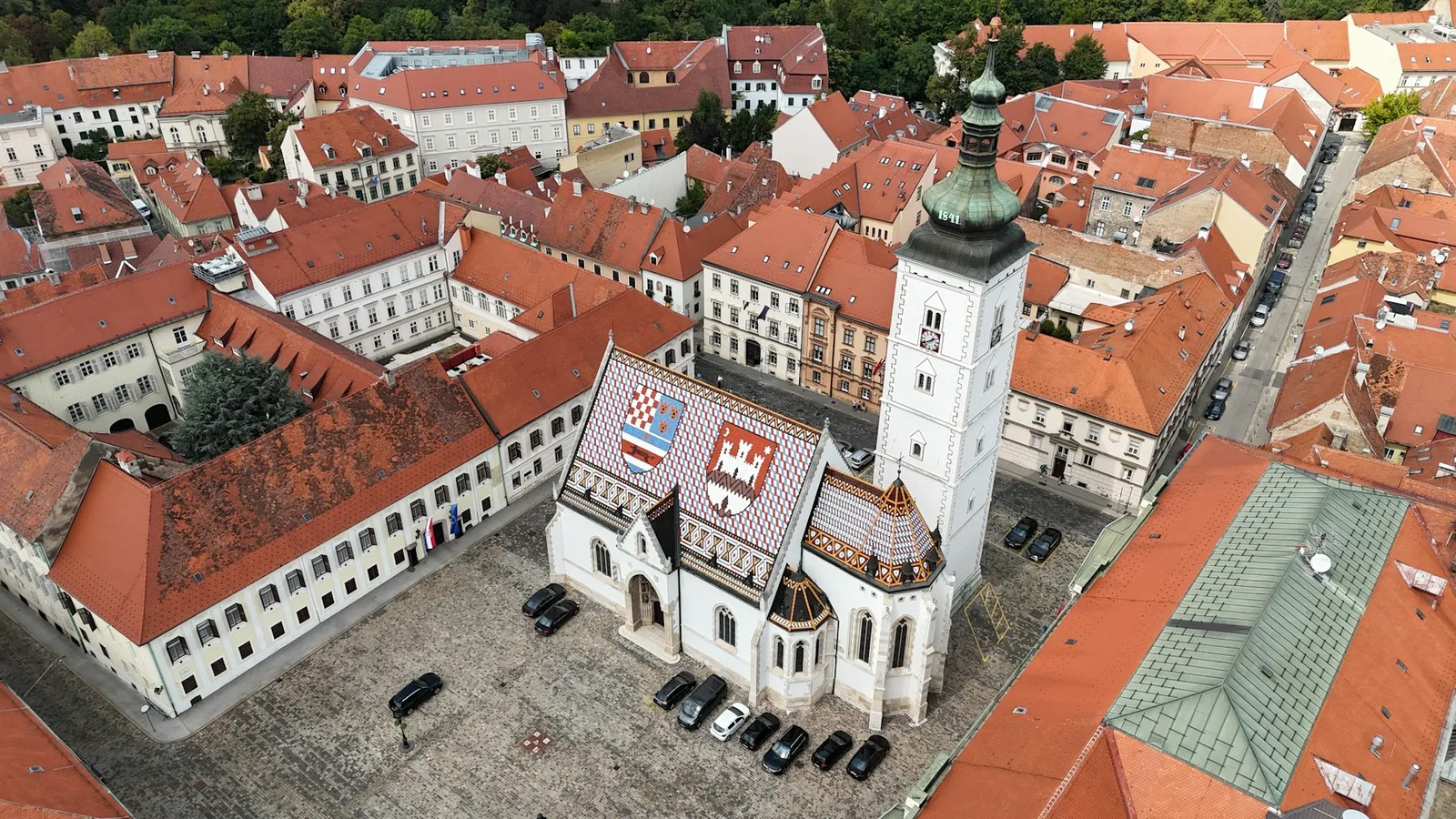
- Late morning: Upper Town loop (Stone Gate → St. Mark’s Church → viewpoints).
- Afternoon: one museum (quirky or classic) → Lower Town parks stroll.
- Evening: dinner → slow night walk through the center.
Day 2: Choose your mood (two easy templates)
Pick one of these Day 2 templates based on how you want the day to feel.
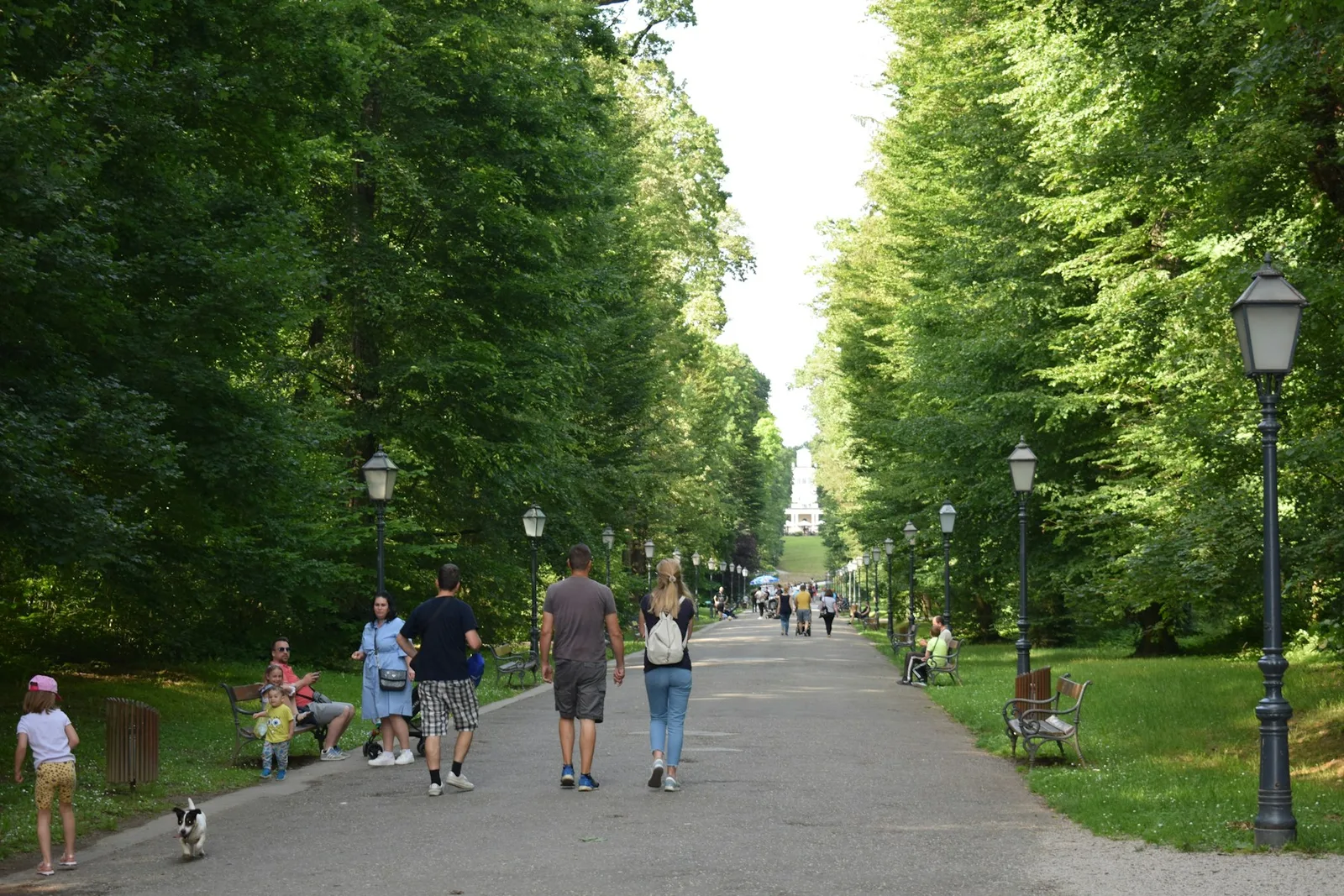
- Template A (green + calm): Lower Town parks loop → long lunch → Maksimir Park → easy evening.
- Template B (modern + open space): Museum of Contemporary Art (MSU) → Novi Zagreb walk → Jarun at golden hour → casual dinner.
Museum picks (so it fits the pace)
Two days is not a “museum marathon” trip. Choose one, or at most two.
- Quirky and memorable: Museum of Broken Relationships.
- Playful and light: Museum of Illusions / Chocolate Museum.
- Classic context: Zagreb City Museum / Archaeological Museum.
Weather swaps (keep the structure, change the anchors)
- Rain: swap parks for museums + cafés; use Grič Tunnel as a practical connector.
- Winter: make evenings the headline (lights + cozy cafés) and shorten daytime walks.
- Summer: walk early/late; use museums at midday; do Jarun at golden hour.
Where to stay (so 2 days feels effortless)
- Best base for a short trip: central Lower Town (Donji Grad) — walkable and easy for evenings.
- Upper Town edges: beautiful, but expect stairs (especially with luggage).
- If you want a calmer base: a neighborhood on a direct tram line is still easy in minutes.
What two days in Zagreb should add to the trip
Two days allow one classic central day and one deliberate contrast. Protect the first for orientation, then choose culture, a major park, a residential morning or a short excursion according to interest.
A route and pace that make two days in Zagreb work
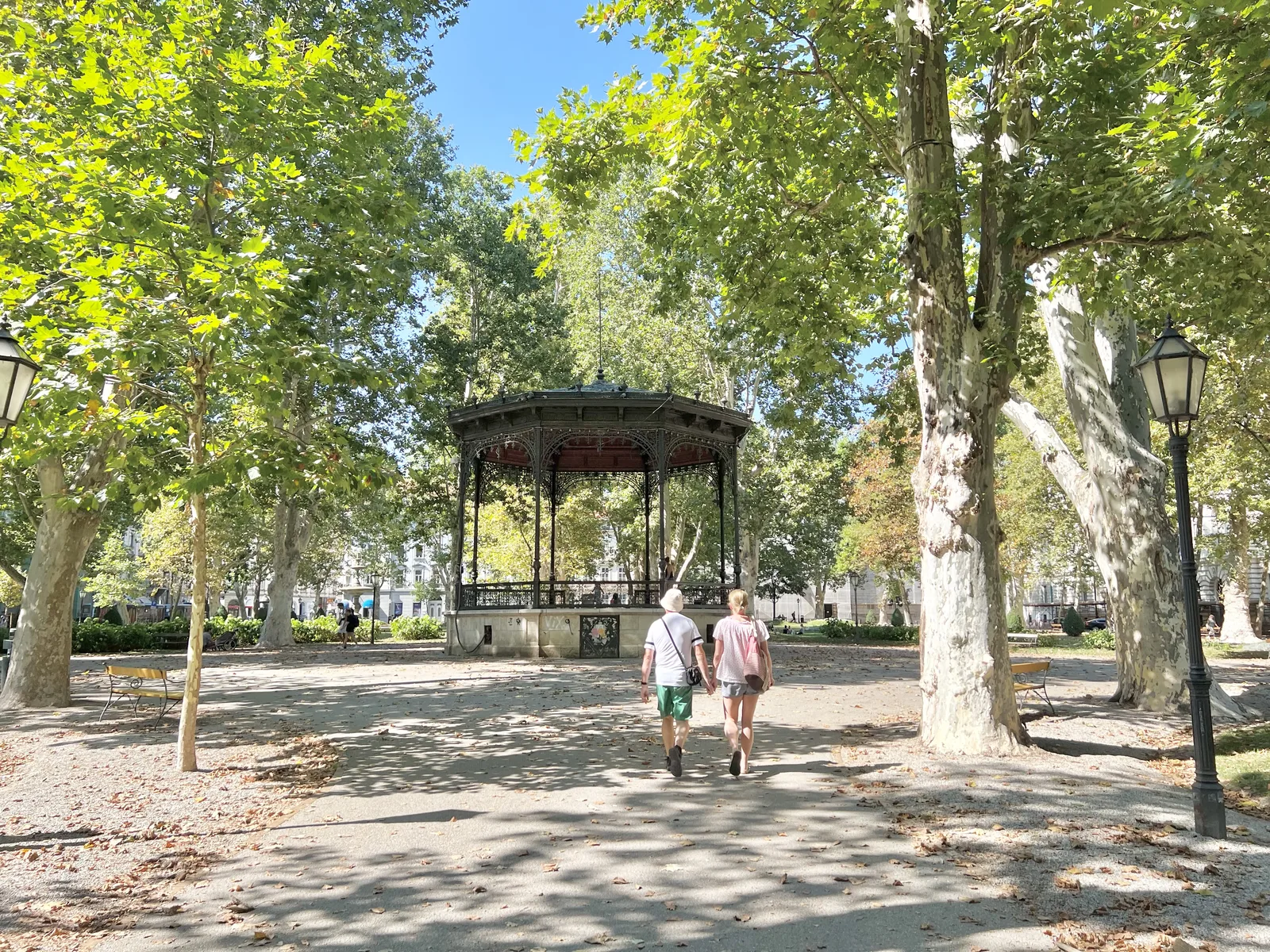
Day one joins Dolac, Upper Town and Lower Town. Day two can pair a museum with the Green Horseshoe, Maksimir with a relaxed evening, or Trešnjevka with a neighbourhood meal.
The choices, trade-offs and common mistake
Choose one second-day direction rather than sampling all of them. A day trip is worthwhile only when leaving Zagreb matters more than exploring a city layer not yet seen.
A late arrival or early departure makes this closer to a one-day itinerary. Count hotel transfers and opening days honestly before assigning four major blocks to forty-eight calendar hours.
Weather, current information and the fallback plan
Keep the central culture-and-parks day as the weather-proof fallback for any outer plan. Move the best outdoor window to Upper Town or Maksimir and let museums take the less settled period.
Splitting an arrival day from a full day
Very few 48-hour trips actually deliver two full days — one of them is almost always compressed by a flight, a train or a late check-in. If Day 1 is your arrival day, don't try to run the full classic-Zagreb sequence from morning to night. Start with whichever half of it still fits comfortably, then let Day 2 absorb whatever got pushed off, rather than rushing the market and Upper Town loop into a shrinking afternoon.
If instead Day 2 is your departure day, work backwards from the actual last-usable-hour, factoring in luggage, transfers and check-out, and assign the museum or park templates only to the time genuinely left over. A 48-hour itinerary on paper often has closer to thirty usable hours once arrival and departure are honestly accounted for.
What to skip across two days
Two days is enough for one classic core day and one deliberate contrast, but it is not enough for both Day 2 templates, a day trip, and a leisurely pace. Choose one direction for Day 2 — parks and Maksimir, or contemporary art and Novi Zagreb — and commit to it rather than trying to sample pieces of both, which tends to leave you commuting between districts instead of settling into either one.
Resist adding a day trip onto a pure 48-hour city break unless Zagreb is genuinely a stopover on a longer itinerary. Leaving the city for even half of Day 2 removes one of your only two full days, and the parks-and-museums version of Day 2 usually gives a better return on a short stay.
- A second museum on Day 1 — one is enough alongside the Upper Town loop.
- Both Day 2 templates in the same trip — pick parks or contemporary art, not both.
- A day trip out of the city, unless Zagreb is a stop on a longer route.
Food rhythm across 48 hours
Across two days, the temptation is to treat every meal as an event, which leaves you exhausted rather than fed. Let Day 1's lunch be quick and close to the Upper Town loop, then make dinner the day's one unhurried meal, paired with the slow night walk through the centre. That contrast — brisk daytime meals, one slow evening meal — is what makes a two-day trip feel paced rather than packed.
On Day 2, mirror the same idea in whichever template you've chosen: a long lunch works well with the parks-and-Maksimir day, since there's no tight afternoon schedule to protect, while the contemporary-art-and-Jarun day suits a lighter lunch and a more relaxed dinner once you're back from Novi Zagreb at golden hour.
Choosing Day 2's character deliberately
The two Day 2 templates aren't interchangeable, and picking between them early avoids a wasted morning of indecision. The parks-and-Maksimir day suits travellers who found Day 1's pace already full and want something calmer and greener, with fewer transitions and more time to sit still. It's also the safer choice if energy is already lower than planned.
The contemporary-art-and-Novi-Zagreb day suits travellers who want a genuine contrast to Upper Town's historic streets — a different architectural language, more open space, and a golden-hour lake walk to close it out. It involves more movement across the river, so it works best when Day 1 didn't already feel like a lot of walking.
Adjusting the same 48 hours for different travellers
Solo travellers can move through Day 1's classic core faster than the itinerary assumes, which frees up time for an extra café stop or a longer wander through Upper Town's side streets without any group pace to manage. That flexibility makes the parks-and-Maksimir Day 2 template especially easy to stretch or shrink on the day itself.
Couples tend to get the most from the evening sequences on both days — the night walk on Day 1 and the golden-hour lake walk if the contemporary-art template is chosen for Day 2. Families should expect Day 1's museum stop to run shorter than planned and should lean towards the lighter, more playful museum choices rather than the classic, text-heavy ones.
Luggage, check-in and the return journey
With two calendar days rather than one, luggage logistics are less pressing on Day 1 than they would be for a single-day trip, since you'll typically have checked into a hotel before the itinerary really begins. Still, confirm check-in timing before committing to the full Dolac-to-night-walk sequence on Day 1, since an early-morning arrival with a mid-afternoon check-in leaves a genuine gap to plan around rather than ignore.
On the departure side, the same discipline from a one-day trip applies in reverse: work out the last realistic hour for Day 2's chosen template, and don't let the golden-hour lake walk or Maksimir's calmer pace tempt you into cutting the transfer buffer too close.

When a day trip genuinely fits inside two days
The general advice above is to skip a day trip on a pure 48-hour break, but there is one exception worth naming: if Zagreb sits in the middle of a longer route rather than being the whole trip, a short excursion on Day 2 can replace one of the two templates outright rather than compete with it. In that case, treat Day 1's classic core as the entire Zagreb experience and let Day 2 belong fully to the day trip.
What doesn't work is trying to fit a half-day excursion around a shortened version of Maksimir or Novi Zagreb — the transfer time alone usually cancels out whatever was gained, and you end the trip having done a rushed version of three things instead of a proper version of two.
Day 1: learn the map before adding contrast
Give the first morning to Dolac, Kaptol and the Upper Town climb. That sequence explains where Zagreb came from and how the central districts join. Enter through the Stone Gate, reach St. Mark’s Square, use the surrounding lanes rather than one direct line, and finish at Strossmayer Promenade. A museum belongs here only when the subject genuinely adds to the historic chapter; otherwise, descend with enough appetite and attention left for lunch.
Use the afternoon to establish Lower Town, not to complete it. Zrinjevac is the hinge, followed by one cultural institution or a selected Green Horseshoe section. The contrast is what makes the first day complete: compressed old lanes above, formal parks and institutional façades below. Save the Botanical Garden, HNK side or a second collection for Day 2 only if they fit that day’s chosen character. Proximity is not a command to see everything at once.
Keep the first evening central and readable. Dinner near the final park or museum, followed by a short return through lit streets, is more useful than a nightlife crawl after a full orientation day. If a theatre performance is the trip’s fixed event, organise the Lower Town afternoon around it and reduce the museum ambition. The day should end with Zagreb’s geography clear enough that the second morning can deliberately leave the classic core.
Day 2: choose one Zagreb the first day did not show
For a green day, travel to Maksimir with the park—not the zoo—as the default anchor. Choose the zoo only for a family or animal-led visit, and decide the walking loop before energy disappears. Return centrally for a late lunch or continue the slower rhythm near the park. This version suits travellers who spent Day 1 looking closely at buildings and collections and now want shade, movement and fewer decisions.
For a modern-culture day, cross the Sava with the Museum of Contemporary Art as the clear anchor. Bundek can supply the outdoor contrast when weather and stamina allow; it should not become another box that must follow the museum. Novi Zagreb works because its scale and planning differ from the historic centre. Give that difference time, then return for dinner rather than attaching Trešnjevka or Jarun to the same cross-city sweep.
For an everyday-city day, use Trešnjevka Market or the Martićeva-to-Kvatrić line as the morning’s reason to leave the centre. Browse, stop for coffee or lunch and return when the neighbourhood purpose is complete. This is the best choice for food-curious travellers and repeat visitors, but the weakest choice for someone who still regrets missing a major museum on Day 1. Use the second day to answer the interest that remains strongest, not to perform localness.
Keep the second evening simple whichever contrast you choose. A park day benefits from a good central dinner and short return walk; a Novi Zagreb day benefits from coming back without another museum or bar circuit attached; a residential market day can end in the same neighbourhood only when that meal was part of the reason for going. The two-day trip succeeds when Day 2 feels different from Day 1 and still lands gently, not when it finishes the remaining pins.
Use the hotel as the hinge between the days. A Lower Town base makes the historic first morning and several second-day tram directions straightforward; an Upper Town-edge stay gives a memorable first evening but adds terrain to returns; a residential base can improve space and routine while making Day 1 less immediate. None is wrong, but the base should support both days’ repeated journeys. If it only suits one spectacular moment, the other three hotel transitions will expose the mismatch.
The two-day plan also benefits from one repeat. Return to the café, park edge or evening street that felt right on Day 1 instead of forcing a final new venue before departure. Repetition turns the centre from a map of stops into somewhere briefly familiar, and Zagreb’s compact core makes that return easy. Use it as the final chapter, then leave with enough margin that the trip does not end in a transport sprint.
That final return also gives both travellers a shared reference point when the two days have followed very different moods.
Questions people actually ask
Is two days enough for Zagreb?
Yes. Two days is enough for a classic core experience: market morning, Upper Town loop, parks, one or two museums, and the city’s best evening vibe.
Should a 2-day trip include a day trip?
Usually no. A day trip can work if Zagreb is a stop on a bigger itinerary, but for a pure 48-hour city break, staying in Zagreb gives the best pace.
What’s the one ‘must’ ritual in a 2-day plan?
A long coffee sit. Zagreb is a city where the pauses are part of the experience — and they make the itinerary feel like a vacation.